Business Standard

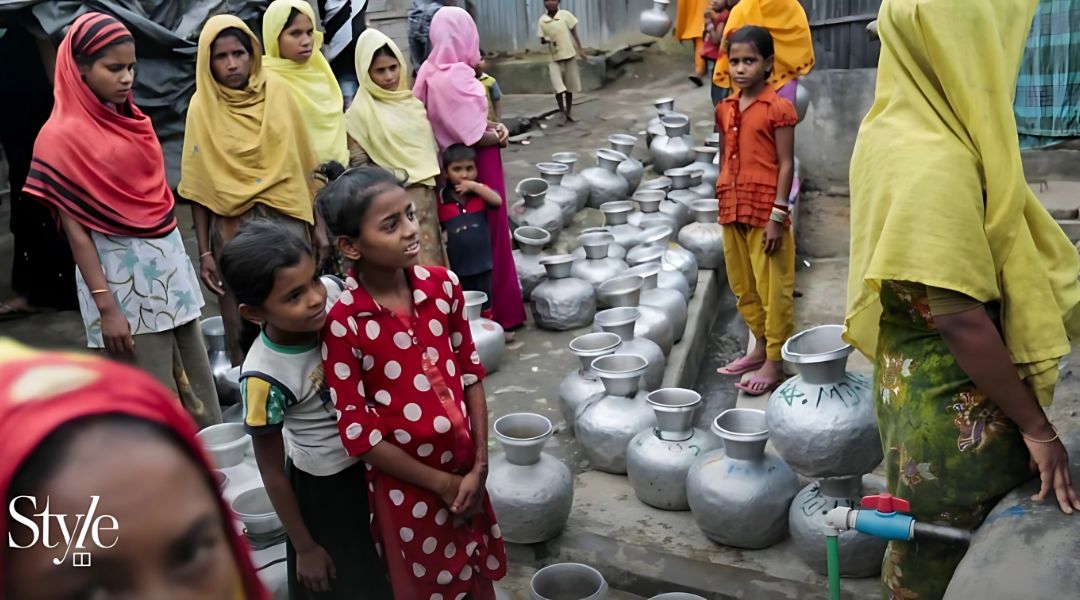
Water scarcity has become a global concern, with incidents such as Day Zero in Cape Town (2018) serving as stark reminders of the urgency of this issue. Transporting drinkable water to regions affected by natural disasters, especially equatorial areas during summer, remains a challenge. India faces its own water crisis, with cities like Bengaluru, Mumbai, Shimla, and Chennai projected to exhaust groundwater reserves by 2030, as highlighted in a report by Niti Aayog.

In April this year, water scarcity triggered mass migration in rural Madhya Pradesh’s Damoh district. Moreover, the groundwater contribution to the Ganga River is expected to decrease over the next three decades, potentially impacting 115 million people in the Ganga basin, according to IIT Kharagpur.

Such issues require innovative solutions. One promising approach is the Atmospheric Water Generator (AWG) technology developed by AKVO Atmospheric Water Systems Pvt Ltd, under the leadership of Mr. Navkaran Singh Bagga, Founder and CEO.

How AKVO Tackles Water Scarcity

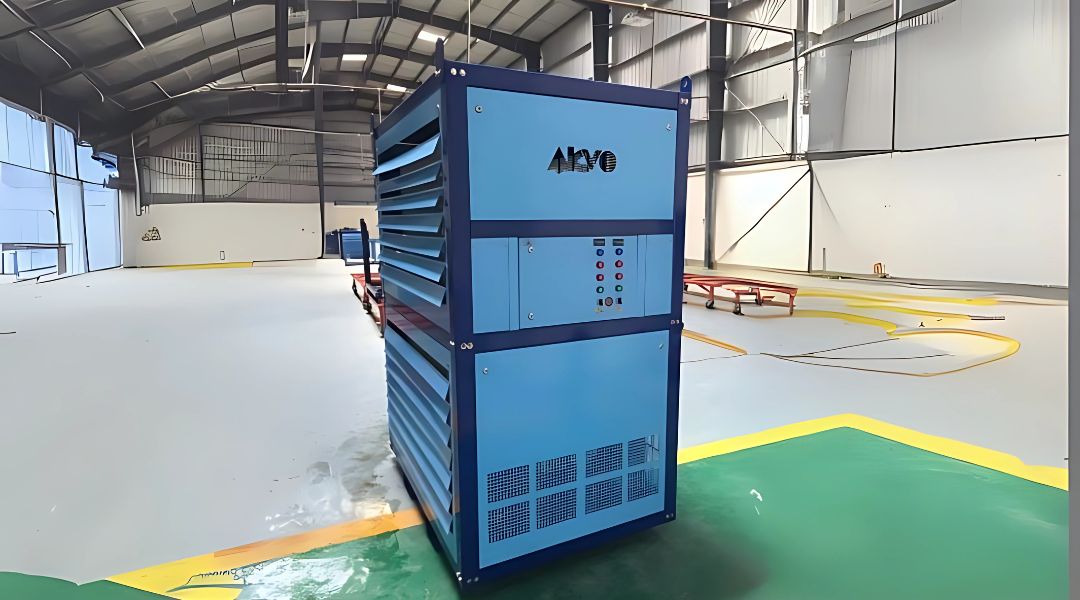
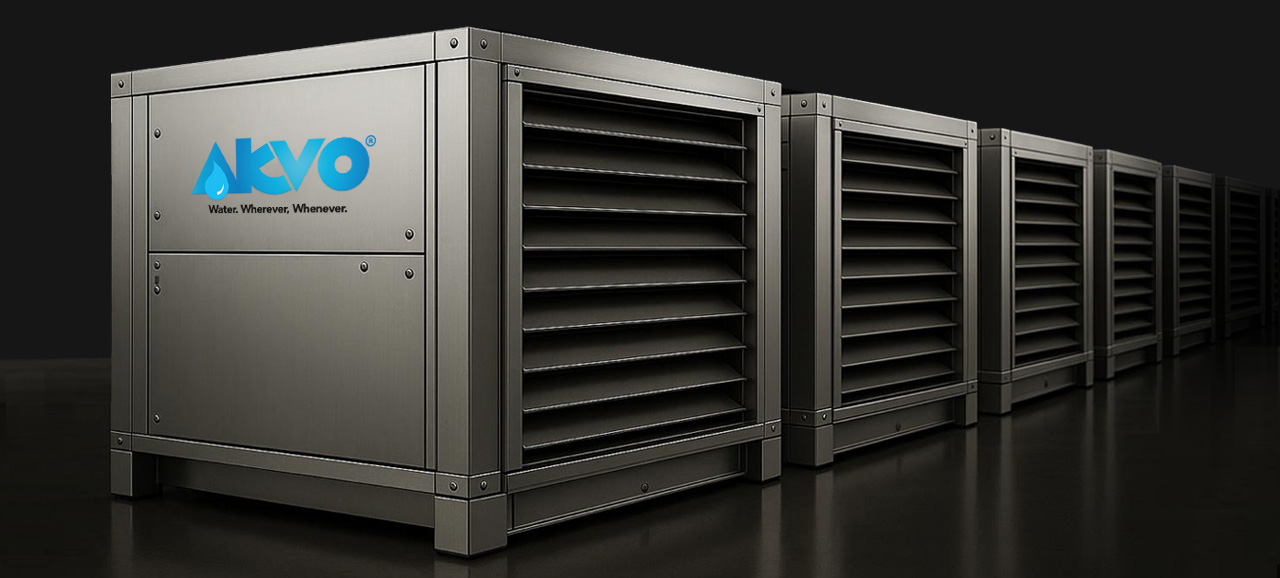
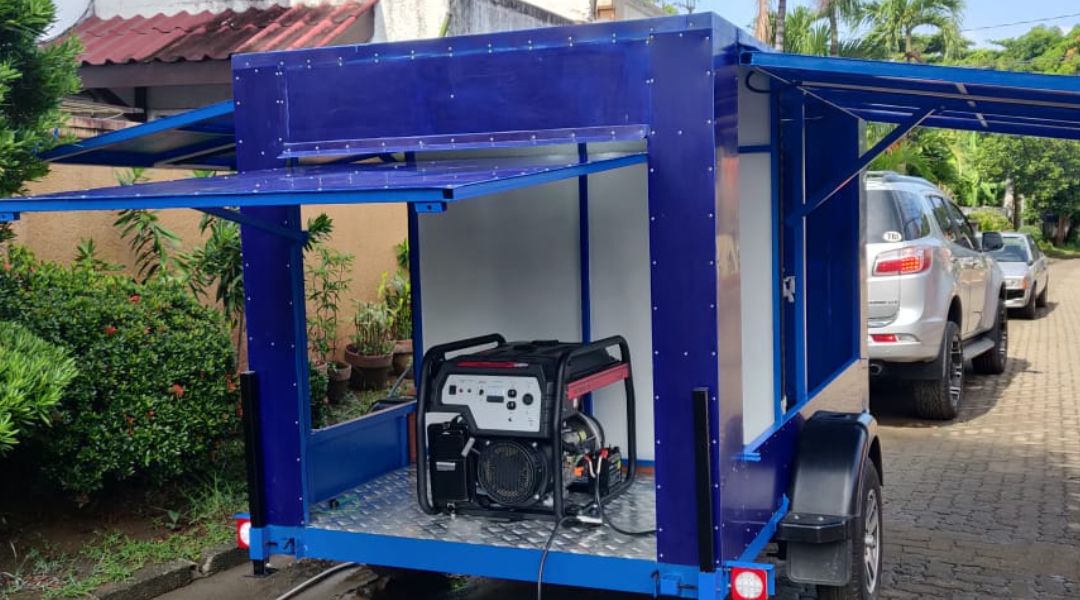
AKVO AWGs generate pure drinking water by extracting and purifying humidity from the air. These machines come in various sizes, catering to both community and industrial needs:

  • Capacity: Machines produce between 100 and 10,000 liters per day.
  • Cost: AKVO water costs INR 1.75–2.00 per liter, significantly cheaper than market rates (INR 15–20 per liter).

Impactful Deployments of AKVO AWG Machines

  1. Rural Communities:
    • A 1000-liter machine was installed in Hardua Mangarh, Madhya Pradesh, addressing the water needs of a village that relied on a 200-year-old well.
  2. Industrial Use:
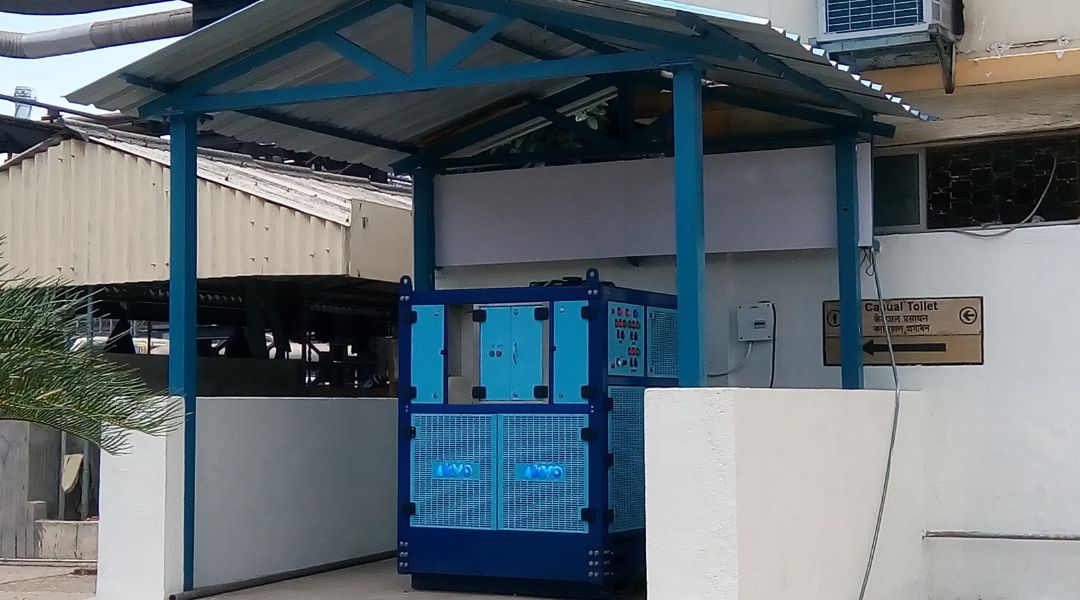
    • Six machines have been installed at the IOCL refinery in Haldia, decentralizing water availability across its 300-acre area.
  3. Hydroponics:
    • Customizable machines support water demands for hydroponic farming, meeting specific mineral and volume requirements.
  4. Global Reach:
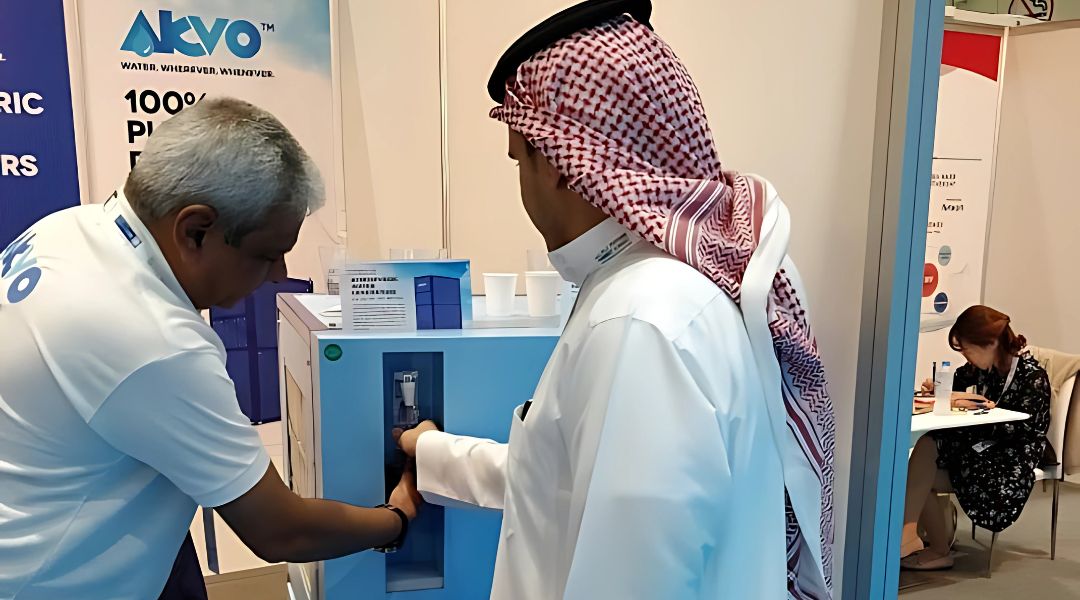
    • AKVO AWG machines gained international recognition at the International Water Summit (2018 & 2019) in Abu Dhabi and have been installed by Sharjah Electricity and Water Authority (SEWA) in the Middle East.

A Green, Cost-Efficient Solution for the Future

AKVO AWG machines operate without water wastage and consume just one unit of electricity per hour. Unlike desalination, which damages marine ecosystems, AKVO offers an eco-friendly alternative, making it ideal for tropical and coastal regions.

“Our vision is a future where no one suffers from water scarcity,” says Navkaran Singh Bagga, CEO. “We aim to deliver sustainable, cost-effective solutions that protect water resources while meeting the needs of diverse communities.”

Explore how AKVO AWGs are transforming water access across India and beyond. Discover the full original article here.
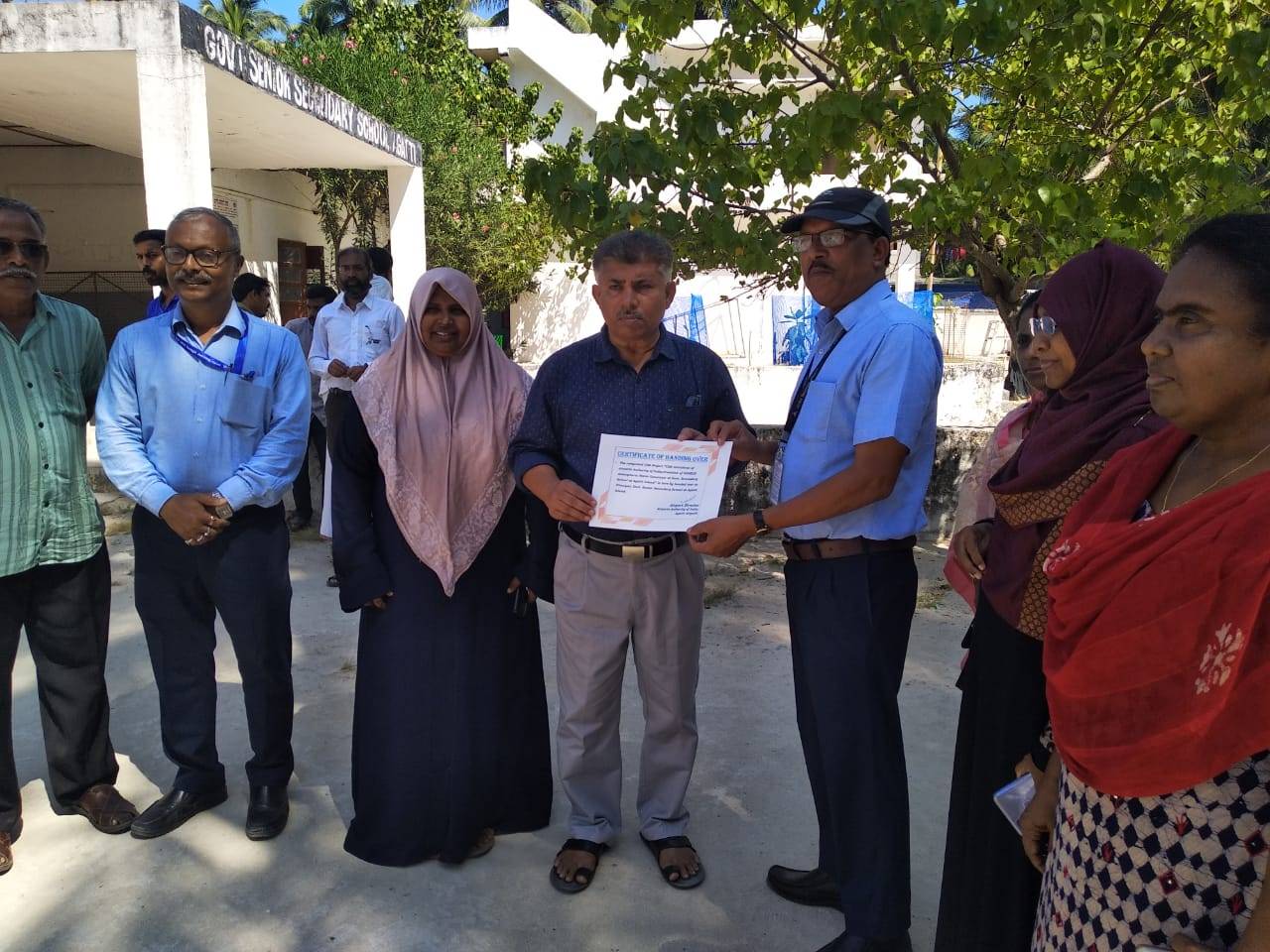
The Airports Authority of India, Lakshadweep

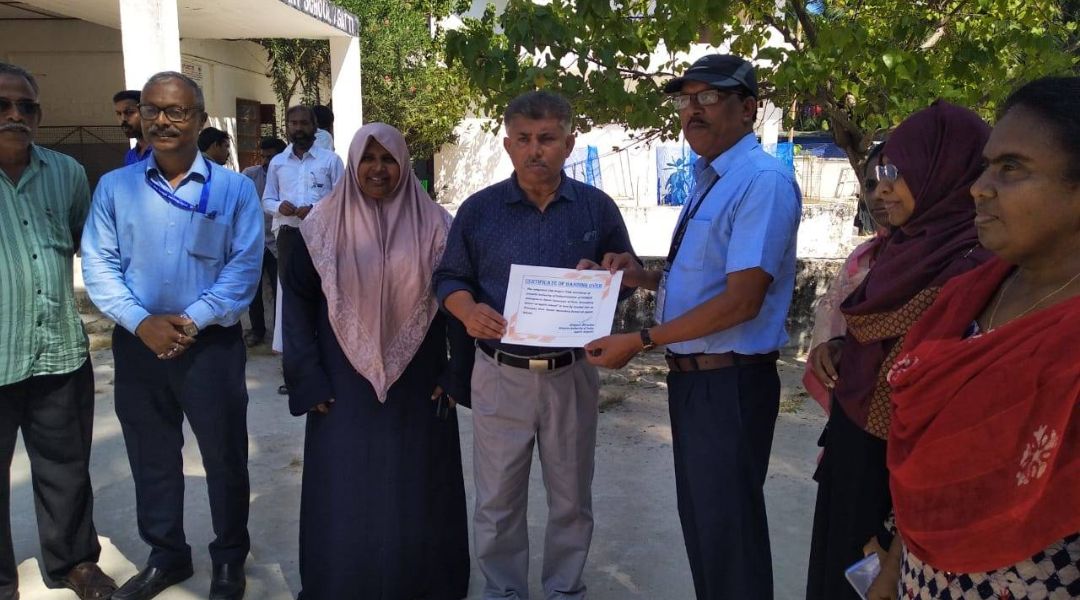
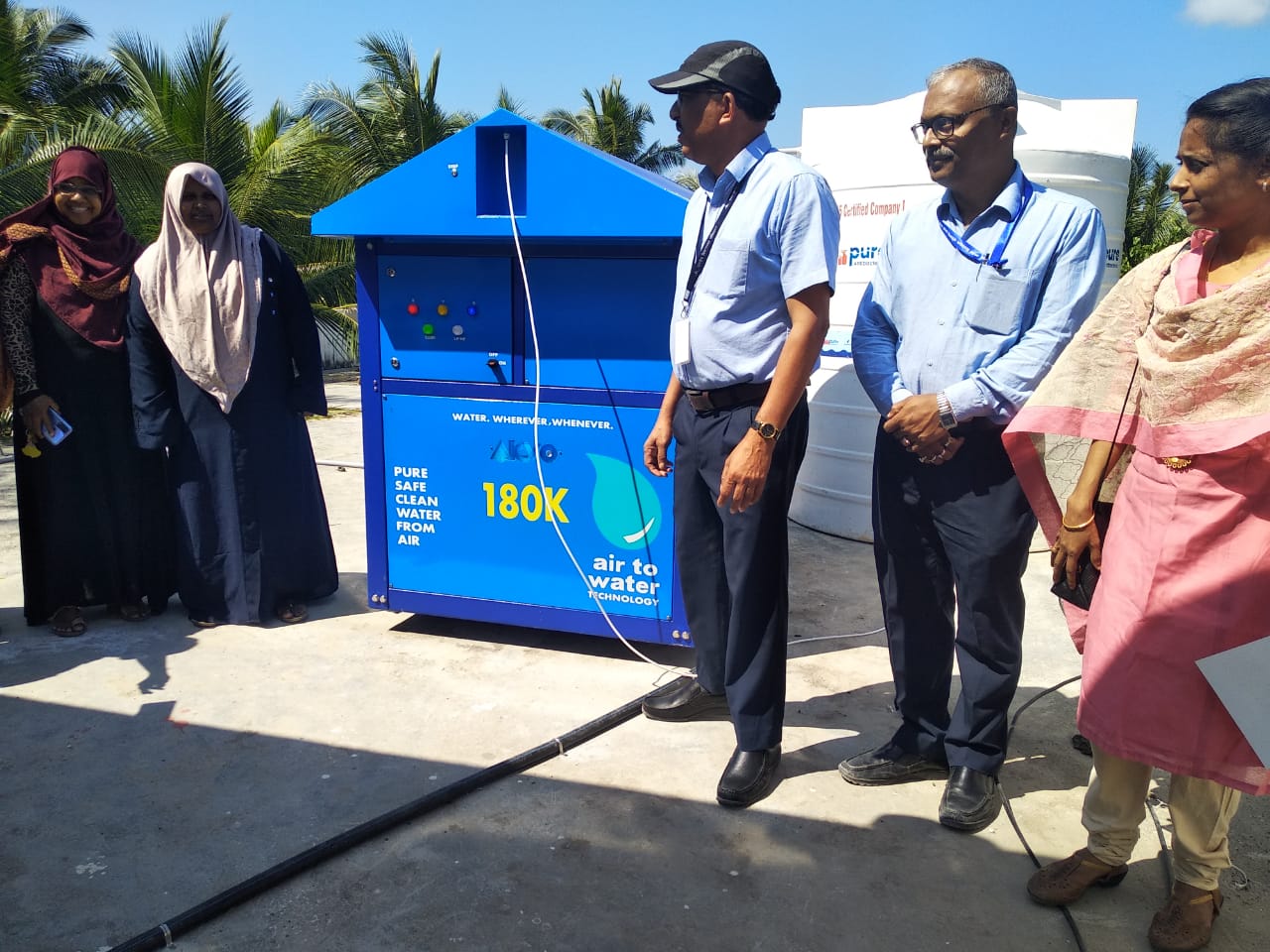
The Airports Authority of India or AAI is a statutory body, under the ownership of, Ministry of Civil Aviation, Government of India. It is responsible for creating, upgrading, maintaining and managing civil aviation infrastructure in India.

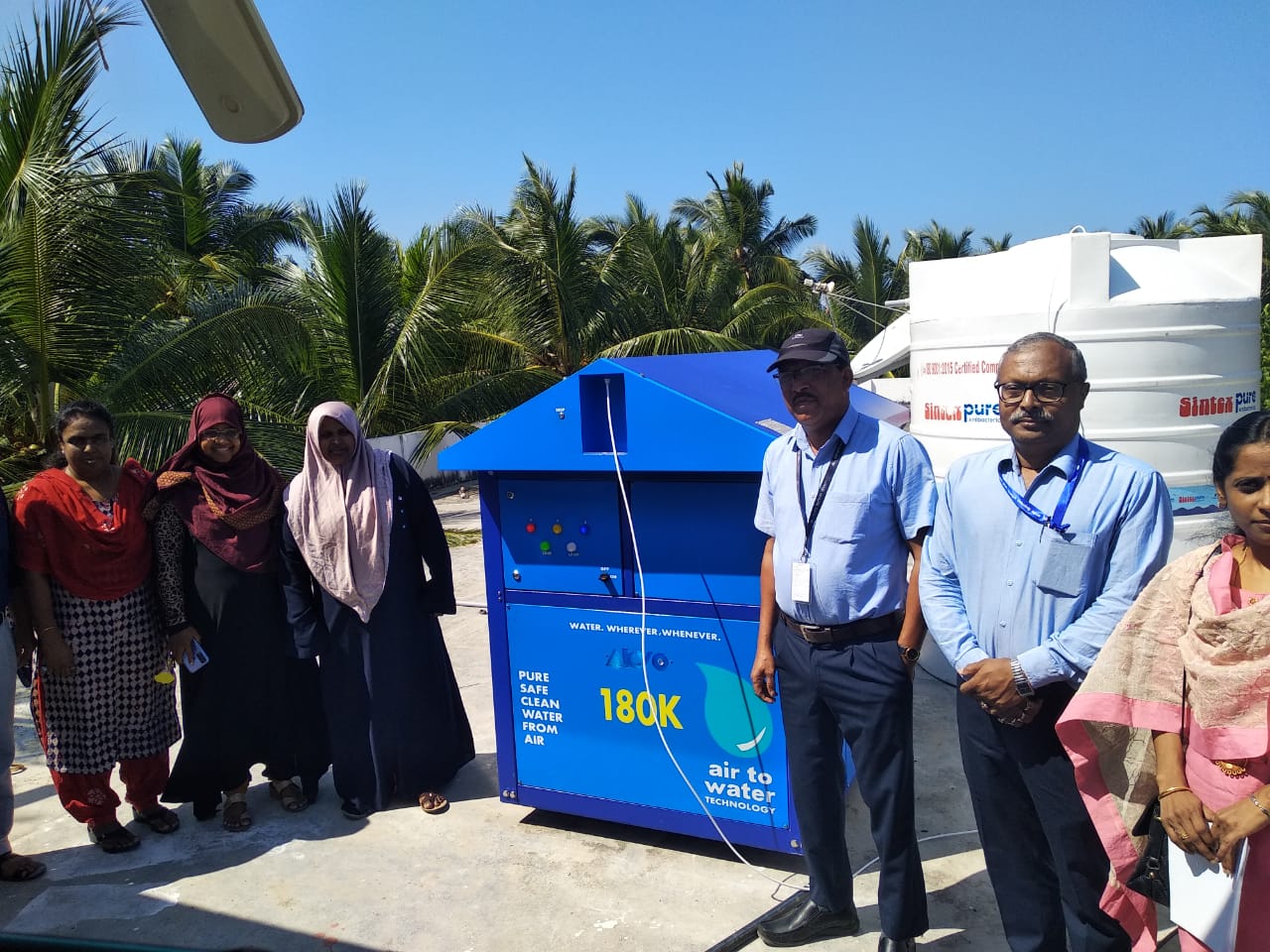
AAI airport at Lakshadweep was looking for a solution to generate water as there were very scarce source of water hence Akvo installed one 500 LPD unit to provide water for their need.

Eco-Intelligent.com

Water is a big crisis in today’s world. It doesn’t matter where you live or how lavishly you live; you are going to face the brunt of the water crisis now or at some point in the future.

The problem remains acute in India and the crisis is only growing. Despite relying on a variety of water resources like rivers, above ground storage structures and groundwater, we are still not able to provide sufficient water to the people of this country to meet their daily requirements. Continue reading “Eco-Intelligent.com”

Clean Future

Akvo Atmospheric Water Systems has been working since 2016 to design and manufacture a product which would utilize the moisture in the air and condense it to produce fresh drinking water.

With an initial investment of Rs 5 crore, bootstrapped to the founding team, it manufactures its products in West Bengal and has been selling them in the market since May 2018.

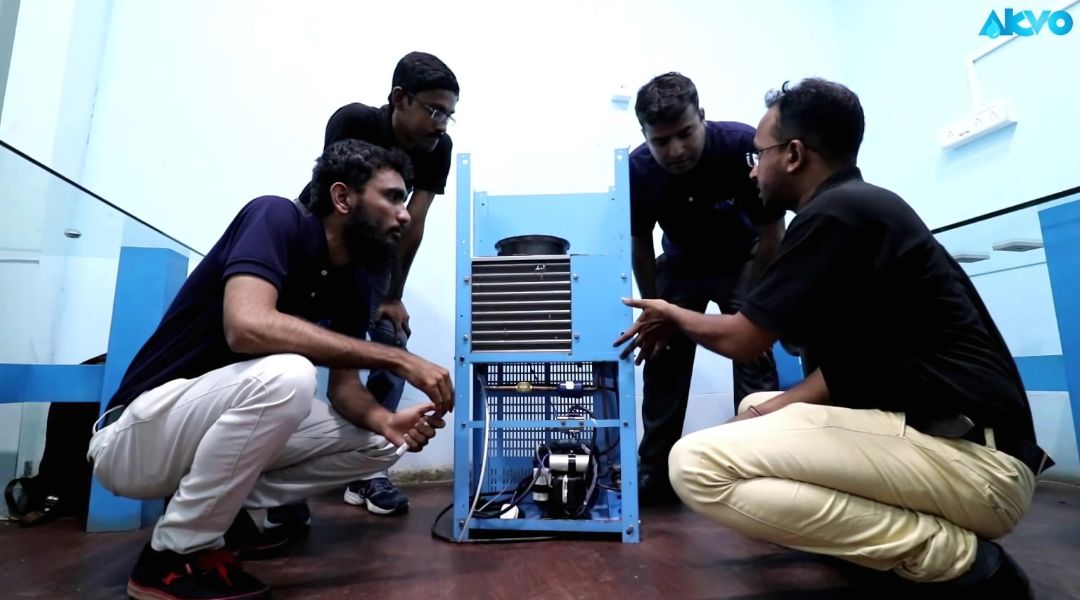
The equipment has a refrigeration system and heat exchangers which help achieve right temperatures to form condensate when air is sucked and brought into the system.

The condensate is then collected and dispensed for use, explains Navkaran Singh Bagga, founder and CEO of the company.

The products are designed to run at temperatures ranging from 10-degree Celsius to 60-degree Celsius with humidity factor of 30-80%, making it a viable model to deploy in coastal and hilly areas, especially in tropical countries that are rich in atmospheric moisture content.

The machines are rated for different run times and generation capacities. For example, one model can run for 24 hours and produce 100 liters in ideal condition.

It draws 250Wh of energy per liter of water generated which also reduces the stress on the grid when runs on power generated from localized renewable sources.

One of the early adopters of this product is Indian Oil refinery in Haldia, near Kolkata. The product has helped decentralize water availability on a massive 300-acre area, enabling workers to access drinking water at six locations.

The Madhya Pradesh government has also taken a 1000-litre system to supply water to Hardua Mangarh village in Damoh district.

The company is also expanding to West Asia. Gulf region will be his major focus in the next couple of years.

Currently, the company has a revenue of around Rs 1.5 crore but with an expanding distribution network and new markets in the Gulf, it expects to hit its target of Rs 12 crore in the coming financial year.

Discover the full story behind Akvo’s innovative journey and its groundbreaking technology here.

India’s Water Crisis Explained

In India, the rate at which groundwater supplies are depleting is shocking. More groundwater is being consumed than the natural processes that replenish them.  It’s not surprising, given the population of the country, that we are the largest users of ground water in the world, just behind China. The 2030 Water Resources Group, made up of private companies, argues that the “water gap” (between insufficient supply and excess demand) in Asia will only close once countries limit the water-intensity of their economies. Continue reading “India’s Water Crisis Explained”

 Akvo Water from Air Pilot Program – Damoh, MP

Hardua Mangarh, a small village in Damoh faces drought on a regular basis and coupled with depleting ground water available, the local Government has been fighting water crisis for the past few years. With no source of water, providing safe drinking water to the local population has become a challenge. 

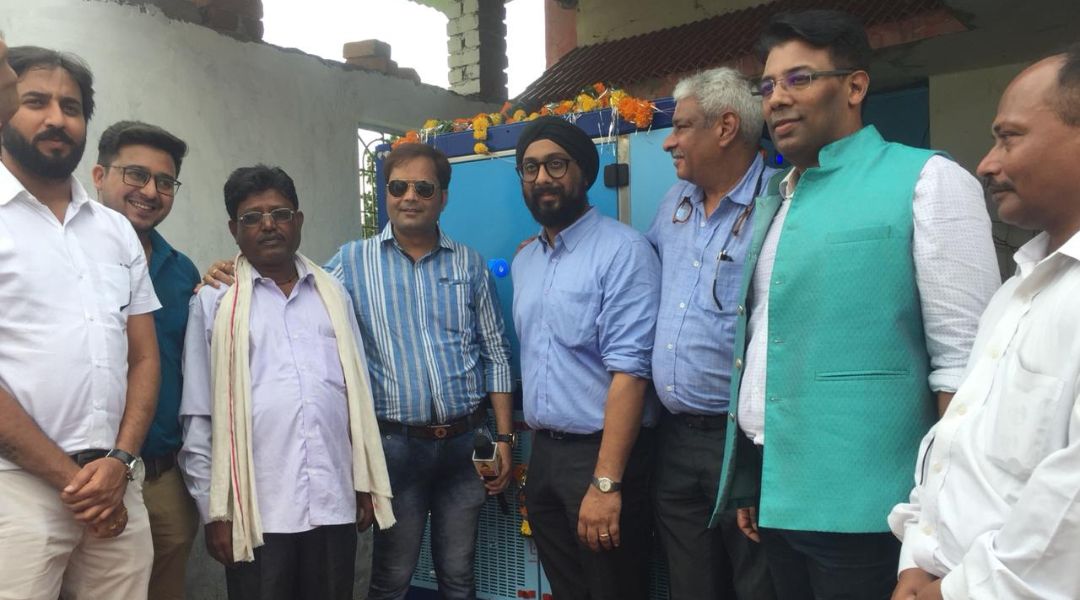
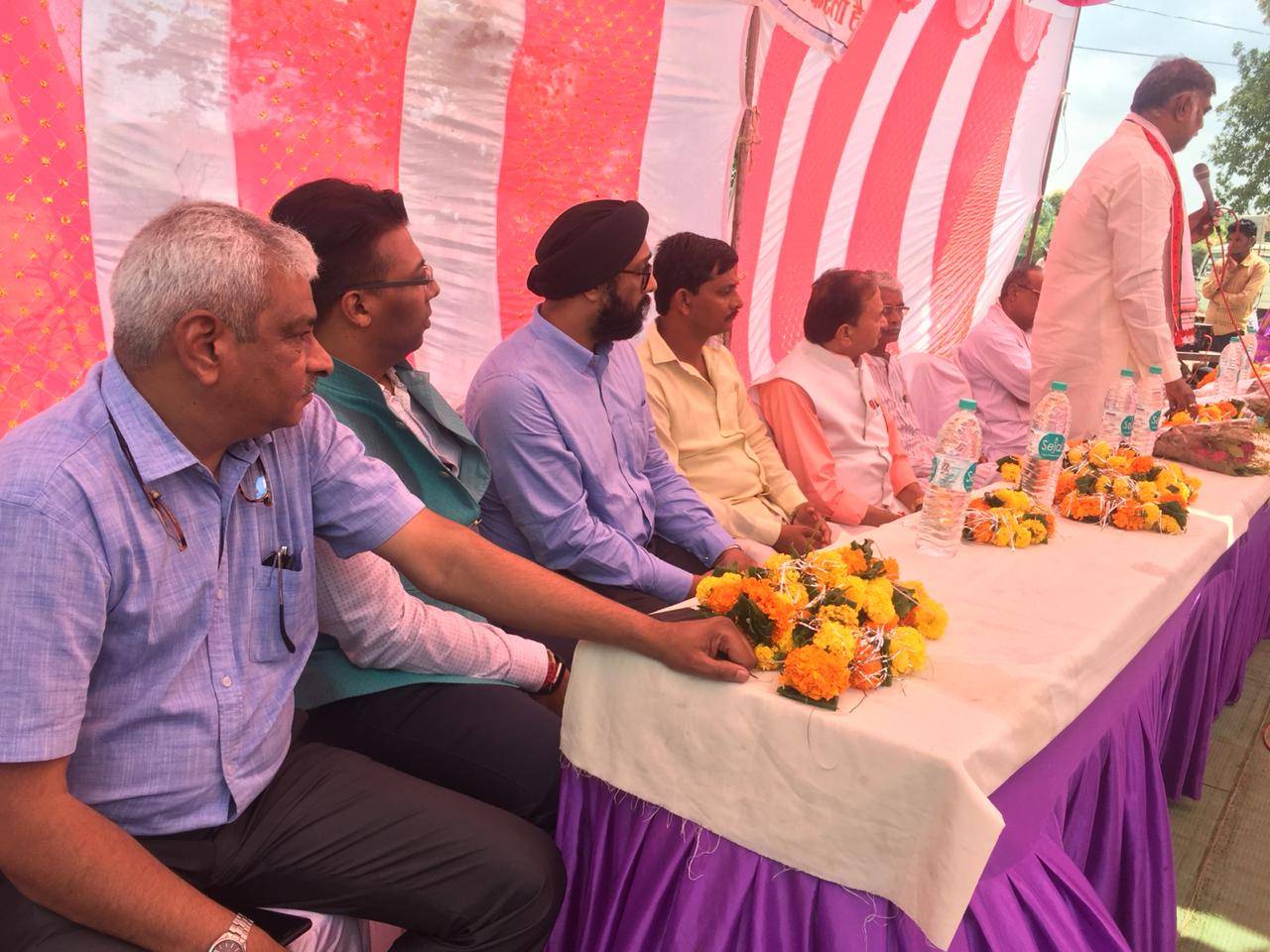
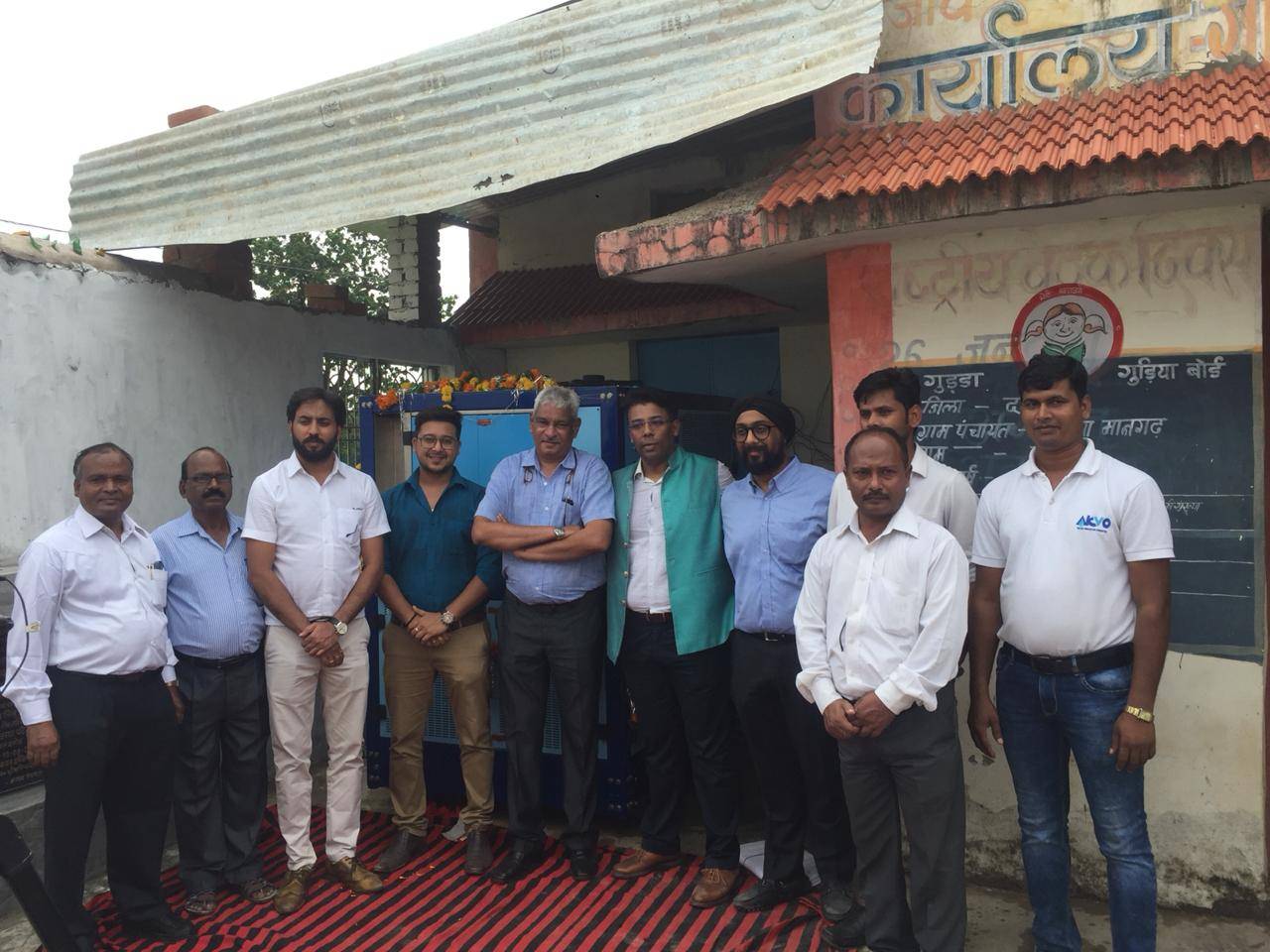
On August 2018, the local government sought Akvo’s Air to water technology to test its water from air machines in a pilot program to meet the drinking water demands. Akvo in coordination with the local authorities installed its Akvo 365K machine, a 1000 Liter of water from air per day machine thus ensuring continuous supply of uninterrupted safe drinking water for local population of Hardua Mangarh.

After the completion of the pilot program more Akvo Atmospheric water generators will be installed in strategic locations to fulfil the drinking water demand.

Berhampur, Odisha

Brahmapur, also known as Berhampur is a city on the eastern coastline of Ganjam district of the Indian state of Odisha in East India, The municipality was looking at some solution to provide safe drinking water to people at prominent places like bus / train stations.  

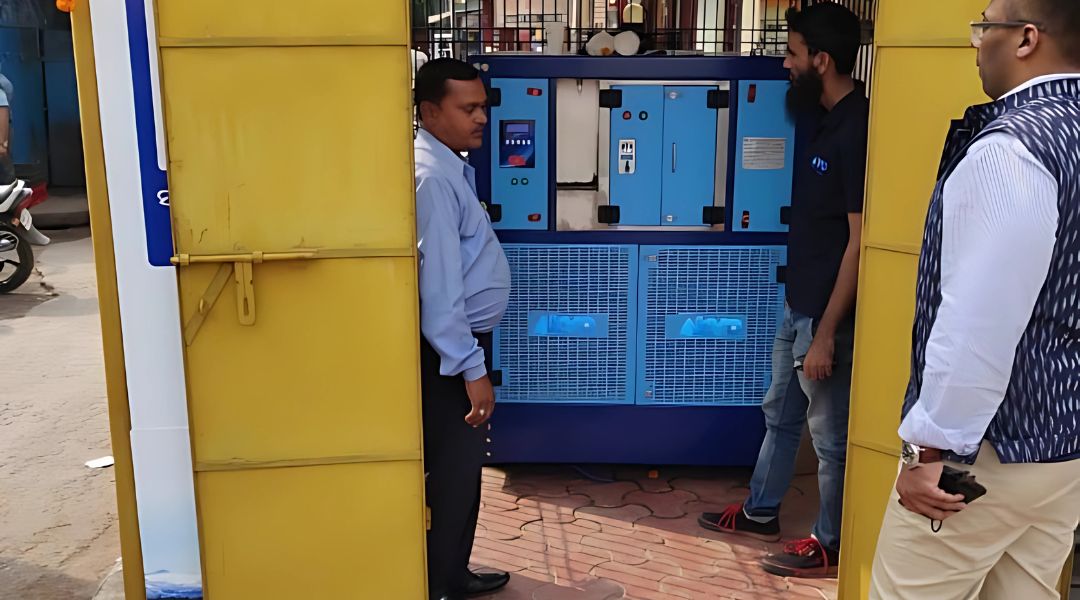
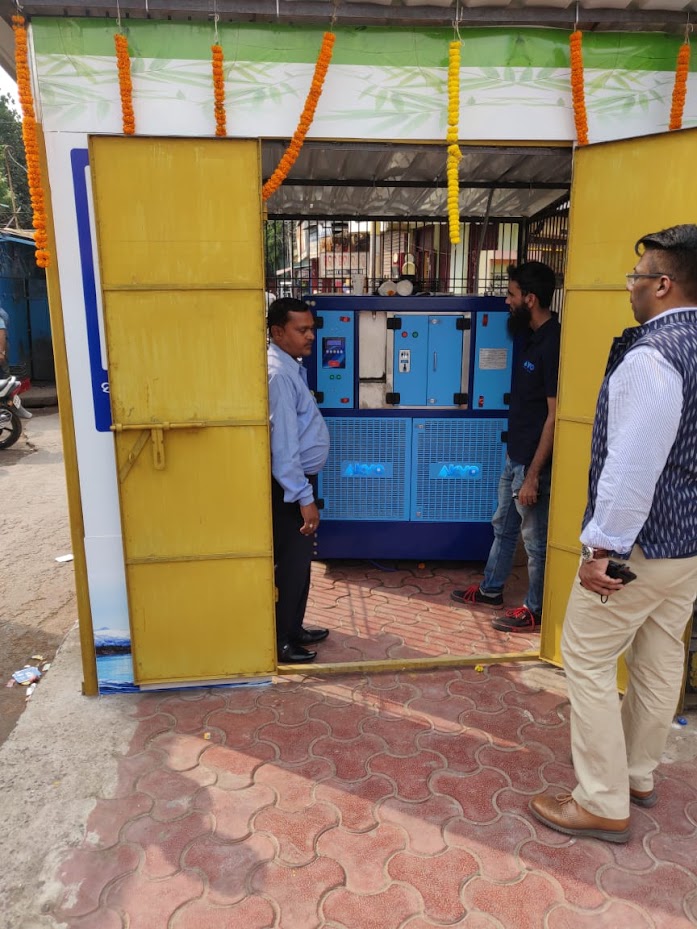
Akvo has deployed the world’s first Air to Water ATM to Berhampur in Odisha with plans of deployment of More units nationwide, where local Civic authorities will be able to provide drinking water to the public without having to provide a source of water, thereby increasing reach and decreasing deployment and infrastructure delays.

Telegraph India

Eye-popping products at EZCC show.

Drinking water out of thin air. That is what one of the stalls claimed to produce with a machine called Atmospheric Water Generator.

WATER FROM AIR

Drinking water out of thin air. That is what one of the stalls claimed to produce with a machine called Atmospheric Water Generator.

“You don’t need any natural or artificial source of water be it a tap, a tank, a pond or a river,” smiled the man at the counter.

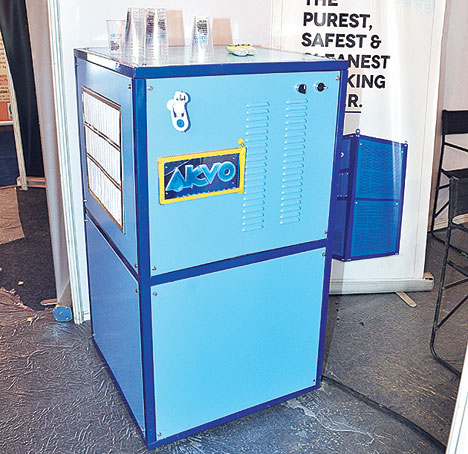
AKVO, a Calcutta-based company, manufactures drinking water using a air-to-water technology which replicates the natural process of condensation by simulating the dew point, which allows it to produce water continuously.

The machine produces water ranging from 30 to 1,000 litres, depending on the product specification, from atmospheric moisture in the air and filters out the dust and micro particles in air through a powerful organic filtrating process. It reportedly has litle maintenance cost, unlike other purifiers.

“Decline in rainfall, depletion of fresh water resources and increase in population are posing great threats to humanity. In the days to come, when we will have to face water scarcity, such a product would be a blessing,” the company official at the stall said.

The machine that produces 30l daily will cost Rs 60-70,000 and will be available in a couple of months. The 100l Akvo is available in the market and costs about Rs 1 lakh. Orders are coming in from Dubai and South Africa, he said.

Read the article here: Telegraph India

India Education Diary

AKVO presents India’s most cost efficient and indigenously manufactured Atmospheric Water Generator

Bhubaneswar: Currently India holds the undesirable title of having the highest number of rural people without access to clean water. Although being home to nearly a sixth of the world’s population, India only gets 4% of the Earth’s fresh water. Already more than half of Asia’s third-biggest economy faces high water stress. By 2030, demand is expected to outstrip supply by around 50%. With scientists and geologists trying to find avenues to arrest the attrition of groundwater and climate change, it is time our Country gets its first indigenously manufactured Atmospheric Water Generator (AWG) technology. Designed by Kolkata, AKVO, a unit of Trishan Exports Pvt. Ltd. Is the vision of second generation entrepreneur, Mr. Navkaran Singh Bagga, Director, AKVO and his team of researchers. The prototype of this new price efficient purifier based on AWG platform was showcased in Kolkata, which will soon be launched along with the industrial machines of AKVO 1000 and AKVO 5000 models across India.

Speaking elaborately about this dream project, Mr. Navkaran Singh Bagga, Director, AKVO, said, “With only 60% of water ready for consumption by 2030, India and rest of the world is staring at a global crisis, unless we care about our environment. The hour has come to try and find sustainable solutions to minimize the use of groundwater and innovate to develop cost efficient technology to provide clean drinking water for mankind. The Indian market is still in its nascent stage when it comes to adopting AWG technology. At AKVO, we are working towards manufacturing the most cost efficient AWG machine indigenously to cater to both industrial and household use. The depleting fresh water reserves along with rapid industrialization in India should augment the demand for AWG products in next few years. Alongside manufacturers need the policy and regulatory support from Government, Municipal bodies and Environment Activists to propose installation of AWGs to address the need of fresh drinking water.”
In line with the vision of the Hon’ble Prime Minister of India, Shri Narendra Modi, AKVO will be manufacturing all the products indigenously in India at their manufacturing unit near Kolkata. The current capacity of the company is 800 Industrial units per Month and will be scaled up to 2000 units over the course of next 6 months. It is the vision of Mr. Navkaran Singh Bagga, who as a second generation entrepreneur from Kolkata has come up with a solution to find answer with resilience required to save undue usage of groundwater and year on year operating and maintenance cost with RO filters. With the Union Government already planning adequate measures to address the depleting groundwater crisis and unavailability of clean drinking water, a product like AKVO is ideal for industrial demand, homes, public and private institutions, defence and a perfect model for natural disasters to aid human need and prevent contamination. The most abundant source of fresh water is the Earth’s atmosphere. AKVO AWG replicates the natural process of condensation by simulating the dew point, which allows it to make water continuously using plug and play method. AKVO AWG machines can generate water entirely depending on the level of humidity and atmospheric temperature which is ideal in Indian conditions for AWG machines to function to its optimum level.

On this momentous occasion, Mr. Harbans Singh Bagga, Managing Director, Trishan Exports Pvt. Ltd. said, “As a responsible Corporate entity this dream project will reduce unnecessary usage of groundwater and give mankind an answer to save the world for future generations.”

 Read the article here: India Education Diary

Sunday Guardian Live

Kolkata entrepreneur generates drinking water from moisture

As the country faces a ground water crisis, a Kolkata-based entrepreneur has come out with a solution to generate water by extracting atmospheric moisture and making it usable for drinking purpose.

AKVO, a unit of Trishan Exports, has developed a prototype which is ready with its commercial production, using Atmospheric Water Generator (AWG) technology, with capacity to produce 1000 litre per day pure water. The company is in the process to start production of equipment for domestic use also.

The equipment run on the basic principle of converting atmospheric vapour into liquid form and purify it further so that it can be used for drinking. “It’s like harvesting humidity when it is in the air,” said director of AKVO Navkaran Singh Bagga, who was in the capital recently, while speaking to this newspaper.

The device consists of a system wherein the water extracted from the atmosphere is subjected to four-stage purification. Some minerals are added in the process to make it sweet to drink. So at the end of the process, the final water is completely safe for drinking and is just like an RO water. The USP of the product is that it uses unlimited source of water, which is natural and abundant and that no separate purification is required. Humidity/moisture is present everywhere. If some moisture at a particular place is used for condensation, moisture of surrounding areas fills in at that place after some time.  Normally, the humidity is around 80% at a temperature of 28 degree Celsius.

A few hotels and organisations in Kolkata have started using the equipment, which Bagga claims is “fully indigenous”. A 1000 litre capacity equipment costs Rs 9 lakh. Right now, the cost of domestic equipment is coming close to about Rs 1 lakh, which according to Bagga, is too costly for domestic consumers. “We are working out ways to cut the cost so that it can be made available at a reasonable price of Rs 35,000 to Rs 40,000. We hope we will be able to do it very soon,” he said.

Bagga is talking to Indian Railways and municipal corporations across the country for installing this equipment which can solve the drinking water problem to a great extent. For water ATMs, this device can be used instead of RO, he said, adding the most abundant source of fresh water is Earth’s atmosphere which should be tapped for our use.

When asked if separate equipment needed to be manufactured as percentage of humidity varies from place to place, he said: “We are trying to customise the product depending on the humidity of a particular location. For example, it will be easier to extract water in places like Kolkata or Chennai because of the presence of high quantity of moisture in the atmosphere, but it will consume more power in dry places like Rajasthan. We are trying to come out with a solution which can work best in low humidity areas.”

Read the article here: Sunday Guardian Live