Startup Talky

Atmospheric Water Generation Is Entering a New Era: Building a Future of Water Independence

The global Atmospheric Water Generator (AWG) market is entering a period of significant growth as businesses, governments and communities look for decentralised and sustainable sources of drinking water. The market is projected to grow from approximately $4.36 billion in 2025 to $4.96 billion in 2026, with expectations of reaching $7.92 billion by 2030. Rising water scarcity, demand for off-grid solutions, renewable-energy integration and the need for greater water security are among the key factors driving this growth.

At the centre of this transition is a simple idea: water does not always have to be transported to where it is needed. It can be produced where it is consumed.

Turning Air Into Drinking Water

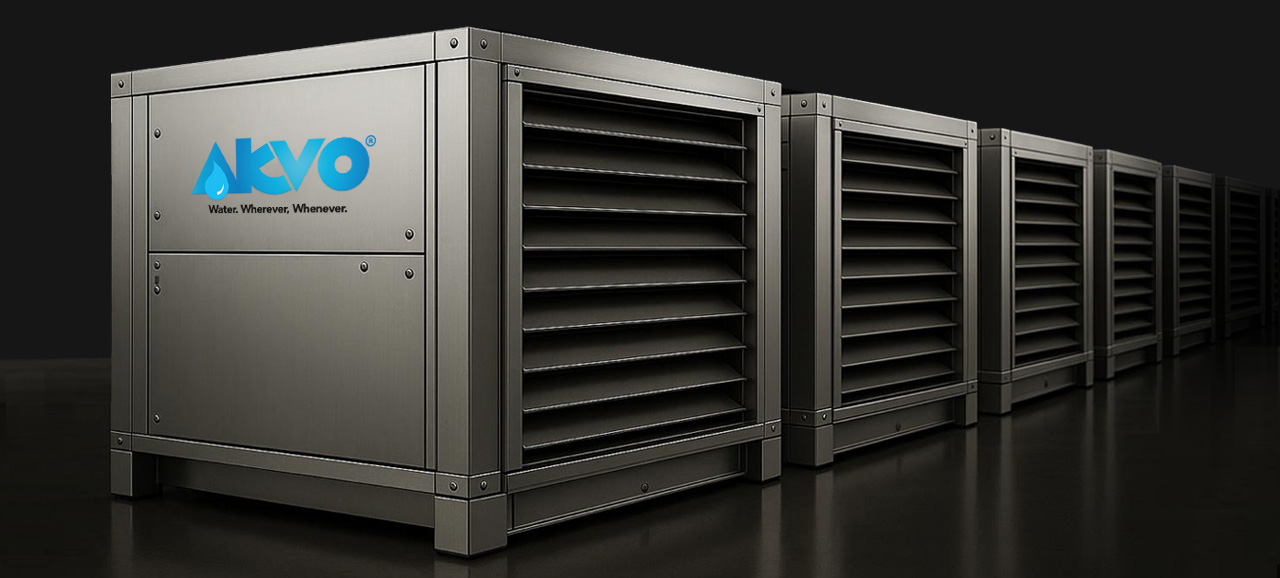
Akvo Atmospheric Water Systems was founded around this principle of water independence. Founded by Navkaran Singh Bagga, the company uses atmospheric water generation technology to extract moisture from the air and convert it into safe drinking water.

The process is based on a familiar natural phenomenon. When humid air comes into contact with a surface cooled below its dew point, moisture condenses into water. Akvo’s systems replicate this process at scale. Air passes over refrigeration coils, where moisture is condensed and subsequently treated through a multi-stage purification process involving sediment filtration, activated carbon, mineralisation and UV treatment.

The technology extends beyond condensation itself. Akvo’s Nimbus OS IoT platform continuously monitors parameters such as humidity, temperature, water yield and filter life, providing real-time visibility into machines deployed across different geographies.

From Water Scarcity to Water Independence

For Navkaran Singh Bagga, the challenge is not simply that the world lacks water. It is that access to water remains dependent on infrastructure and logistics.

Pipelines do not reach every location. Tankers are expensive and unreliable. Borewells can become depleted or contaminated, while bottled water involves a continuous transportation and packaging infrastructure.

Akvo’s approach is therefore to generate water at the point of consumption, reducing dependence on external water supply systems. This philosophy has become the foundation of the company’s vision of water independence.

Expanding Across Global Markets

Akvo’s systems are now deployed in more than 15 countries, serving a range of markets including India, the Gulf, Southeast Asia and East Africa. Demand has been particularly strong in coastal and island regions where humidity is available but conventional freshwater infrastructure can be limited or expensive.

In India, the company has also developed Water on Want (WoW), a water-as-a-service model in which Akvo installs, owns and operates the water-generation plant at a customer’s site, with customers paying for the water they consume. The model is designed for facilities such as factories, hospitals and campuses.

Engineering for Real-World Conditions

Atmospheric water generation is highly dependent on environmental conditions, particularly humidity and temperature. Akvo’s experience in deploying systems across different climates has therefore shaped its engineering approach.

The company’s machines are designed to operate from approximately 25% relative humidity upward, while performing most efficiently at higher humidity levels. In low-humidity environments, systems can be deliberately oversized to maintain committed water output.

Energy efficiency remains another major focus. Akvo’s current Water Blocks operate at approximately 0.29–0.35 kWh per litre depending on conditions, with continued R&D focused on compressor selection, coil design and intelligent control systems. The company has also developed Akvo Helios, a solar-thermal system designed to combine atmospheric water generation with renewable energy, rooftop solar and rainwater harvesting.

Scaling Water Generation Across Communities

Akvo’s enterprise-first strategy has enabled it to build a significant installed base. The company has more than 2,000 systems deployed, with the installed base generating approximately 300,000 litres of water per day—equivalent to roughly 100 million litres annually.

Rather than initially focusing on household appliances, Akvo concentrated on industrial facilities, government programmes, institutions and hospitality properties, where systems can operate continuously at larger capacities.

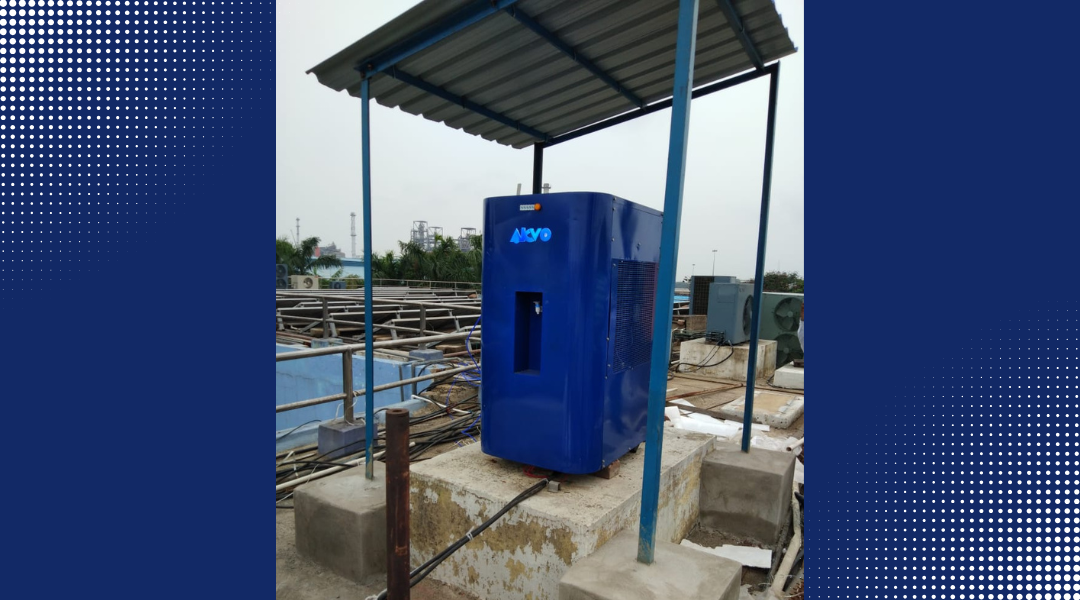
One example is a refinery township in Haldia, where Akvo systems have supplied drinking water to around 900 people continuously for six years. For the company, such long-term deployments demonstrate what water independence can mean in practical terms: reliable access without daily dependence on tankers or municipal supply.

From Machines to Water as a Service

The market for atmospheric water generation is also changing. Customers are increasingly looking beyond purchasing equipment and towards guaranteed outcomes.

In India, this shift has accelerated the adoption of Akvo’s Water on Want model, while international markets continue to see a combination of direct capital purchases and distribution partnerships. The focus is increasingly on the cost of water, uptime and reliable supply rather than simply the technology itself.

This represents a broader evolution of AWG—from an emerging technology to a potential infrastructure solution.

The Road Ahead

For atmospheric water generation to become a mainstream source of drinking water, three factors will be critical: lower cost per litre, greater industry credibility and models that make the technology accessible as a service.

Energy efficiency will continue to play a central role, particularly as atmospheric water systems become increasingly integrated with solar energy. At the same time, standards, certifications and transparent performance data will be essential for building trust in the category.

Navkaran’s vision extends beyond individual machines. He sees the future of air-to-water technology in shared infrastructure—systems serving apartment communities, schools, villages, campuses and other groups through decentralised water services.

Over the next three to five years, Akvo’s priorities are centred on expanding its recurring water-as-a-service business, deepening its international presence, improving energy efficiency and building the organisational capabilities required for sustainable growth.

The larger objective remains unchanged: to make reliable drinking water available where people need it, without depending entirely on infrastructure that may not reach them.

Read the Full Interview

This article is based on Navkaran Singh Bagga’s detailed interview with StartupTalky, covering Akvo’s technology, international expansion, challenges, water-as-a-service model and long-term vision.


Read the full interview on StartupTalky

Exchange 4 Media

Akvo has awarded its creative mandate to The Voice Company, a hybrid advertising and content agency based out of Gurgaon for its phased out launch. 

Akvo, a startup brand that’s in the business of manufacturing atmospheric water generators for large factories and offices has launched its Akvo Pod range for homes. The Voice Company, founded by Bodhisatwa Dasgupta in 2020, specializes in creating voices for emerging brands, through various mediums. The company has worked closely with Milkbasket, Ibis Hotels, MG Motor, Fahrenheit, Crossbeats and a few other accounts. 

Navkaran Singh Bagga, founder of Akvo says ‘The fact that drinking water is soon going to be a scarce resource isn’t new information anymore. So the question is, where is the water going to come from when everything else dries up? The air. And that’s what our proprietary technology does – it collects the moisture from the air, adds the essential minerals that are needed by the human body, and converts it into drinking water. When I was looking for partners for the second phase of our growth, the ideas from The Voice Company really stood out in how simple they were, and how interesting, from a content perspective.’ 

around the films in record time, I think we have a nice little launch planned.’

https://www.youtube.com/embed/f4syORMBfyI
https://youtu.be/GCkfWAacYiM
https://www.youtube.com/embed/LCIM5E_CX0E

View Article

Why is Akvo the Future Of Water?

As we try to envision a future for mankind on Mars, there is an urgent need to make our planet once again inhabitable for millions. For starters, everyone, regardless of where they live or how little they make, should have that most basic of human necessities — clean water.

There are 785 million people who do not get drinking water. And about half a million people die of diarrhea caused by contaminated drinking water every year, according to the World Health Organization. By 2030, 700 million people could be displaced because of intense water shortage, according to the UN.

The water problems of different regions call for a variety of solutions, and among the most talked-about innovations is making water out of thin air, literally.

At Akvo, our endeavour is to tackle the water issues experienced worldwide by providing environmentally sustainable solutions that minimize the use of groundwater and develop innovative cost efficient technology to provide clean and safe water for all.

Akvo® is clean tech company and a leader in the design and manufacture of a large range of atmospheric water generators (AWG) to provide a solution to global water needs. Our Atmospheric Water Generators are ideal for areas that are affected by water scarcity or water contamination as they require no water source to produce healthy, purified drinking water from the atmosphere.

With only 60% of the world’s water ready for consumption by 2030, Akvo, was born out of the idea to provide a solution to curb and tackle the global water scarcity by providing a cost effective machine that uses the least amount of power to generate the most amount of water – with zero environmental impact.

Air-to-water technology is the process of converting water vapor in the air (humidity) to water. Akvo atmospheric water generators replicates this natural process of condensation by simulating the dew point, which allows it to make water continuously, even in low humidity conditions.

What is unique about this technology?

The atmosphere contains 37.5 Million Billion Gallons of water. This is part of the hydrological cycles which maintains air and water vapour making this a virtually unlimited source of water. The most abundant source of fresh water is the Earth’s atmosphere. When atmospheric humidity condenses, it falls as rain. Akvo® replicates this natural process of condensation by simulating the dew point, which allows it to make water continuously, even in low humidity conditions. Our unique technology uses optimised dehumidification techniques to extract and condense moisture in the air to produce healthy, purified drinking water.

With an unlimited source of fresh water in the atmosphere and coupled with our technology to harness it, Akvo truly is the future of water with massive potential to create unlimited drinking water.


5 Akvo Machines installed at Indian Oil, Haldia.

Inaugurating the Akvo Machine at the Indian Oil Corporation Ltd in Haldia. Installed four Akvo 110k thats makes 300 litres of water per day & one Akvo 36k which makes 100 litres of water per day. Thereby, providing safe, clean drinking water that is created from air to over 1000 employees at Indian Oil Refinery in Haldia.  Continue reading “5 Akvo Machines installed at Indian Oil, Haldia.”

How water is made from air

The most abundant source of fresh water is the Earth’s atmosphere. When atmospheric humidity condenses, it falls as rain. Akvo® atmospheric water generators use a similar process  known as the air-to-water technology. Air-to-water technology is the process of converting water vapor in the air (humidity) to water. Akvo® replicates this natural process of condensation by simulating the dew point, which allows it to make clean drinking water continuously. Continue reading “How water is made from air”

Telegraph India

Eye-popping products at EZCC show.

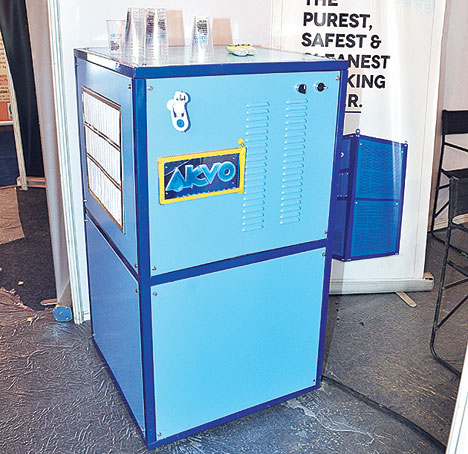
Drinking water out of thin air. That is what one of the stalls claimed to produce with a machine called Atmospheric Water Generator.

WATER FROM AIR

Drinking water out of thin air. That is what one of the stalls claimed to produce with a machine called Atmospheric Water Generator.

“You don’t need any natural or artificial source of water be it a tap, a tank, a pond or a river,” smiled the man at the counter.

AKVO, a Calcutta-based company, manufactures drinking water using a air-to-water technology which replicates the natural process of condensation by simulating the dew point, which allows it to produce water continuously.

The machine produces water ranging from 30 to 1,000 litres, depending on the product specification, from atmospheric moisture in the air and filters out the dust and micro particles in air through a powerful organic filtrating process. It reportedly has litle maintenance cost, unlike other purifiers.

“Decline in rainfall, depletion of fresh water resources and increase in population are posing great threats to humanity. In the days to come, when we will have to face water scarcity, such a product would be a blessing,” the company official at the stall said.

The machine that produces 30l daily will cost Rs 60-70,000 and will be available in a couple of months. The 100l Akvo is available in the market and costs about Rs 1 lakh. Orders are coming in from Dubai and South Africa, he said.

Read the article here: Telegraph India

Fresh Water Pollution

Less than three percent of earth’s water comes from fresh water sources and is virtually the only source for all the drinking water. Continue reading “Fresh Water Pollution”