TimesTech

In an interview with TimesTech, Navkaran Singh Bagga, Founder & CEO of Akvo Atmospheric Water Systems discusses the rising importance of decentralized water solutions in a climate-challenged world. He highlights how atmospheric water generation, IoT integration, and Water-as-a-Service models are reshaping water access. The conversation also explores scalability challenges, sustainability goals, and Akvo’s mission to address global water scarcity through innovation.

TimesTech: Akvo has been at the forefront of atmospheric water generation — how do you see decentralized water systems evolving as a core component of climate-resilient infrastructure globally?

Navkaran: Water infrastructure was constructed for climate conditions which have shifted. Reservoir levels are dropping, aquifers are running out of water, and we cannot build enough pipelines fast enough to keep up with the growth in cities. As a result, we will see more and more and more decentralised water systems (like atmospheric water generation or rainwater collection; reuse of on-site wastewater) be used in addition to municipal supplies as part of an overall plan for resilience, but rather than serving as a replacement system. Over the next 10 years, all of the major components of infrastructure (schools, hospitals, data storage centres, and industrial sites) will be designed with a decentralised water programme built-in at the point of use. I am already seeing the change in all of the 15 countries in which we work.

TimesTech: Your technology transforms air into drinking water — what have been the biggest technological and environmental challenges in scaling AWG systems across diverse geographies?

Navkaran: The core technical challenge is performance under highly variable ambient conditions. Output is environment-dependent i.e. best in warm, humid air and falling sharply in cold or dry zones. So, every geography requires honest climatic modelling before deployment. We have engineered around this through refrigerant optimisation, heat exchanger design and IoT-driven controls that adapt to real-time conditions. Environmentally, the bigger challenge has been energy intensity. Pairing AWG with rooftop solar, and improving the coefficient of performance generation after generation, is how we keep the litre-per-kilowatt-hour equation moving in the right direction. Transparency with customers on all of this is non-negotiable.

TimesTech: With IoT integration becoming central to infrastructure, how is Akvo leveraging intelligent technologies to transform water from a basic utility into smart, data-driven infrastructure?

Navkaran: At Akvo, we treat every machine as a connected asset. Our platform, Nimbus OS, runs across our fleet and gives us real-time visibility into run hours, litres produced, energy consumed, ambient temperature and humidity, filter health and component performance. That data does three things: it enables predictive maintenance before failures occur, lets clients see their environmental impact daily in litres produced and plastic bottles avoided, and allows us to continuously improve product design based on field reality. Water, once instrumented, stops being a silent utility and becomes accountable infrastructure exactly what industrial and CSR clients increasingly demand.

TimesTech: The concept of “Water-as-a-Service” is gaining traction — how do you see this model reshaping water access for industries and urban ecosystems in the coming years?

Navkaran: Water-as-a-Service fundamentally changes who carries the risk. Instead of a client making a large capital purchase and hoping the technology performs, a partner like Akvo invests in the machine and the client pays only for the water actually consumed. That single shift unlocks schools, hospitals, factories and housing societies that would never sign off on a capex line. It also forces us, the provider, to keep uptime and quality high because revenue depends on it. Over the coming years this model will do for decentralised water what leasing did for commercial real estate making access routine, predictable and measurable.

TimesTech: Akvo has already achieved significant global scale, generating millions of litres of water annually — what strategies have been key in balancing sustainability, affordability, and scalability?

Navkaran: The most significant decisions made by the organisation were as follows: the main production facility is located in Chennai and is run by our company instead of Outsourcing; all products manufactured will be of the same design allowing for a variety of market applications based on the same design; we will be partnering with local companies in each of the markets we operate in through joint venture rather than exporting our products from across the globe. A successful sustainable business is only possible when the supply chain, product design and go to market strategy are all developed to support one another.

TimesTech: As someone with a diverse entrepreneurial background, what inspired your transition into climate-tech, and how do you envision Akvo’s role in addressing global water scarcity over the next decade?

Navkaran: My previous business experience has shown me the disciplines of manufacturing, developing markets through exports, and growing during the inevitable downturns. I would like to apply that operational strength to the fields of climate technology and water. Water shortage is not just a future concern, but an active challenge for hundreds of millions of people around the world today. Solutions must be of sufficient industrial scale and commercial grade, rather than a product of goodwill. The goal is for Akvo to become a portable, dependable factor in achieving global water transformation over the next ten years, found in nearly every country, respected by both businesses and governments, and transparent about the capabilities of its technology.
Original article

The Future of Water Sustainability and How Akvo is Pioneering Change

Water is the foundation of life, yet over 2 billion people worldwide lack access to safe drinking water. As climate change intensifies and water resources become increasingly scarce, the need for innovative, sustainable solutions has never been greater. The future of water sustainability lies in harnessing new technologies, reducing dependency on depleting sources, and ensuring equitable access. One such revolutionary innovation leading the way is atmospheric water generation (AWG)—the ability to extract pure, drinkable water from the air.

The Water Crisis: A Growing Global Concern

With rising global temperatures, droughts, groundwater depletion, and pollution are accelerating the water crisis. Traditional sources such as rivers, lakes, and underground aquifers are under immense stress due to urbanization and over-extraction. The UN predicts that by 2025, half of the world’s population will live in water-stressed areas. The question is no longer whether we should act—but how quickly we can adopt solutions that can safeguard future generations.

Innovation as the Key to Sustainable Water Access

While desalination and water recycling have played a role in addressing shortages, they come with high energy costs and environmental concerns. Atmospheric Water Generators (AWGs) present a sustainable, decentralized alternative by pulling moisture from the air and converting it into safe, potable water—without exploiting existing water sources. This breakthrough technology is not just a concept; it’s a reality reshaping water accessibility worldwide.

Akvo’s Role in Shaping the Future of Water Sustainability

At the forefront of this transformation is Akvo Atmospheric Water Generators, a brand dedicated to delivering clean water from the air, anytime and anywhere. Akvo’s technology is designed for households, businesses, and communities that need a reliable, sustainable, and independent water source. Here’s how Akvo is pioneering change:

1. Sustainable & Self-Sufficient Water Generation

Unlike conventional water sources that rely on pipelines or reservoirs, Akvo’s plug-and-play systems extract water directly from the humidity in the air, making it ideal for drought-prone and remote areas. This significantly reduces the pressure on overburdened freshwater supplies.

2. Energy-Efficient & Eco-Friendly Technology

Akvo’s AWGs are designed to minimize energy consumption, using advanced filtration and purification processes to produce high-quality drinking water without the carbon footprint of bottled water production or transportation.

3. Disaster Relief & Emergency Water Solutions

In times of natural disasters, Akvo’s technology offers a lifeline for communities without access to safe drinking water. Portable AWG units can be deployed in disaster-stricken areas, providing immediate relief without the logistical challenges of transporting bottled water.

4. Corporate & Residential Sustainability

From hotels and offices to eco-conscious homes, businesses and individuals are adopting Akvo’s solutions to reduce water wastage and reliance on municipal water supply. This shift contributes to a more resilient, sustainable future where water security is not dependent on shrinking natural reserves.

The Road Ahead: A Water-Secure Future

As we look ahead, water sustainability will require multi-faceted solutions, including policy reforms, conservation efforts, and technological innovation. Atmospheric Water Generation is poised to become a key component of this sustainable future, ensuring that clean water is accessible, affordable, and environmentally responsible.

Akvo is not just providing a product; it is pioneering a movement towards water independence. By leveraging cutting-edge technology, Akvo is proving that the future of water sustainability is not about scarcity—it’s about innovation and accessibility.

The question is: Are we ready to embrace this future?

The Hindu Business Line

Akvo Atmospheric Water Systems Announces Commercial Launch of its Water-on-Want Initiative in Tamil Nadu

Akvo Atmospheric Water Systems Pvt Ltd, a leading water technology company, has announced the commercial launch of its Water-on-Want (WoW) initiative in Tamil Nadu for corporate clients. This innovative model is based on an OPEX-driven Build Own Operate Transfer (BOOT) contract, allowing businesses to access Akvo’s water generation technology with zero upfront capital investment (CAPEX).

A Sustainable & Cost-Effective Water Solution

After an extensive 18-month pilot phase, the WoW initiative has been optimized to help corporations meet their daily water needs in a sustainable, cost-effective, and risk-free manner. With a minimum daily offtake of 500 litres per day (LPD), this initiative is set to redefine corporate water sourcing.

How the OPEX BOOT Model Works

Unlike traditional water procurement methods, the OPEX BOOT model ensures that corporations do not need to purchase or maintain any equipment. Instead, clients pay a variable charge based on actual water consumption, making the process flexible and financially viable. Akvo retains ownership, installation, maintenance, and operation of the Atmospheric Water Generators (AWGs) throughout the contract period, ensuring a seamless, hassle-free experience for businesses.

A Step Towards Sustainable Corporate Water Management

The Water-on-Want initiative aligns with corporate sustainability goals, enabling businesses to reduce their dependence on groundwater and other depleting sources. By utilizing Akvo’s cutting-edge AWG technology, companies can contribute to environmental conservation while ensuring a reliable water supply.

With this launch, Akvo is setting new benchmarks in sustainable water solutions for the corporate sector, reinforcing its commitment to innovative and responsible water management.

Read the full article here

Hindustan Times

The global water crisis, exacerbated by climate change, urbanization, and population growth, requires immediate and innovative action. Navkaran Singh Bagga, CEO & Founder of AKVO, highlights how technology is reshaping water management for a sustainable future. Digital tools like IoT sensors, satellite imagery, and AI-driven analytics enable real-time monitoring and predictive insights, allowing water managers to address issues before they escalate. Circular water economies and advanced wastewater treatment further contribute by transforming waste into reusable water, reducing reliance on dwindling freshwater sources.

Equally groundbreaking is Atmospheric Water Generation (AWG), which harnesses moisture from the air to produce safe drinking water, even in arid regions. Precision agriculture and smart irrigation optimize water use in farming, addressing a sector responsible for 70% of global water withdrawals. Achieving global water resilience, however, requires more than technology; collaborative ecosystems, supportive policies, and community empowerment are critical. By leveraging innovation, fostering partnerships, and ensuring equitable access, we can transition from crisis to sustainability.

Read the full article here.

India Today

Sustainable Water Management Strategies by Akvo

India faces a growing water crisis, with 70% of its water polluted (NITI Aayog). At Akvo, we believe clean water is essential for public health, environmental restoration and economic growth. It is key to building a sustainable, pollution-free India.

Our Founder & CEO, Navkaran Singh Bagga, outlines strategies for sustainable water management:

Harnessing Atmospheric Water Generation (AWG) Technology

Akvo’s Water Block extracts clean drinking water directly from the air, providing a decentralized, eco-friendly solution. Modular and IoT-enabled, it can be deployed in urban rooftops, rural schools, and remote areas, reducing dependence on groundwater.

Circular Water Management

Promoting water reuse through treatment and recycling ensures minimal waste and sustainable water use across agriculture, industries and households.

Community-Centric Solutions

Empowering communities through:

  • Water User Associations
  • Micro-Irrigation
  • Rainwater Harvesting

These grassroots initiatives ensure efficient water management and long-term impact.

Policy and Public-Private Collaboration

Strong policies like Jal Shakti Abhiyan must integrate technologies like AWGs. Public-private partnerships can accelerate infrastructure development and sustainable water solutions.

Education and Awareness

Raising awareness about water conservation helps change behaviors – reducing waste, encouraging rainwater harvesting and promoting sustainable practices.

Conclusion

At Akvo, we are committed to delivering innovative solutions like the Water Block to secure clean water for all and build a pollution-free future.

Read the full article here

Addressing a Global Challenge with Innovation!

Our world faces an urgent water crisis, affecting billions. It’s a scenario that requires immediate action, innovative thinking, and global collaboration. Inspired by the ancient concept of ‘Akrasia’ — the act of knowing what is right but not acting upon it — we are determined to bridge the gap between knowledge and action.

In this video, Navkaran Singh Bagga, CEO of Akvo Atmospheric Water Systems discusses the harsh reality of water scarcity, the universal need for sustainable solutions, and how Akvo Atmospheric Water Systems is rising to meet this challenge. The Atmospheric Water Generation Systems represents more than just technological innovation; they are a beacon of hope, turning air into life-sustaining water.

Let’s move from inaction to impact, from scarcity to abundance. Share your thoughts, your actions, and let’s spread the word.

Together, we can create a future where access to clean water is a reality for all.

https://www.youtube.com/watch?v=zMYCWhGrPn4

Why is Akvo the Future Of Water?

As we try to envision a future for mankind on Mars, there is an urgent need to make our planet once again inhabitable for millions. For starters, everyone, regardless of where they live or how little they make, should have that most basic of human necessities — clean water.

There are 785 million people who do not get drinking water. And about half a million people die of diarrhea caused by contaminated drinking water every year, according to the World Health Organization. By 2030, 700 million people could be displaced because of intense water shortage, according to the UN.

The water problems of different regions call for a variety of solutions, and among the most talked-about innovations is making water out of thin air, literally.

At Akvo, our endeavour is to tackle the water issues experienced worldwide by providing environmentally sustainable solutions that minimize the use of groundwater and develop innovative cost efficient technology to provide clean and safe water for all.

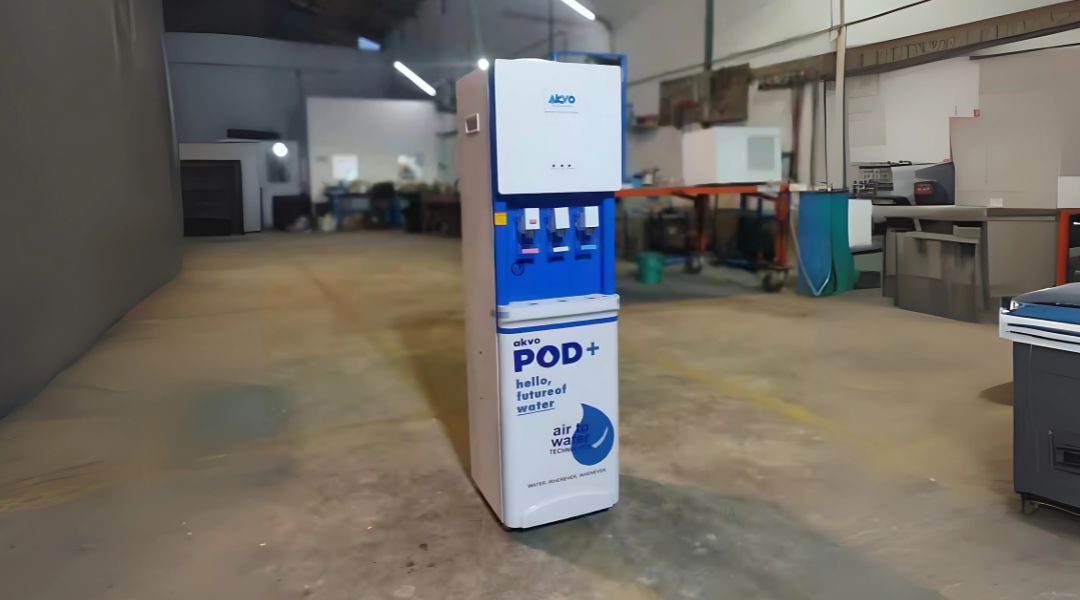
Akvo® is clean tech company and a leader in the design and manufacture of a large range of atmospheric water generators (AWG) to provide a solution to global water needs. Our Atmospheric Water Generators are ideal for areas that are affected by water scarcity or water contamination as they require no water source to produce healthy, purified drinking water from the atmosphere.

With only 60% of the world’s water ready for consumption by 2030, Akvo, was born out of the idea to provide a solution to curb and tackle the global water scarcity by providing a cost effective machine that uses the least amount of power to generate the most amount of water – with zero environmental impact.

Air-to-water technology is the process of converting water vapor in the air (humidity) to water. Akvo atmospheric water generators replicates this natural process of condensation by simulating the dew point, which allows it to make water continuously, even in low humidity conditions.

What is unique about this technology?

The atmosphere contains 37.5 Million Billion Gallons of water. This is part of the hydrological cycles which maintains air and water vapour making this a virtually unlimited source of water. The most abundant source of fresh water is the Earth’s atmosphere. When atmospheric humidity condenses, it falls as rain. Akvo® replicates this natural process of condensation by simulating the dew point, which allows it to make water continuously, even in low humidity conditions. Our unique technology uses optimised dehumidification techniques to extract and condense moisture in the air to produce healthy, purified drinking water.

With an unlimited source of fresh water in the atmosphere and coupled with our technology to harness it, Akvo truly is the future of water with massive potential to create unlimited drinking water.


The land where rivers are worshiped as goddesses, but not respected.

Cry of a River. The trouble with India’s toilets and drinking water: The land where rivers are worshiped as goddesses, but not respected.
This documentary talks about the real truth and how we are bent on destroying our own water security.

Technological Innovation Reaches Chennai

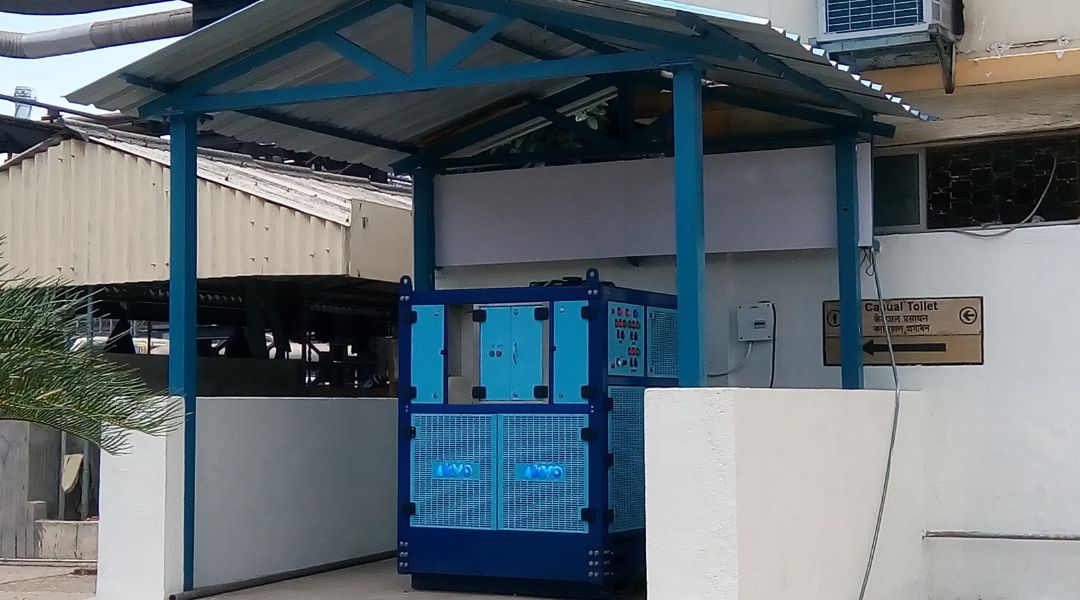
AKVO Atmospheric Water System Pvt. Ltd sets up the 36K machine at Nalmanam, Chennai. Nalmanam is and NGO that works toward uplifting the lives of underprivileged women and children of the society through better living conditions in education, health and economy.
Continue reading “Technological Innovation Reaches Chennai”

Clean Future

Akvo Atmospheric Water Systems has been working since 2016 to design and manufacture a product which would utilize the moisture in the air and condense it to produce fresh drinking water.

With an initial investment of Rs 5 crore, bootstrapped to the founding team, it manufactures its products in West Bengal and has been selling them in the market since May 2018.

The equipment has a refrigeration system and heat exchangers which help achieve right temperatures to form condensate when air is sucked and brought into the system.

The condensate is then collected and dispensed for use, explains Navkaran Singh Bagga, founder and CEO of the company.

The products are designed to run at temperatures ranging from 10-degree Celsius to 60-degree Celsius with humidity factor of 30-80%, making it a viable model to deploy in coastal and hilly areas, especially in tropical countries that are rich in atmospheric moisture content.

The machines are rated for different run times and generation capacities. For example, one model can run for 24 hours and produce 100 liters in ideal condition.

It draws 250Wh of energy per liter of water generated which also reduces the stress on the grid when runs on power generated from localized renewable sources.

One of the early adopters of this product is Indian Oil refinery in Haldia, near Kolkata. The product has helped decentralize water availability on a massive 300-acre area, enabling workers to access drinking water at six locations.

The Madhya Pradesh government has also taken a 1000-litre system to supply water to Hardua Mangarh village in Damoh district.

The company is also expanding to West Asia. Gulf region will be his major focus in the next couple of years.

Currently, the company has a revenue of around Rs 1.5 crore but with an expanding distribution network and new markets in the Gulf, it expects to hit its target of Rs 12 crore in the coming financial year.

Discover the full story behind Akvo’s innovative journey and its groundbreaking technology here.