
Startup Talky

Atmospheric Water Generation Is Entering a New Era: Building a Future of Water Independence

The global Atmospheric Water Generator (AWG) market is entering a period of significant growth as businesses, governments and communities look for decentralised and sustainable sources of drinking water. The market is projected to grow from approximately $4.36 billion in 2025 to $4.96 billion in 2026, with expectations of reaching $7.92 billion by 2030. Rising water scarcity, demand for off-grid solutions, renewable-energy integration and the need for greater water security are among the key factors driving this growth.

At the centre of this transition is a simple idea: water does not always have to be transported to where it is needed. It can be produced where it is consumed.

Turning Air Into Drinking Water

Akvo Atmospheric Water Systems was founded around this principle of water independence. Founded by Navkaran Singh Bagga, the company uses atmospheric water generation technology to extract moisture from the air and convert it into safe drinking water.

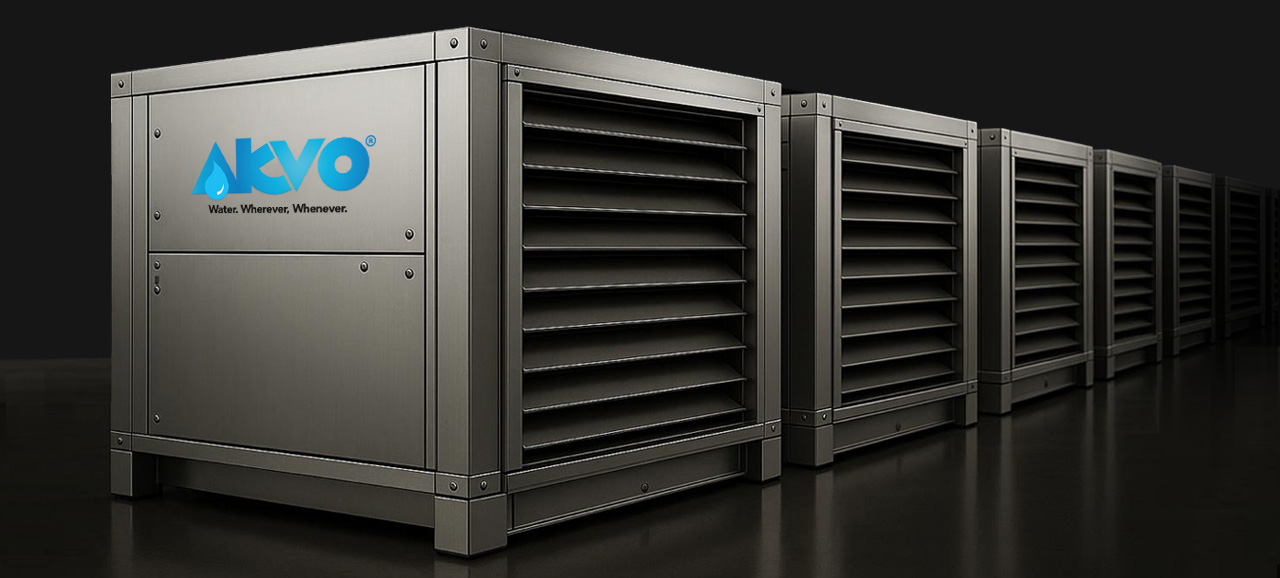
The process is based on a familiar natural phenomenon. When humid air comes into contact with a surface cooled below its dew point, moisture condenses into water. Akvo’s systems replicate this process at scale. Air passes over refrigeration coils, where moisture is condensed and subsequently treated through a multi-stage purification process involving sediment filtration, activated carbon, mineralisation and UV treatment.

The technology extends beyond condensation itself. Akvo’s Nimbus OS IoT platform continuously monitors parameters such as humidity, temperature, water yield and filter life, providing real-time visibility into machines deployed across different geographies.

From Water Scarcity to Water Independence

For Navkaran Singh Bagga, the challenge is not simply that the world lacks water. It is that access to water remains dependent on infrastructure and logistics.

Pipelines do not reach every location. Tankers are expensive and unreliable. Borewells can become depleted or contaminated, while bottled water involves a continuous transportation and packaging infrastructure.

Akvo’s approach is therefore to generate water at the point of consumption, reducing dependence on external water supply systems. This philosophy has become the foundation of the company’s vision of water independence.

Expanding Across Global Markets

Akvo’s systems are now deployed in more than 15 countries, serving a range of markets including India, the Gulf, Southeast Asia and East Africa. Demand has been particularly strong in coastal and island regions where humidity is available but conventional freshwater infrastructure can be limited or expensive.

In India, the company has also developed Water on Want (WoW), a water-as-a-service model in which Akvo installs, owns and operates the water-generation plant at a customer’s site, with customers paying for the water they consume. The model is designed for facilities such as factories, hospitals and campuses.

Engineering for Real-World Conditions

Atmospheric water generation is highly dependent on environmental conditions, particularly humidity and temperature. Akvo’s experience in deploying systems across different climates has therefore shaped its engineering approach.

The company’s machines are designed to operate from approximately 25% relative humidity upward, while performing most efficiently at higher humidity levels. In low-humidity environments, systems can be deliberately oversized to maintain committed water output.

Energy efficiency remains another major focus. Akvo’s current Water Blocks operate at approximately 0.29–0.35 kWh per litre depending on conditions, with continued R&D focused on compressor selection, coil design and intelligent control systems. The company has also developed Akvo Helios, a solar-thermal system designed to combine atmospheric water generation with renewable energy, rooftop solar and rainwater harvesting.

Scaling Water Generation Across Communities

Akvo’s enterprise-first strategy has enabled it to build a significant installed base. The company has more than 2,000 systems deployed, with the installed base generating approximately 300,000 litres of water per day—equivalent to roughly 100 million litres annually.

Rather than initially focusing on household appliances, Akvo concentrated on industrial facilities, government programmes, institutions and hospitality properties, where systems can operate continuously at larger capacities.

One example is a refinery township in Haldia, where Akvo systems have supplied drinking water to around 900 people continuously for six years. For the company, such long-term deployments demonstrate what water independence can mean in practical terms: reliable access without daily dependence on tankers or municipal supply.

From Machines to Water as a Service

The market for atmospheric water generation is also changing. Customers are increasingly looking beyond purchasing equipment and towards guaranteed outcomes.

In India, this shift has accelerated the adoption of Akvo’s Water on Want model, while international markets continue to see a combination of direct capital purchases and distribution partnerships. The focus is increasingly on the cost of water, uptime and reliable supply rather than simply the technology itself.

This represents a broader evolution of AWG—from an emerging technology to a potential infrastructure solution.

The Road Ahead

For atmospheric water generation to become a mainstream source of drinking water, three factors will be critical: lower cost per litre, greater industry credibility and models that make the technology accessible as a service.

Energy efficiency will continue to play a central role, particularly as atmospheric water systems become increasingly integrated with solar energy. At the same time, standards, certifications and transparent performance data will be essential for building trust in the category.

Navkaran’s vision extends beyond individual machines. He sees the future of air-to-water technology in shared infrastructure—systems serving apartment communities, schools, villages, campuses and other groups through decentralised water services.

Over the next three to five years, Akvo’s priorities are centred on expanding its recurring water-as-a-service business, deepening its international presence, improving energy efficiency and building the organisational capabilities required for sustainable growth.

The larger objective remains unchanged: to make reliable drinking water available where people need it, without depending entirely on infrastructure that may not reach them.

Read the Full Interview

This article is based on Navkaran Singh Bagga’s detailed interview with StartupTalky, covering Akvo’s technology, international expansion, challenges, water-as-a-service model and long-term vision.


Read the full interview on StartupTalky

TimesTech

In an interview with TimesTech, Navkaran Singh Bagga, Founder & CEO of Akvo Atmospheric Water Systems discusses the rising importance of decentralized water solutions in a climate-challenged world. He highlights how atmospheric water generation, IoT integration, and Water-as-a-Service models are reshaping water access. The conversation also explores scalability challenges, sustainability goals, and Akvo’s mission to address global water scarcity through innovation.

TimesTech: Akvo has been at the forefront of atmospheric water generation — how do you see decentralized water systems evolving as a core component of climate-resilient infrastructure globally?

Navkaran: Water infrastructure was constructed for climate conditions which have shifted. Reservoir levels are dropping, aquifers are running out of water, and we cannot build enough pipelines fast enough to keep up with the growth in cities. As a result, we will see more and more and more decentralised water systems (like atmospheric water generation or rainwater collection; reuse of on-site wastewater) be used in addition to municipal supplies as part of an overall plan for resilience, but rather than serving as a replacement system. Over the next 10 years, all of the major components of infrastructure (schools, hospitals, data storage centres, and industrial sites) will be designed with a decentralised water programme built-in at the point of use. I am already seeing the change in all of the 15 countries in which we work.

TimesTech: Your technology transforms air into drinking water — what have been the biggest technological and environmental challenges in scaling AWG systems across diverse geographies?

Navkaran: The core technical challenge is performance under highly variable ambient conditions. Output is environment-dependent i.e. best in warm, humid air and falling sharply in cold or dry zones. So, every geography requires honest climatic modelling before deployment. We have engineered around this through refrigerant optimisation, heat exchanger design and IoT-driven controls that adapt to real-time conditions. Environmentally, the bigger challenge has been energy intensity. Pairing AWG with rooftop solar, and improving the coefficient of performance generation after generation, is how we keep the litre-per-kilowatt-hour equation moving in the right direction. Transparency with customers on all of this is non-negotiable.

TimesTech: With IoT integration becoming central to infrastructure, how is Akvo leveraging intelligent technologies to transform water from a basic utility into smart, data-driven infrastructure?

Navkaran: At Akvo, we treat every machine as a connected asset. Our platform, Nimbus OS, runs across our fleet and gives us real-time visibility into run hours, litres produced, energy consumed, ambient temperature and humidity, filter health and component performance. That data does three things: it enables predictive maintenance before failures occur, lets clients see their environmental impact daily in litres produced and plastic bottles avoided, and allows us to continuously improve product design based on field reality. Water, once instrumented, stops being a silent utility and becomes accountable infrastructure exactly what industrial and CSR clients increasingly demand.

TimesTech: The concept of “Water-as-a-Service” is gaining traction — how do you see this model reshaping water access for industries and urban ecosystems in the coming years?

Navkaran: Water-as-a-Service fundamentally changes who carries the risk. Instead of a client making a large capital purchase and hoping the technology performs, a partner like Akvo invests in the machine and the client pays only for the water actually consumed. That single shift unlocks schools, hospitals, factories and housing societies that would never sign off on a capex line. It also forces us, the provider, to keep uptime and quality high because revenue depends on it. Over the coming years this model will do for decentralised water what leasing did for commercial real estate making access routine, predictable and measurable.

TimesTech: Akvo has already achieved significant global scale, generating millions of litres of water annually — what strategies have been key in balancing sustainability, affordability, and scalability?

Navkaran: The most significant decisions made by the organisation were as follows: the main production facility is located in Chennai and is run by our company instead of Outsourcing; all products manufactured will be of the same design allowing for a variety of market applications based on the same design; we will be partnering with local companies in each of the markets we operate in through joint venture rather than exporting our products from across the globe. A successful sustainable business is only possible when the supply chain, product design and go to market strategy are all developed to support one another.

TimesTech: As someone with a diverse entrepreneurial background, what inspired your transition into climate-tech, and how do you envision Akvo’s role in addressing global water scarcity over the next decade?

Navkaran: My previous business experience has shown me the disciplines of manufacturing, developing markets through exports, and growing during the inevitable downturns. I would like to apply that operational strength to the fields of climate technology and water. Water shortage is not just a future concern, but an active challenge for hundreds of millions of people around the world today. Solutions must be of sufficient industrial scale and commercial grade, rather than a product of goodwill. The goal is for Akvo to become a portable, dependable factor in achieving global water transformation over the next ten years, found in nearly every country, respected by both businesses and governments, and transparent about the capabilities of its technology.

Original article

Sustainability Karma

Akvo Launches WoW: A No-CAPEX Water Solution for Businesses

Akvo Atmospheric Water Systems has launched its innovative Water-on-Want (WoW) initiative—a first-of-its-kind, OPEX-based water solution for businesses across Tamil Nadu, Karnataka, Maharashtra, and Gujarat.

This model uses a Build-Own-Operate-Transfer (BOOT) contract structure, allowing companies to access atmospheric water generators (AWGs) without any upfront capital expenditure (CAPEX). Instead, clients pay a per-litre OPEX fee, with Akvo handling installation, operations, and maintenance—making sustainable water access seamless and risk-free.

“WoW is more than a product—it’s a shift in how companies approach water sustainability,” said Navkaran Singh Bagga, CEO & Founder of Akvo. “By eliminating CAPEX, we’re making eco-friendly water tech accessible to all businesses.”

With a minimum daily off-take of 500 litres, WoW is positioned as a scalable, cost-effective, and eco-friendly solution for companies looking to reduce dependence on conventional water sources and improve their ESG performance.

To read the full article visit here: