
TimesTech

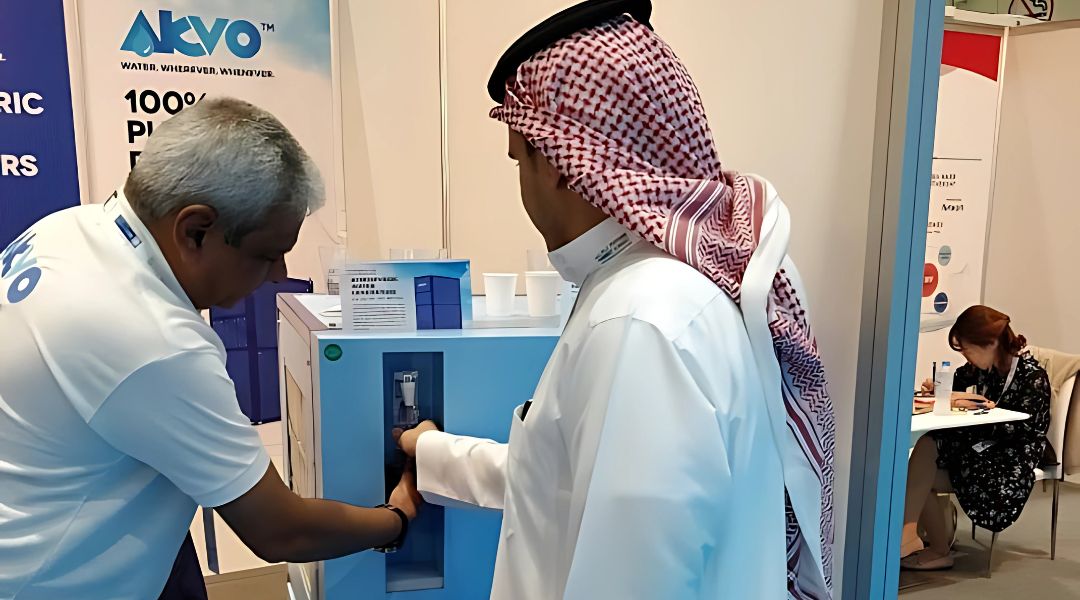
In an interview with TimesTech, Navkaran Singh Bagga, Founder & CEO of Akvo Atmospheric Water Systems discusses the rising importance of decentralized water solutions in a climate-challenged world. He highlights how atmospheric water generation, IoT integration, and Water-as-a-Service models are reshaping water access. The conversation also explores scalability challenges, sustainability goals, and Akvo’s mission to address global water scarcity through innovation.

TimesTech: Akvo has been at the forefront of atmospheric water generation — how do you see decentralized water systems evolving as a core component of climate-resilient infrastructure globally?

Navkaran: Water infrastructure was constructed for climate conditions which have shifted. Reservoir levels are dropping, aquifers are running out of water, and we cannot build enough pipelines fast enough to keep up with the growth in cities. As a result, we will see more and more and more decentralised water systems (like atmospheric water generation or rainwater collection; reuse of on-site wastewater) be used in addition to municipal supplies as part of an overall plan for resilience, but rather than serving as a replacement system. Over the next 10 years, all of the major components of infrastructure (schools, hospitals, data storage centres, and industrial sites) will be designed with a decentralised water programme built-in at the point of use. I am already seeing the change in all of the 15 countries in which we work.

TimesTech: Your technology transforms air into drinking water — what have been the biggest technological and environmental challenges in scaling AWG systems across diverse geographies?

Navkaran: The core technical challenge is performance under highly variable ambient conditions. Output is environment-dependent i.e. best in warm, humid air and falling sharply in cold or dry zones. So, every geography requires honest climatic modelling before deployment. We have engineered around this through refrigerant optimisation, heat exchanger design and IoT-driven controls that adapt to real-time conditions. Environmentally, the bigger challenge has been energy intensity. Pairing AWG with rooftop solar, and improving the coefficient of performance generation after generation, is how we keep the litre-per-kilowatt-hour equation moving in the right direction. Transparency with customers on all of this is non-negotiable.

TimesTech: With IoT integration becoming central to infrastructure, how is Akvo leveraging intelligent technologies to transform water from a basic utility into smart, data-driven infrastructure?

Navkaran: At Akvo, we treat every machine as a connected asset. Our platform, Nimbus OS, runs across our fleet and gives us real-time visibility into run hours, litres produced, energy consumed, ambient temperature and humidity, filter health and component performance. That data does three things: it enables predictive maintenance before failures occur, lets clients see their environmental impact daily in litres produced and plastic bottles avoided, and allows us to continuously improve product design based on field reality. Water, once instrumented, stops being a silent utility and becomes accountable infrastructure exactly what industrial and CSR clients increasingly demand.

TimesTech: The concept of “Water-as-a-Service” is gaining traction — how do you see this model reshaping water access for industries and urban ecosystems in the coming years?

Navkaran: Water-as-a-Service fundamentally changes who carries the risk. Instead of a client making a large capital purchase and hoping the technology performs, a partner like Akvo invests in the machine and the client pays only for the water actually consumed. That single shift unlocks schools, hospitals, factories and housing societies that would never sign off on a capex line. It also forces us, the provider, to keep uptime and quality high because revenue depends on it. Over the coming years this model will do for decentralised water what leasing did for commercial real estate making access routine, predictable and measurable.

TimesTech: Akvo has already achieved significant global scale, generating millions of litres of water annually — what strategies have been key in balancing sustainability, affordability, and scalability?

Navkaran: The most significant decisions made by the organisation were as follows: the main production facility is located in Chennai and is run by our company instead of Outsourcing; all products manufactured will be of the same design allowing for a variety of market applications based on the same design; we will be partnering with local companies in each of the markets we operate in through joint venture rather than exporting our products from across the globe. A successful sustainable business is only possible when the supply chain, product design and go to market strategy are all developed to support one another.

TimesTech: As someone with a diverse entrepreneurial background, what inspired your transition into climate-tech, and how do you envision Akvo’s role in addressing global water scarcity over the next decade?

Navkaran: My previous business experience has shown me the disciplines of manufacturing, developing markets through exports, and growing during the inevitable downturns. I would like to apply that operational strength to the fields of climate technology and water. Water shortage is not just a future concern, but an active challenge for hundreds of millions of people around the world today. Solutions must be of sufficient industrial scale and commercial grade, rather than a product of goodwill. The goal is for Akvo to become a portable, dependable factor in achieving global water transformation over the next ten years, found in nearly every country, respected by both businesses and governments, and transparent about the capabilities of its technology.

Original article

The Week

As climate change intensifies and extreme weather events strain freshwater availability, Indian researchers and innovators are exploring cutting-edge solutions to tackle water scarcity. On World Water Day, attention turns to ideas that go beyond conventional sources like groundwater and surface water.

Harnessing Rain Energy
Dr. Visakh Vaikuntanathan and his team at Shiv Nadar University are working on an innovative concept: extracting energy from rainfall. Their research focuses on “all-weather cells” that function as both solar and rain-powered energy units. By calculating rainfall intensity and raindrop energy using IMD data, they aim to build a rain energy map and harvest kinetic energy through rooftops and drainage systems.

Water from Air: A Real-World Solution
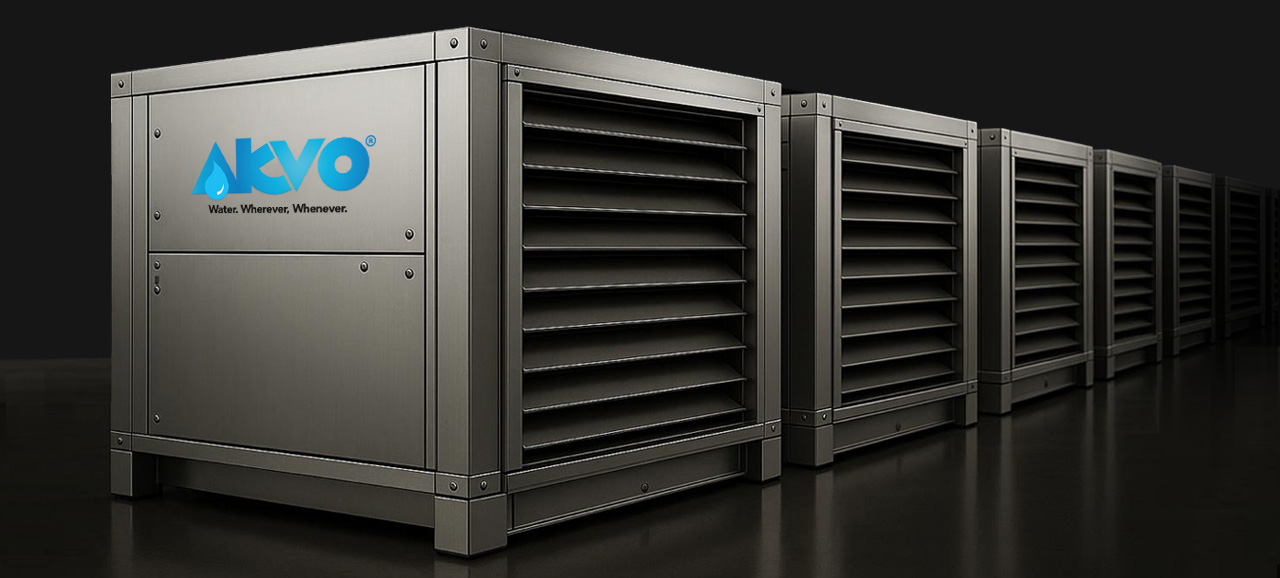
Another futuristic technology making real-world impact is atmospheric water generation (AWG). Navkaran Singh Bagga, CEO of Akvo, leads the way with machines that pull humidity from the air and turn it into clean drinking water. Operating in 15 countries, Akvo offers eco-friendly, decentralized water systems with zero upfront costs through its BOOT model. The company recently launched the Water-on-Want (WoW) initiative, providing sustainable water solutions to corporates across India.

“AWG offers a reliable and green alternative to depleting water resources,” says Bagga. “It’s scalable, efficient, and built for future resilience.”

Technology and the Himalayas
In the Himalayan region, melting glaciers are altering river flows and threatening water security. Experts like Dr. Dipankar Saha from MRIIRS emphasize the need for urgent intervention. Companies such as Suhora are using satellite data, sensors, and predictive analytics to monitor glacial changes and help reduce disaster risks.

With India home to 18% of the global population but only 4% of freshwater resources, such innovative technologies are not just promising – they’re essential.

To read the full article visit here.

Techgraph

This is a major problem worldwide; it affects billions of people in homes, villages, and towns. Population increases, climate change and limited water resources make the situation worse and thus require innovative approaches.

In the current world, technology is still rising as the key driver and is changing the way that water is harvested, treated, and transported to communities across the world.

This has been one of the most important developments in the last few years with the development of atmospheric water generation technology. These systems pull the moisture from the air and produce clean drinking water that can be taken to areas with limited infrastructure. Air water generators can work in almost all kinds of climate conditions and provide water solutions to people in arid areas and areas that have been affected by disasters. This technology is further improved by the developments in the design of solar-powered and energy-saving systems, which make this technology a better option than conventional water sources.

In addition to management, new technologies are available that are creating a change in the way that water is gathered and stored by the communities. The application of IoT sensors, data analysis, and cloud computing enable the real-time monitoring of water quality, distribution systems, and consumption trends. Local authorities and utilities can save time and cost on repairs and prevent losses and pollution by identifying leaks, tolerances, or overuse of water. This degree of data granularity also assists policymakers in making better decisions on water control and management and the utilization of resources.

Other filtration and purification technologies also enhance the community’s water resilience. Graphene-based filters and other new-age materials can filter out pollutants and microbes and provide safe drinking water even in highly industrialized waters. Along with these technologies, portable purification devices also help people during personal requirements and during calamities, thus protecting the health of people in vulnerable populations.

This is because water tech solutions are not applied in isolation. New technologies cannot work effectively on their own; they need to be integrated into wider strategies that include education, infrastructure development, and community participation for the sustainability of the interventions. One of the other ways is training the local people on how to use and maintain the new technology so that they own it. Private public partnerships and social enterprises also have a significant role to play. These partnerships help economically disadvantaged communities access clean water by investing in reusable and scalable systems, subsidizing distribution costs, and providing microfinance solutions.

In conclusion, the integration of innovation, policy, and the power of community is the way forward to closing the water divide. From atmospheric water generation to the latest filtration systems and IoT-based monitoring, each new technology is helping to create stronger, more independent communities. If all the stakeholders and donors remain committed to their efforts, we may one day be able to provide safe water to people no matter where they are in the world.

With the help of technology and people’s cooperation, water can be transformed to be the source of improvement, health, and the future we desire for everyone, anywhere.

Written by
Navkaran Singh Bagga,
CEO & Founder, AKVO

Eco-Intelligent.com

Water is a big crisis in today’s world. It doesn’t matter where you live or how lavishly you live; you are going to face the brunt of the water crisis now or at some point in the future.

The problem remains acute in India and the crisis is only growing. Despite relying on a variety of water resources like rivers, above ground storage structures and groundwater, we are still not able to provide sufficient water to the people of this country to meet their daily requirements. Continue reading “Eco-Intelligent.com”