
TimesTech

In an interview with TimesTech, Navkaran Singh Bagga, Founder & CEO of Akvo Atmospheric Water Systems discusses the rising importance of decentralized water solutions in a climate-challenged world. He highlights how atmospheric water generation, IoT integration, and Water-as-a-Service models are reshaping water access. The conversation also explores scalability challenges, sustainability goals, and Akvo’s mission to address global water scarcity through innovation.

TimesTech: Akvo has been at the forefront of atmospheric water generation — how do you see decentralized water systems evolving as a core component of climate-resilient infrastructure globally?

Navkaran: Water infrastructure was constructed for climate conditions which have shifted. Reservoir levels are dropping, aquifers are running out of water, and we cannot build enough pipelines fast enough to keep up with the growth in cities. As a result, we will see more and more and more decentralised water systems (like atmospheric water generation or rainwater collection; reuse of on-site wastewater) be used in addition to municipal supplies as part of an overall plan for resilience, but rather than serving as a replacement system. Over the next 10 years, all of the major components of infrastructure (schools, hospitals, data storage centres, and industrial sites) will be designed with a decentralised water programme built-in at the point of use. I am already seeing the change in all of the 15 countries in which we work.

TimesTech: Your technology transforms air into drinking water — what have been the biggest technological and environmental challenges in scaling AWG systems across diverse geographies?

Navkaran: The core technical challenge is performance under highly variable ambient conditions. Output is environment-dependent i.e. best in warm, humid air and falling sharply in cold or dry zones. So, every geography requires honest climatic modelling before deployment. We have engineered around this through refrigerant optimisation, heat exchanger design and IoT-driven controls that adapt to real-time conditions. Environmentally, the bigger challenge has been energy intensity. Pairing AWG with rooftop solar, and improving the coefficient of performance generation after generation, is how we keep the litre-per-kilowatt-hour equation moving in the right direction. Transparency with customers on all of this is non-negotiable.

TimesTech: With IoT integration becoming central to infrastructure, how is Akvo leveraging intelligent technologies to transform water from a basic utility into smart, data-driven infrastructure?

Navkaran: At Akvo, we treat every machine as a connected asset. Our platform, Nimbus OS, runs across our fleet and gives us real-time visibility into run hours, litres produced, energy consumed, ambient temperature and humidity, filter health and component performance. That data does three things: it enables predictive maintenance before failures occur, lets clients see their environmental impact daily in litres produced and plastic bottles avoided, and allows us to continuously improve product design based on field reality. Water, once instrumented, stops being a silent utility and becomes accountable infrastructure exactly what industrial and CSR clients increasingly demand.

TimesTech: The concept of “Water-as-a-Service” is gaining traction — how do you see this model reshaping water access for industries and urban ecosystems in the coming years?

Navkaran: Water-as-a-Service fundamentally changes who carries the risk. Instead of a client making a large capital purchase and hoping the technology performs, a partner like Akvo invests in the machine and the client pays only for the water actually consumed. That single shift unlocks schools, hospitals, factories and housing societies that would never sign off on a capex line. It also forces us, the provider, to keep uptime and quality high because revenue depends on it. Over the coming years this model will do for decentralised water what leasing did for commercial real estate making access routine, predictable and measurable.

TimesTech: Akvo has already achieved significant global scale, generating millions of litres of water annually — what strategies have been key in balancing sustainability, affordability, and scalability?

Navkaran: The most significant decisions made by the organisation were as follows: the main production facility is located in Chennai and is run by our company instead of Outsourcing; all products manufactured will be of the same design allowing for a variety of market applications based on the same design; we will be partnering with local companies in each of the markets we operate in through joint venture rather than exporting our products from across the globe. A successful sustainable business is only possible when the supply chain, product design and go to market strategy are all developed to support one another.

TimesTech: As someone with a diverse entrepreneurial background, what inspired your transition into climate-tech, and how do you envision Akvo’s role in addressing global water scarcity over the next decade?

Navkaran: My previous business experience has shown me the disciplines of manufacturing, developing markets through exports, and growing during the inevitable downturns. I would like to apply that operational strength to the fields of climate technology and water. Water shortage is not just a future concern, but an active challenge for hundreds of millions of people around the world today. Solutions must be of sufficient industrial scale and commercial grade, rather than a product of goodwill. The goal is for Akvo to become a portable, dependable factor in achieving global water transformation over the next ten years, found in nearly every country, respected by both businesses and governments, and transparent about the capabilities of its technology.

Original article

Telegraph India

How Akvo is Making Water Sustainable and Accessible

In an era where water scarcity is rapidly becoming one of the world’s most pressing environmental concerns, Kolkata-based Akvo Atmospheric Water Systems is offering a transformative solution. At the forefront of this innovation is Akvo’s new initiative — Water-on-Want (WoW) — which is reshaping the way businesses think about water access, sustainability, and cost-efficiency.

Rethinking the Water Supply Chain

Akvo’s WoW model is built on a simple yet powerful idea: access to clean drinking water shouldn’t require heavy capital investment. Traditionally, businesses have relied on expensive infrastructure or unsustainable bottled water solutions. Akvo’s solution changes that by turning water into a service — not a product.

“WoW was born from a simple question: Why must access to clean water be capital-intensive? Water becomes a service, not a product — transforming it from a logistical headache into a strategic sustainability win,” said Navkaran Singh Bagga, Founder and CEO of Akvo Atmospheric Water Systems.

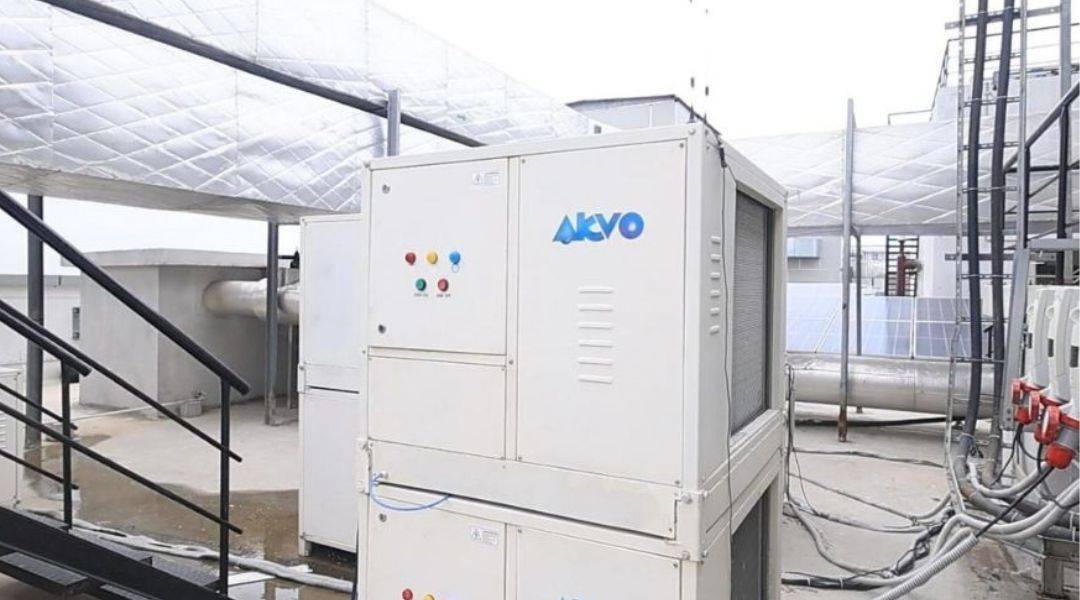
Under an OPEX-based Build, Own, Operate, Transfer (BOOT) model, Akvo installs its atmospheric water generators (AWGs) on-site at client locations. The company maintains ownership and operation of the units, while clients are billed only for the volume of water they consume. This approach eliminates upfront costs, simplifies maintenance, and provides predictable, consumption-based pricing.

Adaptable Technology for a Diverse Climate

Currently deployed in water-stressed regions across Tamil Nadu, Karnataka, Maharashtra, and Gujarat, Akvo’s AWG units are engineered to function efficiently across a wide range of climatic conditions — from Chennai’s coastal humidity to Pune’s drier air.

“Our machines condense moisture from the air, filter and mineralise it, and deliver safe drinking water on demand. Thanks to IoT-enabled performance tracking, we ensure consistent output regardless of external climate conditions,” explained Navkaran Singh Bagga.

This adaptability allows Akvo to serve areas where municipal supply is unreliable and groundwater is rapidly depleting.

The Numbers Behind Sustainability

The environmental impact of Akvo’s model is significant. During an 18-month pilot, clients reported up to a 95% reduction in plastic water jar usage, which translates to eliminating over 200,000 litres of transported water per month. A Bengaluru IT park cut carbon emissions by 4.5 tonnes annually, while a Mumbai hotel reduced water procurement costs by 22% and earned green building credits.

“Each 500-litre-per-day unit can save nearly 365,000 plastic bottles annually. That’s the kind of impact that scales when businesses adopt water as a sustainable service rather than a commodity,” said Navkaran Singh Bagga.

A Win-Win for Business and the Planet

Akvo’s AWG units are compact — requiring just one square metre of space — and operate at just 0.26 kWh per litre under optimal conditions. With pricing as low as ₹1.25 per litre, the systems are already serving sectors like IT parks, hotels, and manufacturing hubs.

“By producing water locally, we eliminate transportation emissions, avoid municipal tariffs, and help businesses meet ESG targets without increasing costs,” added Navkaran Singh Bagga.

Akvo has now expanded into 15 countries, including Qatar and Dubai, generating over 100 million litres of clean water globally. The company is now focusing on fully solar-powered AWGs and mobile container units to serve remote locations and disaster zones.

Bridging Innovation and Accessibility

Despite the advanced technology, Akvo’s mission is rooted in making sustainability accessible. “WoW isn’t just an ESG move — it’s a practical hedge against water volatility. Sustainability is no longer a choice — it’s a license to operate. If you can save money, reduce plastic waste, and secure your water supply—all without capex — why wouldn’t you?” said Navkaran Singh Bagga.

For Akvo, the goal goes beyond business. It’s about changing how we think about water — not just as a resource, but as a sustainable service.

“We don’t want sustainability to be a buzzword or a checkbox. It should be as simple as turning on a tap — and knowing you’re doing right by the planet,” concluded Navkaran Singh Bagga.

To read the full article, please visit here.

Times Tech

On National Technology Day 2025, Akvo CEO Navkaran Singh Bagga Champions Water Innovation

In a special feature by TimesTech, Navkaran Singh Bagga, CEO and founder of Akvo Atmospheric Water Systems, showcased how the company’s pioneering air-to-water technology is transforming global access to clean water. On the occasion of National Technology Day 2025, Bagga outlined Akvo’s mission to deliver decentralized, climate-resilient water solutions through innovations like modular Water Block units, IoT integration, and AI-powered efficiency.

“Our vision is simple yet ambitious,” Navkaran Singh Bagga said. “We want every community—from remote villages to megacities—to access clean drinking water directly from air, without depending on overburdened natural sources.”

With more than 100 million litres of water generated to date, Akvo’s smart systems are addressing critical water challenges across geographies—from coastal cities to arid interiors—while eliminating reliance on plastic bottles and tanker transport.

Reflecting on his own entrepreneurial journey from steel manufacturing to clean-tech, Bagga shared a message for young innovators:

“Dream big, but stay rooted in local realities. The best innovations come from deep empathy for the communities you serve. Focus on creating scalable, sustainable solutions, and don’t be afraid to challenge conventional thinking. Building technology is only half the journey—delivering impact is where true innovation shines. And remember, resilience matters as much as brilliance.”

Looking ahead, Bagga emphasized the role of AI and IoT in making Akvo’s systems more predictive, autonomous, and accessible to underserved populations — further advancing the company’s mission of sustainable, democratized water access.

To read the full article, please visit here.

News Byte

This Indian Company Is Turning Air Into Drinking Water

Amid growing global water scarcity, Akvo, an Indian startup, is redefining how we source drinking water—with machines that extract water from air.

Using Atmospheric Water Generators (AWGs), Akvo captures moisture from the atmosphere, filters it, and condenses it into clean, potable water—mimicking the natural process of dew formation.

How It Works

Air is first passed through a triple-layer filtration system to remove dust and impurities. It’s then cooled below the dew point, causing moisture to condense into water droplets. These are collected and filtered multiple times to meet drinking water standards—offering a sustainable alternative to groundwater and bottled water.

Built for Versatility

According to Navkaran Singh Bagga, Founder and CEO of Akvo, the biggest challenge has been optimizing water yield while keeping energy consumption low. Innovations in heat exchange, filtration, and IoT monitoring have made Akvo’s AWGs more efficient and affordable.

While best suited for warm and humid environments, Akvo’s systems are designed to operate even in moderate humidity, making them viable in a wide range of climates.

A Renewable Water Source

Akvo’s AWGs tap into the Earth’s atmosphere—an inexhaustible source holding over 3,100 cubic miles of water vapor. Unlike groundwater depletion or energy-intensive desalination, this approach is low-impact and climate-resilient.

“Atmospheric water generation offers a renewable, decentralized solution for communities facing droughts and water pollution,” says Bagga.