
Startup Talky

Atmospheric Water Generation Is Entering a New Era: Building a Future of Water Independence

The global Atmospheric Water Generator (AWG) market is entering a period of significant growth as businesses, governments and communities look for decentralised and sustainable sources of drinking water. The market is projected to grow from approximately $4.36 billion in 2025 to $4.96 billion in 2026, with expectations of reaching $7.92 billion by 2030. Rising water scarcity, demand for off-grid solutions, renewable-energy integration and the need for greater water security are among the key factors driving this growth.

At the centre of this transition is a simple idea: water does not always have to be transported to where it is needed. It can be produced where it is consumed.

Turning Air Into Drinking Water

Akvo Atmospheric Water Systems was founded around this principle of water independence. Founded by Navkaran Singh Bagga, the company uses atmospheric water generation technology to extract moisture from the air and convert it into safe drinking water.

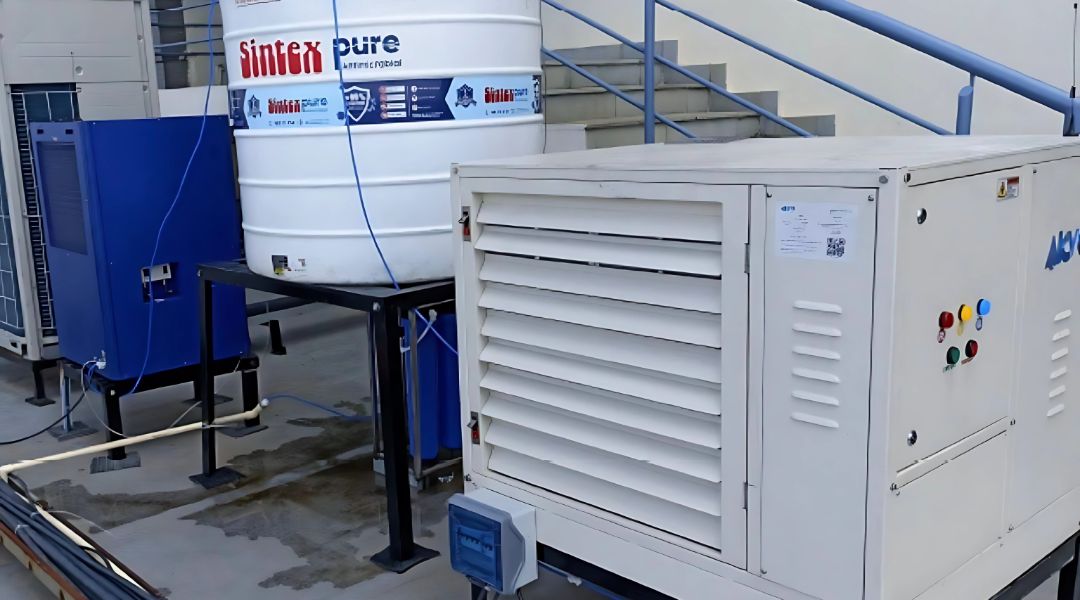
The process is based on a familiar natural phenomenon. When humid air comes into contact with a surface cooled below its dew point, moisture condenses into water. Akvo’s systems replicate this process at scale. Air passes over refrigeration coils, where moisture is condensed and subsequently treated through a multi-stage purification process involving sediment filtration, activated carbon, mineralisation and UV treatment.

The technology extends beyond condensation itself. Akvo’s Nimbus OS IoT platform continuously monitors parameters such as humidity, temperature, water yield and filter life, providing real-time visibility into machines deployed across different geographies.

From Water Scarcity to Water Independence

For Navkaran Singh Bagga, the challenge is not simply that the world lacks water. It is that access to water remains dependent on infrastructure and logistics.

Pipelines do not reach every location. Tankers are expensive and unreliable. Borewells can become depleted or contaminated, while bottled water involves a continuous transportation and packaging infrastructure.

Akvo’s approach is therefore to generate water at the point of consumption, reducing dependence on external water supply systems. This philosophy has become the foundation of the company’s vision of water independence.

Expanding Across Global Markets

Akvo’s systems are now deployed in more than 15 countries, serving a range of markets including India, the Gulf, Southeast Asia and East Africa. Demand has been particularly strong in coastal and island regions where humidity is available but conventional freshwater infrastructure can be limited or expensive.

In India, the company has also developed Water on Want (WoW), a water-as-a-service model in which Akvo installs, owns and operates the water-generation plant at a customer’s site, with customers paying for the water they consume. The model is designed for facilities such as factories, hospitals and campuses.

Engineering for Real-World Conditions

Atmospheric water generation is highly dependent on environmental conditions, particularly humidity and temperature. Akvo’s experience in deploying systems across different climates has therefore shaped its engineering approach.

The company’s machines are designed to operate from approximately 25% relative humidity upward, while performing most efficiently at higher humidity levels. In low-humidity environments, systems can be deliberately oversized to maintain committed water output.

Energy efficiency remains another major focus. Akvo’s current Water Blocks operate at approximately 0.29–0.35 kWh per litre depending on conditions, with continued R&D focused on compressor selection, coil design and intelligent control systems. The company has also developed Akvo Helios, a solar-thermal system designed to combine atmospheric water generation with renewable energy, rooftop solar and rainwater harvesting.

Scaling Water Generation Across Communities

Akvo’s enterprise-first strategy has enabled it to build a significant installed base. The company has more than 2,000 systems deployed, with the installed base generating approximately 300,000 litres of water per day—equivalent to roughly 100 million litres annually.

Rather than initially focusing on household appliances, Akvo concentrated on industrial facilities, government programmes, institutions and hospitality properties, where systems can operate continuously at larger capacities.

One example is a refinery township in Haldia, where Akvo systems have supplied drinking water to around 900 people continuously for six years. For the company, such long-term deployments demonstrate what water independence can mean in practical terms: reliable access without daily dependence on tankers or municipal supply.

From Machines to Water as a Service

The market for atmospheric water generation is also changing. Customers are increasingly looking beyond purchasing equipment and towards guaranteed outcomes.

In India, this shift has accelerated the adoption of Akvo’s Water on Want model, while international markets continue to see a combination of direct capital purchases and distribution partnerships. The focus is increasingly on the cost of water, uptime and reliable supply rather than simply the technology itself.

This represents a broader evolution of AWG—from an emerging technology to a potential infrastructure solution.

The Road Ahead

For atmospheric water generation to become a mainstream source of drinking water, three factors will be critical: lower cost per litre, greater industry credibility and models that make the technology accessible as a service.

Energy efficiency will continue to play a central role, particularly as atmospheric water systems become increasingly integrated with solar energy. At the same time, standards, certifications and transparent performance data will be essential for building trust in the category.

Navkaran’s vision extends beyond individual machines. He sees the future of air-to-water technology in shared infrastructure—systems serving apartment communities, schools, villages, campuses and other groups through decentralised water services.

Over the next three to five years, Akvo’s priorities are centred on expanding its recurring water-as-a-service business, deepening its international presence, improving energy efficiency and building the organisational capabilities required for sustainable growth.

The larger objective remains unchanged: to make reliable drinking water available where people need it, without depending entirely on infrastructure that may not reach them.

Read the Full Interview

This article is based on Navkaran Singh Bagga’s detailed interview with StartupTalky, covering Akvo’s technology, international expansion, challenges, water-as-a-service model and long-term vision.
Read the full interview on StartupTalky

NITI Frontier Tech Hub

2,000 Machines, 15 Countries, Zero Groundwater: The Rise of Atmospheric Water Infrastructure

As Indian cities face growing water stress, alternative and decentralised water solutions are becoming increasingly important. Atmospheric water generation (AWG) technology is emerging as one such solution by producing drinking water directly from humidity in the air.

Founded in 2017 by Navkaran Singh Bagga, Kolkata-based Akvo Atmospheric Water Systems has developed AWG systems that reduce dependence on groundwater, water tankers, and bottled water. Since its first deployment in 2018, the company has installed over 2,000 systems across 15 countries, collectively generating more than 100 million litres of drinking water.

Akvo’s systems work by extracting moisture from ambient air, condensing it into water, and purifying it through multi-stage filtration and UV sterilisation. Minerals are then added to improve taste and quality.

The technology is particularly effective in humid urban regions and is currently being used across industries, hospitals, institutions, renewable energy sites, and commercial campuses in cities such as Bengaluru, Mumbai, Chennai, Kolkata, Ahmedabad, and Goa.

Beyond water generation, the systems are helping organisations reduce plastic waste, lower dependence on groundwater extraction, and improve water resilience as part of broader sustainability and ESG initiatives.

As climate change and urbanisation continue to pressure conventional water infrastructure, decentralised technologies like atmospheric water generation are becoming an important part of the future water security conversation.

Read the full article here

NGO Box

Akvo Launches Water-on-Want (WoW) for Sustainable Corporate Water Solutions

Akvo Atmospheric Water Systems Pvt. Ltd. has launched its Water-on-Want (WoW) initiative, offering a CAPEX-free, sustainable water solution for corporates in Tamil Nadu, Karnataka, Maharashtra, and Gujarat. Using an OPEX-based BOOT model, companies can now access Akvo’s Atmospheric Water Generators (AWGs) with no upfront investment. Businesses pay per litre, while Akvo manages the equipment end-to-end.

“WoW merges technology with a no-risk business model to help companies go green without financial strain,” said Navkaran Singh Bagga, CEO & Founder.

With a minimum daily offtake of 500 LPD, WoW helps corporates adopt sustainability while cutting costs—making every drop count.

To read full article visit here.

Times Now News

Transforming Air into Water: How Akvo is Solving the Water Crisis

Access to clean drinking water remains a major challenge in many parts of the world. In Hardua Mangarh, a village in Madhya Pradesh, residents struggled daily for safe water. Women and children walked miles to collect water, often from contaminated sources. The dry months made water even scarcer.

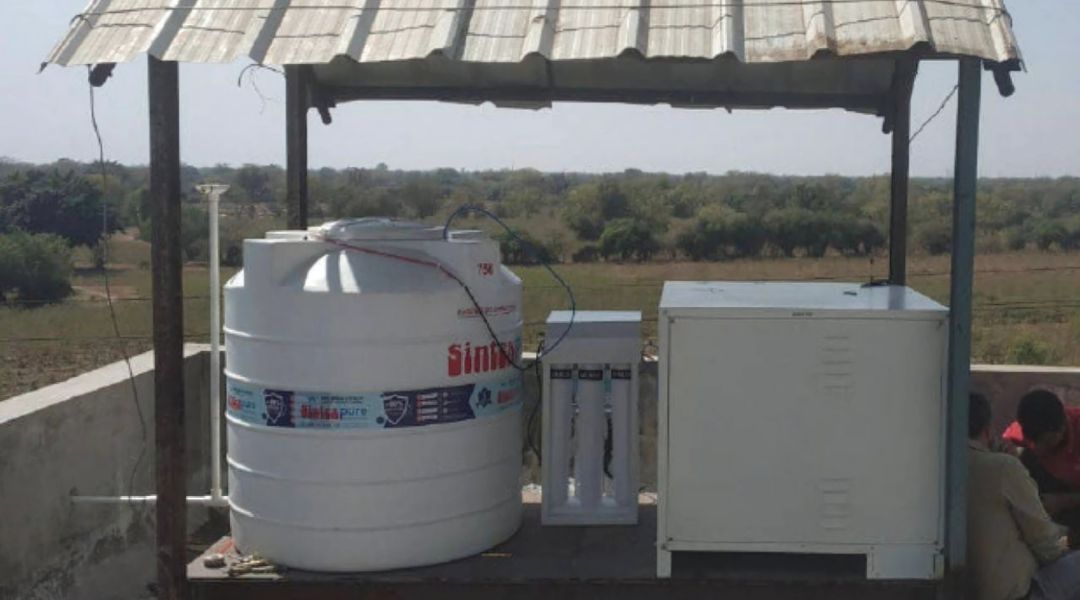
This changed when Akvo, led by Navkaran Singh Bagga, introduced Atmospheric Water Generator (AWG) technology. Instead of relying on wells, rivers, or government tankers, the villagers now generate their own drinking water—directly from the air.

Who is Navkaran Singh Bagga?

At 38, Navkaran Singh Bagga, based in Kolkata, transitioned from family businesses in steel, hospitality, and trade to water technology. Around 2016-17, he identified water scarcity as a critical global issue. Discovering Atmospheric Water Generators (AWGs), he saw an opportunity to create water from air, independent of existing sources, and developed solutions for industrial and community use.

How Does It Work?

The AWG system mimics nature’s condensation cycle. It pulls in air, filters dust and contaminants, then cools it to dew point, turning vapor into liquid. The water undergoes multi-stage filtration, including UV sterilization, before being made available for consumption.

Overcoming Challenges

Many were skeptical of drawing water from air. Additionally, the technology needed optimization for drier climates. Bagga’s team worked on improving efficiency, affordability, and integrating AWGs with solar power for off-grid solutions, aiming to make air-to-water technology mainstream.

A Sustainable Future

“Climate change is making traditional water sources unreliable,” says Bagga. “But air is everywhere—if we tap into it efficiently, we can create water where it’s needed.”

Akvo is driving towards a future where clean water is accessible without depleting natural resources. By merging innovation with sustainability, AWG technology has the potential to revolutionize water accessibility worldwide.

To read the full article, click here.

Abu Dabhi – Sustainable agriculture with atmospheric water generation

Location: Abu Dhabi, UAE
Usage: Unfiltered water generation for agricultural use
Setup Type: AWG (Atmospheric Water Generator)

Background

In the arid environment of Abu Dhabi, where water scarcity is a constant challenge, the Ministry of Presidential Aairs sought a sustainable solution for agricultural water needs. Traditional methods were either too expensive or environmentally unsustainable. A forward thinking approach was required to support local agriculture without straining limited water resources.

Solution

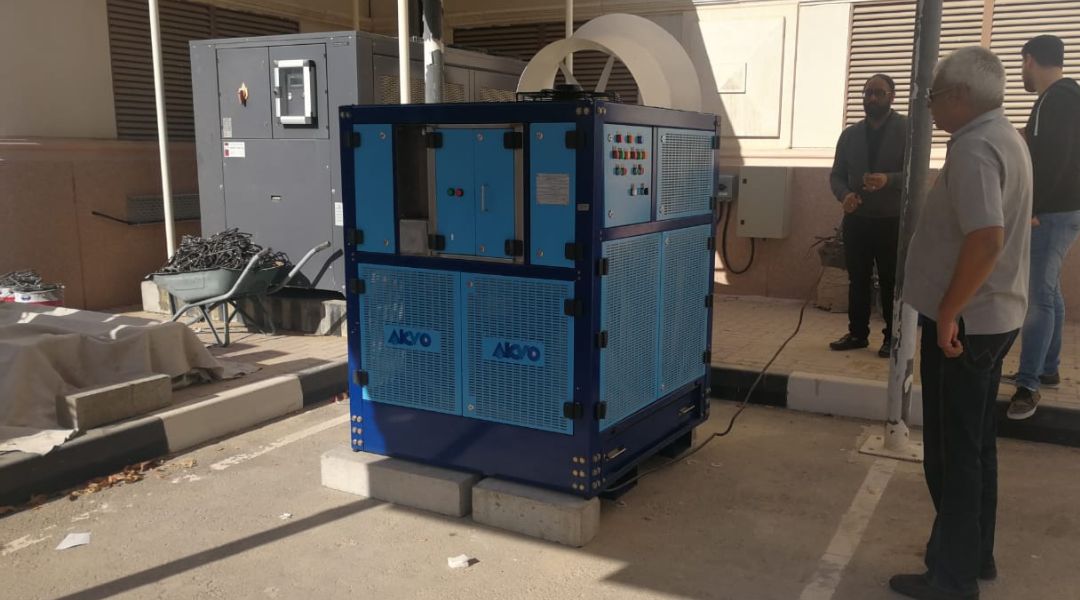
Akvo introduced a specially designed single-phase AWG system that could generate 300 liters of water per day. This innovative solution harnessed ambient humidity to produce water, bypassing the need for energy-intensive desalination or expensive water imports. The unfiltered water was ideal for agricultural applications, providing a fresh source of hydration for plants and landscapes around government facilities.

Impact

– Resource Optimisation: Enabled the Ministry to utilise a renewable source of water, significantly reducing the ecological footprint associated with traditional water sourcing methods.
– Operational Eiciency: The single-phase system was easy to install and required minimal maintenance, making it a practical solution for sustained agricultural support.
– Strategic Resilience: By adopting atmospheric water generation, the Ministry enhanced its water security strategy, ensuring a reliable supply even under adverse climatic condition.

Chennai – Empowering a corporate giant with on-site water generation

Location: Chennai
Usage: Drinking water supply for a large corporate headquarters
Setup Type: Distributed Water Supply with Rooftop AWGs

Background

A major corporate headquartered in Chennai, employing over 5,000 people, required a reliable, high volume water solution that could keep pace with its growing needs. The traditional reliance on municipal water supplies posed a risk of shortages and disruptions, making it imperative to find a self-sufficient alternative.

Solution

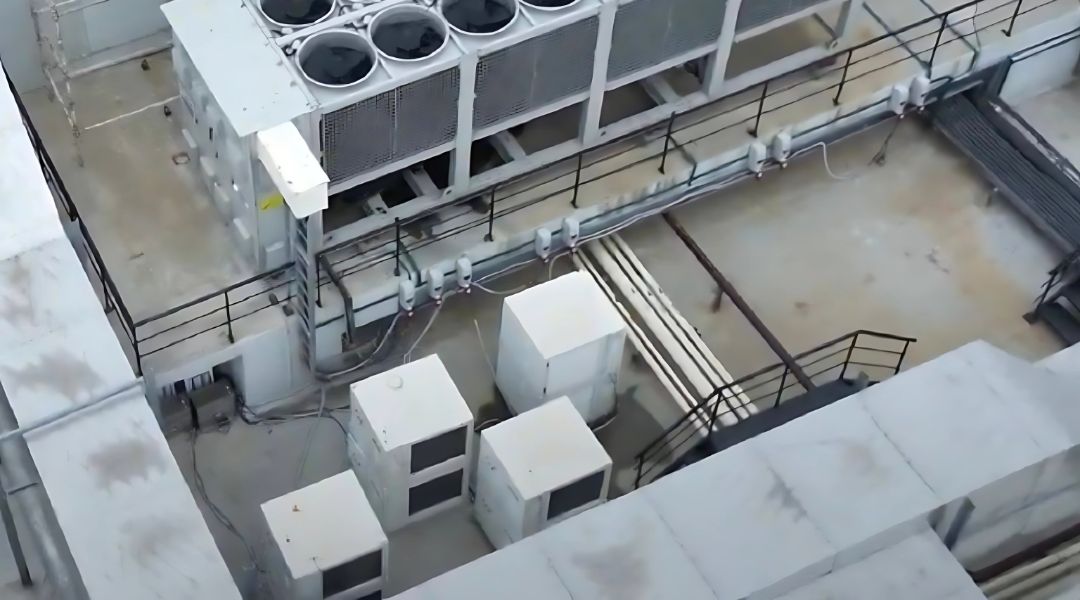
Akvo installed 60 Water Blocks on the rooftop, each generating 500 litres of water per day. This modular setup, producing a total of 30,000 litres daily, was connected to multiple distribution points across the headquarters, ensuring a steady low of fresh water for all employees, visitors, and operational needs.

Impact

– Self-Suficiency: The company gained complete control over its water supply, eliminating dependence on external sources and mitigating the risk of water scarcity.
– Enhanced Sustainability: By generating water on-site, the corporate reduced its environmental footprint, supporting its broader sustainability goals.
– Team Well-Being: A consistent supply of high-quality drinking water & enhancing workplace health.

Gujarat – Redefining industrial water solutions for employee welfare

Location: Gujarat
Usage: Drinking water for factory employees
Setup Type: Distributed Water Supply with Rooftop AWGs

Background

The largest glass bottle manufacturer in Gujarat, employing thousands, faced a persistent challenge: ensuring the availability of safe drinking water in a region where groundwater resources were both scarce and compromised. A reliable, decentralised solution was essential to safeguard employee health and productivity.

Solution

Akvo deployed multiple 500 LPD AWGs across the factory premises, strategically installing them on rooftops and connecting them to various distribution points throughout the facility. This setup ensured that every employee had easy access to fresh drinking water, regardless of their location within the factory.

Impact

– Employee Health and Safety: The provision of clean drinking water reduced health risks and absenteeism, contributing to a more productive workforce.
– Operational Eficiency: The decentralised system eliminated the logistical complexities of transporting water, ensuring consistent availability at a lower operational cost.
– Sustainability Leadership: By adopting a renewable water generation model, the company positioned itself as a leader in sustainable industrial practices.

Bengaluru – Revolutionising corporate water supply with WOW (Water on Want)

Location: Bengaluru
Usage: Corporate water supply through a pay per-litre model
Setup Type: Distributed Water Supply with Rooftop AWGs

Background

A leading corporate in Bengaluru, catering to thousands of employees, faced the dual challenge of ensuring a consistent supply of high-quality drinking water while managing costs and environmental impact. The conventional approach of procuring bottled water was not only expensive but also contributed to significant plastic waste, contradicting the company’s sustainability goals.

Solution

Akvo implemented its WoW (Water on Want) model, installing rooftop AWGs capable of producing 3000 liters per day. This innovative pay-per-litre BOOT (Build Own Operate-Transfer) setup allowed the corporate to access fresh water on demand, eliminating the need for bottled water. Multiple dispensers were strategically placed across the campus to ensure easy access for all employees.

Impact

– Sustainable Transformation: Reduced the use of single-use plastics by over 80%, aligning the company with its environmental commitments.
– Cost Efficiency: Achieved significant cost savings on water procurement and logistics, reinvesting the savings into employee welfare programs.
– Enhanced Employee Experience: Improved access to fresh, chilled water, contributing to employee satisfaction and productivity.

APAC NEWS Network

At Akvo, innovation isn’t just a buzzword—it’s a mission. In a recent interview with APAC News Network, Navkaran Singh Bagga, CEO of Akvo Atmospheric Water Systems, shared insights into his groundbreaking work transforming air into water, addressing global water scarcity with cutting-edge technology. Continue reading “APAC NEWS Network”

Silicon India

Access to clean drinking water remains a critical issue worldwide, especially for underserved communities facing the challenges of water scarcity. AKVO Atmospheric Water Systems, founded in 2017 by Navkaran Singh Bagga in Kolkata, is pioneering an innovative solution to this pressing problem by turning atmospheric moisture into clean, drinkable water.

Continue reading “Silicon India”