India Today

Making Water from Air: From Vision to Breakthrough

A Policy Idea Backed by Science

In 2020, during a virtual interaction with Vestas, Prime Minister Narendra Modi suggested that technology could harvest moisture from the air to generate drinking water. What seemed ambitious at the time has now been reinforced by scientific advancement.

In 2026, Nobel laureate Omar Yaghi, winner of the 2025 Nobel Prize in Chemistry, unveiled an industrial-scale atmospheric water harvesting system capable of producing up to 1,000 litres of water daily — even in extremely dry regions. Through his California-based company Atoco, Yaghi has translated advanced materials science into a practical solution.

The Science: Reticular Chemistry and Molecular Sponges

At the core of this breakthrough is reticular chemistry, a field focused on designing crystalline structures known as Metal Organic Frameworks (MOFs). These highly porous materials function like molecular sponges, capturing water directly from the air through adsorption rather than energy-intensive cooling.

Unlike conventional Atmospheric Water Generators (AWGs) that rely on refrigeration to reach dew point, MOF-based systems chemically attract water molecules, allowing operation even at humidity levels as low as 10–20%. This dramatically reduces energy consumption and expands viability to desert environments.

Decentralised Water Security in Practice

Atmospheric harvesting represents a shift toward decentralised water production. A container-sized unit can generate around 1,000 litres of clean water per day and can operate using solar heat, eliminating dependence on pipelines or lMaking water from air, atmospheric water generation, Omar Yaghi Nobel Prize, reticular chemistry, metal organic frameworks MOF, PM Narendra Modi water vision, Atoco atmospheric harvesting, decentralized water solutions, water from dry air technology, climate resilient water systems, India water security, sustainable water innovationarge infrastructure.

In India, AKVO, led by Navkaran Singh Bagga, deploys condensation-based AWGs suited to the country’s diverse climates. These systems filter air, condense moisture, and purify it through multi-stage treatment, reducing reliance on groundwater, tankers, and bottled water.

A New Era of Resilience

With billions lacking access to safe drinking water and climate pressures intensifying, atmospheric water generation offers a scalable and resilient alternative. By extracting water directly from the air, communities can move toward self-sufficiency — transforming a forward-looking vision into a tangible solution.

Read the full original article here: India Today
The Better India

Navkaran Singh Bagga: Pulling drinking water straight from the air

Navkaran Singh Bagga grew up taking apart electronics in his Kolkata home, but the water crisis pushed him towards a different kind of invention. He wondered why a country surrounded by humidity was still running out of drinking water. In 2017, he built Akvo, a system that turns air into clean, mineral-balanced water.

Since the first machine went commercial in 2018, Akvo has installed over 2,000 units across six Indian cities and 15 countries, producing more than 100 million litres without touching a drop of groundwater. From factories to schools and remote sites, the machines offer a dependable, decentralised answer to water scarcity.

Read more about our work here.

The Hans India

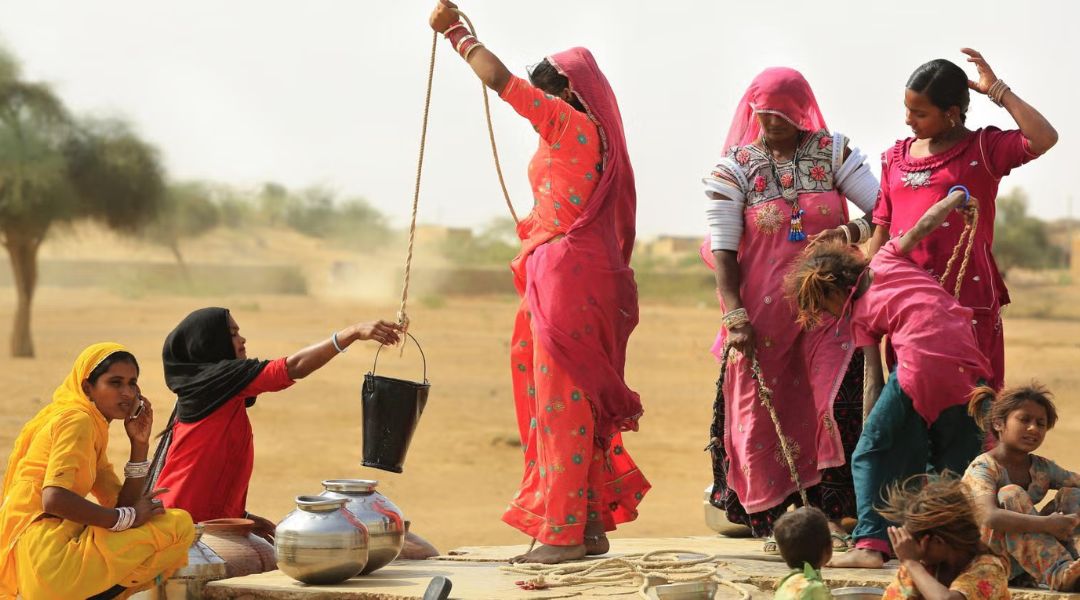
India’s water paradox is stark—we have abundant rivers and monsoons, yet face recurring shortages. Over 80% of our drinking water comes from underground aquifers, but relentless extraction is depleting them. Cities like Chennai, Bengaluru, and Delhi are already seeing the consequences through sinking water tables, salinity, and supply conflicts.

Traditional fixes—dams, canals, and desalination—help but come with ecological and economic trade-offs. With demand outpacing supply, it’s clear we need new approaches.

One overlooked source lies above us: the atmosphere. It holds six times more water than Earth’s rivers. With Atmospheric Water Generators (AWGs), we can harvest humidity and convert it into safe drinking water—right where it’s needed. This decentralized model cuts dependence on tankers, pipelines, and plastic bottles, while offering resilience in times of patchy rainfall or aquifer stress.

India’s humid climate makes AWGs especially viable. They can complement rainwater harvesting, recharge programs, wastewater treatment, and desalination—diversifying our water portfolio much like solar energy transformed power generation. With the right policy recognition, corporate adoption, and public mindset shift, atmospheric water can become a mainstream solution.

Water should not be a privilege but a basic right, as accessible as switching on a light. By looking up, not just down, India can move from depletion to renewal.

Read the full article here: The Hans India

The Week

As climate change intensifies and extreme weather events strain freshwater availability, Indian researchers and innovators are exploring cutting-edge solutions to tackle water scarcity. On World Water Day, attention turns to ideas that go beyond conventional sources like groundwater and surface water.

Harnessing Rain Energy
Dr. Visakh Vaikuntanathan and his team at Shiv Nadar University are working on an innovative concept: extracting energy from rainfall. Their research focuses on “all-weather cells” that function as both solar and rain-powered energy units. By calculating rainfall intensity and raindrop energy using IMD data, they aim to build a rain energy map and harvest kinetic energy through rooftops and drainage systems.

Water from Air: A Real-World Solution
Another futuristic technology making real-world impact is atmospheric water generation (AWG). Navkaran Singh Bagga, CEO of Akvo, leads the way with machines that pull humidity from the air and turn it into clean drinking water. Operating in 15 countries, Akvo offers eco-friendly, decentralized water systems with zero upfront costs through its BOOT model. The company recently launched the Water-on-Want (WoW) initiative, providing sustainable water solutions to corporates across India.

“AWG offers a reliable and green alternative to depleting water resources,” says Bagga. “It’s scalable, efficient, and built for future resilience.”

Technology and the Himalayas
In the Himalayan region, melting glaciers are altering river flows and threatening water security. Experts like Dr. Dipankar Saha from MRIIRS emphasize the need for urgent intervention. Companies such as Suhora are using satellite data, sensors, and predictive analytics to monitor glacial changes and help reduce disaster risks.

With India home to 18% of the global population but only 4% of freshwater resources, such innovative technologies are not just promising – they’re essential.

To read the full article visit here.

Why is Akvo the Future Of Water?

As we try to envision a future for mankind on Mars, there is an urgent need to make our planet once again inhabitable for millions. For starters, everyone, regardless of where they live or how little they make, should have that most basic of human necessities — clean water.

There are 785 million people who do not get drinking water. And about half a million people die of diarrhea caused by contaminated drinking water every year, according to the World Health Organization. By 2030, 700 million people could be displaced because of intense water shortage, according to the UN.

The water problems of different regions call for a variety of solutions, and among the most talked-about innovations is making water out of thin air, literally.

At Akvo, our endeavour is to tackle the water issues experienced worldwide by providing environmentally sustainable solutions that minimize the use of groundwater and develop innovative cost efficient technology to provide clean and safe water for all.

Akvo® is clean tech company and a leader in the design and manufacture of a large range of atmospheric water generators (AWG) to provide a solution to global water needs. Our Atmospheric Water Generators are ideal for areas that are affected by water scarcity or water contamination as they require no water source to produce healthy, purified drinking water from the atmosphere.

With only 60% of the world’s water ready for consumption by 2030, Akvo, was born out of the idea to provide a solution to curb and tackle the global water scarcity by providing a cost effective machine that uses the least amount of power to generate the most amount of water – with zero environmental impact.

Air-to-water technology is the process of converting water vapor in the air (humidity) to water. Akvo atmospheric water generators replicates this natural process of condensation by simulating the dew point, which allows it to make water continuously, even in low humidity conditions.

What is unique about this technology?

The atmosphere contains 37.5 Million Billion Gallons of water. This is part of the hydrological cycles which maintains air and water vapour making this a virtually unlimited source of water. The most abundant source of fresh water is the Earth’s atmosphere. When atmospheric humidity condenses, it falls as rain. Akvo® replicates this natural process of condensation by simulating the dew point, which allows it to make water continuously, even in low humidity conditions. Our unique technology uses optimised dehumidification techniques to extract and condense moisture in the air to produce healthy, purified drinking water.

With an unlimited source of fresh water in the atmosphere and coupled with our technology to harness it, Akvo truly is the future of water with massive potential to create unlimited drinking water.