
Techgraph

This is a major problem worldwide; it affects billions of people in homes, villages, and towns. Population increases, climate change and limited water resources make the situation worse and thus require innovative approaches.

In the current world, technology is still rising as the key driver and is changing the way that water is harvested, treated, and transported to communities across the world.

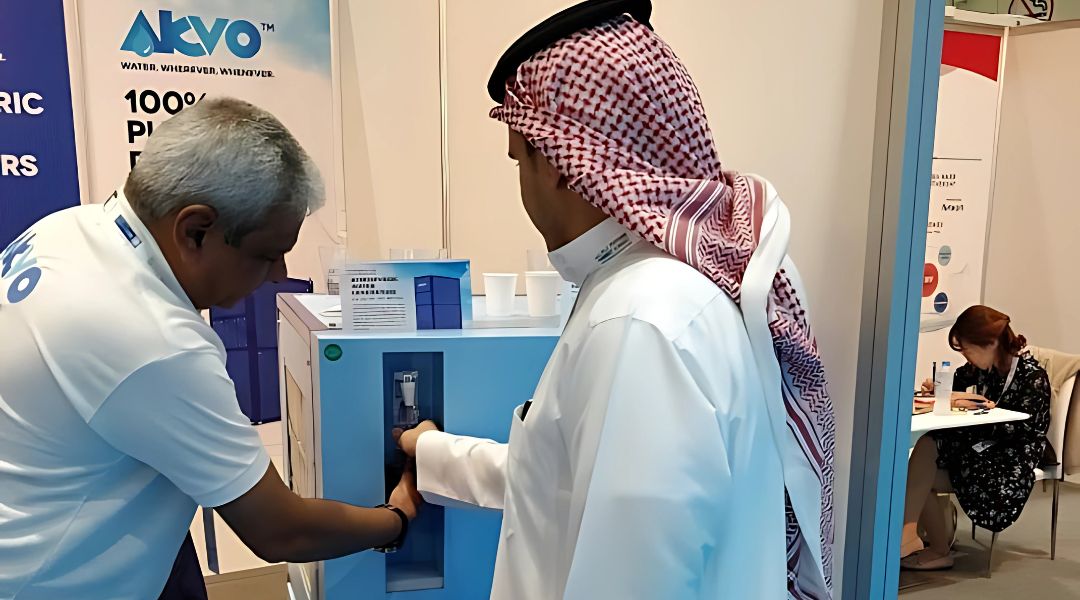
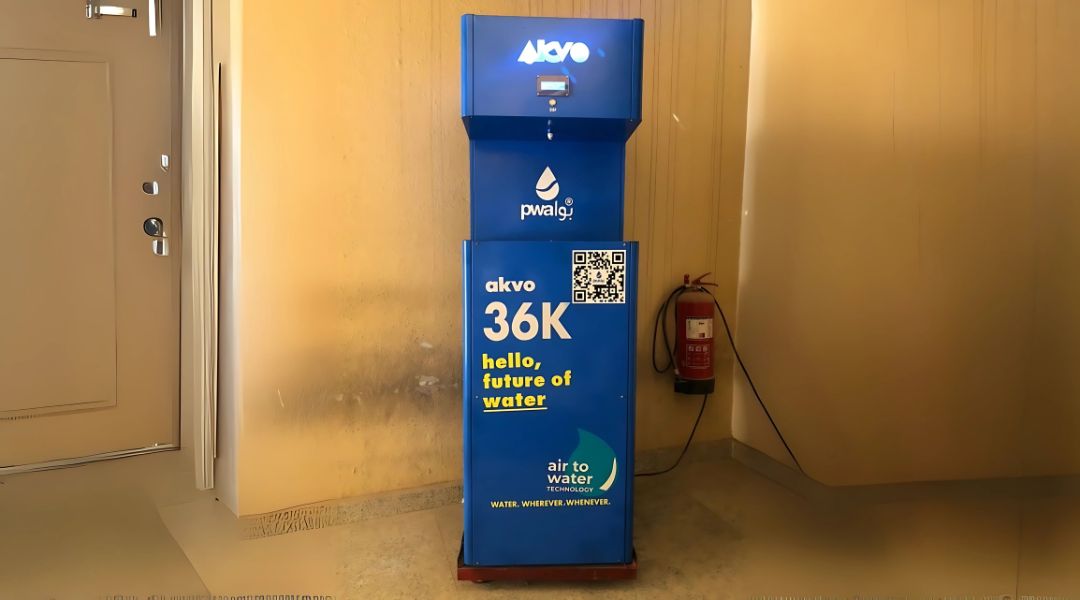
This has been one of the most important developments in the last few years with the development of atmospheric water generation technology. These systems pull the moisture from the air and produce clean drinking water that can be taken to areas with limited infrastructure. Air water generators can work in almost all kinds of climate conditions and provide water solutions to people in arid areas and areas that have been affected by disasters. This technology is further improved by the developments in the design of solar-powered and energy-saving systems, which make this technology a better option than conventional water sources.

In addition to management, new technologies are available that are creating a change in the way that water is gathered and stored by the communities. The application of IoT sensors, data analysis, and cloud computing enable the real-time monitoring of water quality, distribution systems, and consumption trends. Local authorities and utilities can save time and cost on repairs and prevent losses and pollution by identifying leaks, tolerances, or overuse of water. This degree of data granularity also assists policymakers in making better decisions on water control and management and the utilization of resources.

Other filtration and purification technologies also enhance the community’s water resilience. Graphene-based filters and other new-age materials can filter out pollutants and microbes and provide safe drinking water even in highly industrialized waters. Along with these technologies, portable purification devices also help people during personal requirements and during calamities, thus protecting the health of people in vulnerable populations.

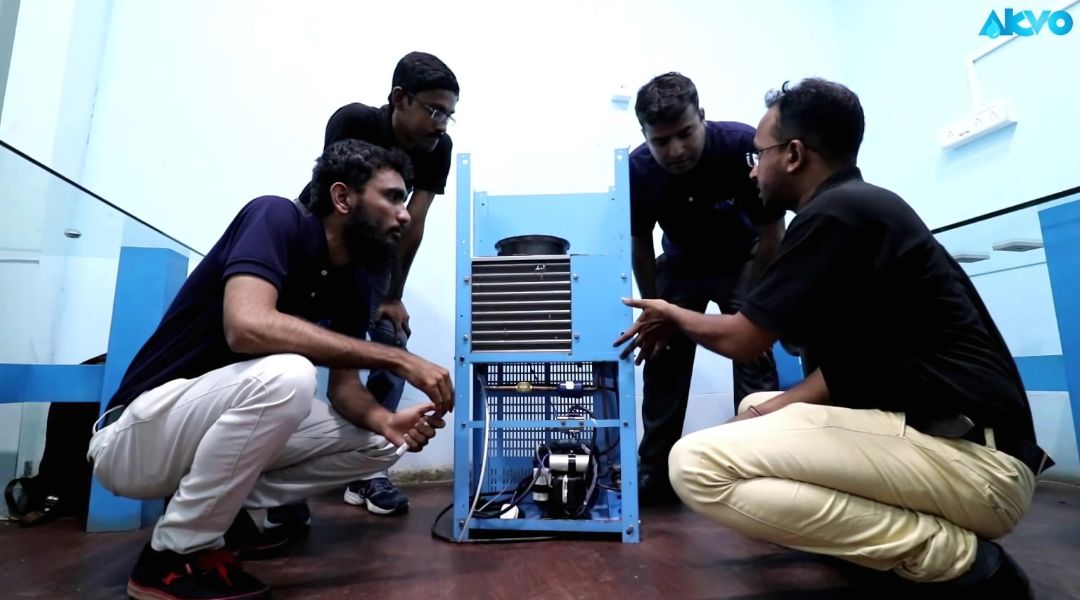
This is because water tech solutions are not applied in isolation. New technologies cannot work effectively on their own; they need to be integrated into wider strategies that include education, infrastructure development, and community participation for the sustainability of the interventions. One of the other ways is training the local people on how to use and maintain the new technology so that they own it. Private public partnerships and social enterprises also have a significant role to play. These partnerships help economically disadvantaged communities access clean water by investing in reusable and scalable systems, subsidizing distribution costs, and providing microfinance solutions.

In conclusion, the integration of innovation, policy, and the power of community is the way forward to closing the water divide. From atmospheric water generation to the latest filtration systems and IoT-based monitoring, each new technology is helping to create stronger, more independent communities. If all the stakeholders and donors remain committed to their efforts, we may one day be able to provide safe water to people no matter where they are in the world.

With the help of technology and people’s cooperation, water can be transformed to be the source of improvement, health, and the future we desire for everyone, anywhere.
Written by
Navkaran Singh Bagga,
CEO & Founder, AKVO

India Today

Sustainable Water Management Strategies by Akvo

India faces a growing water crisis, with 70% of its water polluted (NITI Aayog). At Akvo, we believe clean water is essential for public health, environmental restoration and economic growth. It is key to building a sustainable, pollution-free India.

Our Founder & CEO, Navkaran Singh Bagga, outlines strategies for sustainable water management:

Harnessing Atmospheric Water Generation (AWG) Technology

Akvo’s Water Block extracts clean drinking water directly from the air, providing a decentralized, eco-friendly solution. Modular and IoT-enabled, it can be deployed in urban rooftops, rural schools, and remote areas, reducing dependence on groundwater.

Circular Water Management

Promoting water reuse through treatment and recycling ensures minimal waste and sustainable water use across agriculture, industries and households.

Community-Centric Solutions

Empowering communities through:

  • Water User Associations
  • Micro-Irrigation
  • Rainwater Harvesting

These grassroots initiatives ensure efficient water management and long-term impact.

Policy and Public-Private Collaboration

Strong policies like Jal Shakti Abhiyan must integrate technologies like AWGs. Public-private partnerships can accelerate infrastructure development and sustainable water solutions.

Education and Awareness

Raising awareness about water conservation helps change behaviors – reducing waste, encouraging rainwater harvesting and promoting sustainable practices.

Conclusion

At Akvo, we are committed to delivering innovative solutions like the Water Block to secure clean water for all and build a pollution-free future.

Read the full article here

Addressing a Global Challenge with Innovation!

Our world faces an urgent water crisis, affecting billions. It’s a scenario that requires immediate action, innovative thinking, and global collaboration. Inspired by the ancient concept of ‘Akrasia’ — the act of knowing what is right but not acting upon it — we are determined to bridge the gap between knowledge and action.

In this video, Navkaran Singh Bagga, CEO of Akvo Atmospheric Water Systems discusses the harsh reality of water scarcity, the universal need for sustainable solutions, and how Akvo Atmospheric Water Systems is rising to meet this challenge. The Atmospheric Water Generation Systems represents more than just technological innovation; they are a beacon of hope, turning air into life-sustaining water.

Let’s move from inaction to impact, from scarcity to abundance. Share your thoughts, your actions, and let’s spread the word.

Together, we can create a future where access to clean water is a reality for all.

https://www.youtube.com/watch?v=zMYCWhGrPn4

Eco-Intelligent.com

Water is a big crisis in today’s world. It doesn’t matter where you live or how lavishly you live; you are going to face the brunt of the water crisis now or at some point in the future.

The problem remains acute in India and the crisis is only growing. Despite relying on a variety of water resources like rivers, above ground storage structures and groundwater, we are still not able to provide sufficient water to the people of this country to meet their daily requirements. Continue reading “Eco-Intelligent.com”

ET Now

Navkaran Singh Bagga, Founder and CEO of AKVO Atmospheric Water Sytems Pvt. Ltd. was invited on ET Now’s SME Initiative ‘Leaders of Tomorrow’ where he talks about atmospheric water generators as a viable source of renewable water source for the future. He also talks about his vision and way forward. Continue reading “ET Now”

Sunday Guardian Live

Kolkata entrepreneur generates drinking water from moisture

As the country faces a ground water crisis, a Kolkata-based entrepreneur has come out with a solution to generate water by extracting atmospheric moisture and making it usable for drinking purpose.

AKVO, a unit of Trishan Exports, has developed a prototype which is ready with its commercial production, using Atmospheric Water Generator (AWG) technology, with capacity to produce 1000 litre per day pure water. The company is in the process to start production of equipment for domestic use also.

The equipment run on the basic principle of converting atmospheric vapour into liquid form and purify it further so that it can be used for drinking. “It’s like harvesting humidity when it is in the air,” said director of AKVO Navkaran Singh Bagga, who was in the capital recently, while speaking to this newspaper.

The device consists of a system wherein the water extracted from the atmosphere is subjected to four-stage purification. Some minerals are added in the process to make it sweet to drink. So at the end of the process, the final water is completely safe for drinking and is just like an RO water. The USP of the product is that it uses unlimited source of water, which is natural and abundant and that no separate purification is required. Humidity/moisture is present everywhere. If some moisture at a particular place is used for condensation, moisture of surrounding areas fills in at that place after some time.  Normally, the humidity is around 80% at a temperature of 28 degree Celsius.

A few hotels and organisations in Kolkata have started using the equipment, which Bagga claims is “fully indigenous”. A 1000 litre capacity equipment costs Rs 9 lakh. Right now, the cost of domestic equipment is coming close to about Rs 1 lakh, which according to Bagga, is too costly for domestic consumers. “We are working out ways to cut the cost so that it can be made available at a reasonable price of Rs 35,000 to Rs 40,000. We hope we will be able to do it very soon,” he said.

Bagga is talking to Indian Railways and municipal corporations across the country for installing this equipment which can solve the drinking water problem to a great extent. For water ATMs, this device can be used instead of RO, he said, adding the most abundant source of fresh water is Earth’s atmosphere which should be tapped for our use.

When asked if separate equipment needed to be manufactured as percentage of humidity varies from place to place, he said: “We are trying to customise the product depending on the humidity of a particular location. For example, it will be easier to extract water in places like Kolkata or Chennai because of the presence of high quantity of moisture in the atmosphere, but it will consume more power in dry places like Rajasthan. We are trying to come out with a solution which can work best in low humidity areas.”

Read the article here: Sunday Guardian Live