
Techgraph

This is a major problem worldwide; it affects billions of people in homes, villages, and towns. Population increases, climate change and limited water resources make the situation worse and thus require innovative approaches.

In the current world, technology is still rising as the key driver and is changing the way that water is harvested, treated, and transported to communities across the world.

This has been one of the most important developments in the last few years with the development of atmospheric water generation technology. These systems pull the moisture from the air and produce clean drinking water that can be taken to areas with limited infrastructure. Air water generators can work in almost all kinds of climate conditions and provide water solutions to people in arid areas and areas that have been affected by disasters. This technology is further improved by the developments in the design of solar-powered and energy-saving systems, which make this technology a better option than conventional water sources.

In addition to management, new technologies are available that are creating a change in the way that water is gathered and stored by the communities. The application of IoT sensors, data analysis, and cloud computing enable the real-time monitoring of water quality, distribution systems, and consumption trends. Local authorities and utilities can save time and cost on repairs and prevent losses and pollution by identifying leaks, tolerances, or overuse of water. This degree of data granularity also assists policymakers in making better decisions on water control and management and the utilization of resources.

Other filtration and purification technologies also enhance the community’s water resilience. Graphene-based filters and other new-age materials can filter out pollutants and microbes and provide safe drinking water even in highly industrialized waters. Along with these technologies, portable purification devices also help people during personal requirements and during calamities, thus protecting the health of people in vulnerable populations.

This is because water tech solutions are not applied in isolation. New technologies cannot work effectively on their own; they need to be integrated into wider strategies that include education, infrastructure development, and community participation for the sustainability of the interventions. One of the other ways is training the local people on how to use and maintain the new technology so that they own it. Private public partnerships and social enterprises also have a significant role to play. These partnerships help economically disadvantaged communities access clean water by investing in reusable and scalable systems, subsidizing distribution costs, and providing microfinance solutions.

In conclusion, the integration of innovation, policy, and the power of community is the way forward to closing the water divide. From atmospheric water generation to the latest filtration systems and IoT-based monitoring, each new technology is helping to create stronger, more independent communities. If all the stakeholders and donors remain committed to their efforts, we may one day be able to provide safe water to people no matter where they are in the world.

With the help of technology and people’s cooperation, water can be transformed to be the source of improvement, health, and the future we desire for everyone, anywhere.
Written by
Navkaran Singh Bagga,
CEO & Founder, AKVO

Hindustan Times

The global water crisis, exacerbated by climate change, urbanization, and population growth, requires immediate and innovative action. Navkaran Singh Bagga, CEO & Founder of AKVO, highlights how technology is reshaping water management for a sustainable future. Digital tools like IoT sensors, satellite imagery, and AI-driven analytics enable real-time monitoring and predictive insights, allowing water managers to address issues before they escalate. Circular water economies and advanced wastewater treatment further contribute by transforming waste into reusable water, reducing reliance on dwindling freshwater sources.

Equally groundbreaking is Atmospheric Water Generation (AWG), which harnesses moisture from the air to produce safe drinking water, even in arid regions. Precision agriculture and smart irrigation optimize water use in farming, addressing a sector responsible for 70% of global water withdrawals. Achieving global water resilience, however, requires more than technology; collaborative ecosystems, supportive policies, and community empowerment are critical. By leveraging innovation, fostering partnerships, and ensuring equitable access, we can transition from crisis to sustainability.

Read the full article here.

India Today

Sustainable Water Management Strategies by Akvo

India faces a growing water crisis, with 70% of its water polluted (NITI Aayog). At Akvo, we believe clean water is essential for public health, environmental restoration and economic growth. It is key to building a sustainable, pollution-free India.

Our Founder & CEO, Navkaran Singh Bagga, outlines strategies for sustainable water management:

Harnessing Atmospheric Water Generation (AWG) Technology

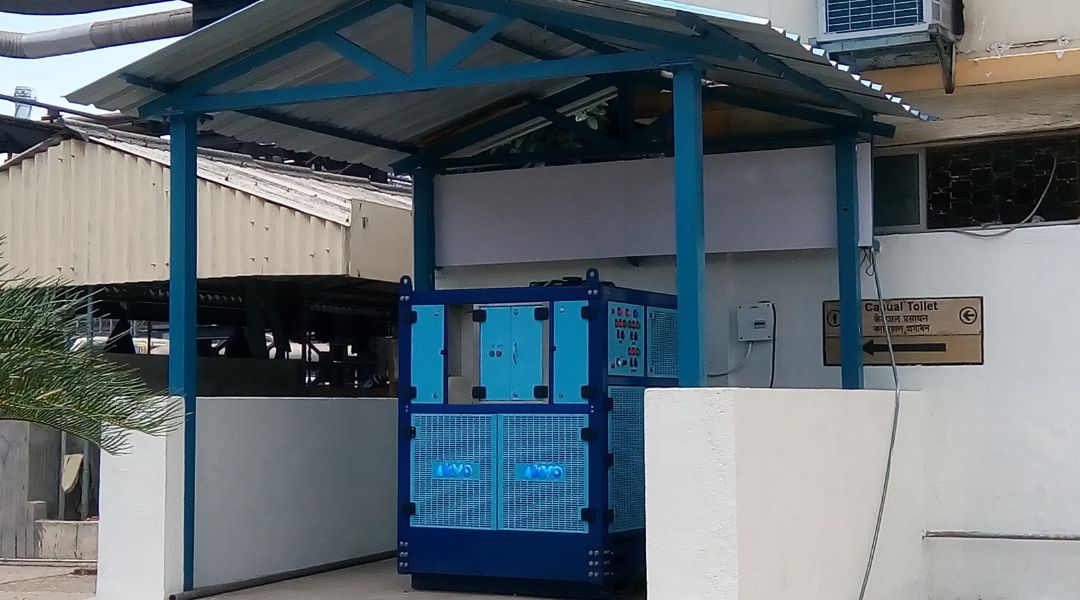
Akvo’s Water Block extracts clean drinking water directly from the air, providing a decentralized, eco-friendly solution. Modular and IoT-enabled, it can be deployed in urban rooftops, rural schools, and remote areas, reducing dependence on groundwater.

Circular Water Management

Promoting water reuse through treatment and recycling ensures minimal waste and sustainable water use across agriculture, industries and households.

Community-Centric Solutions

Empowering communities through:

  • Water User Associations
  • Micro-Irrigation
  • Rainwater Harvesting

These grassroots initiatives ensure efficient water management and long-term impact.

Policy and Public-Private Collaboration

Strong policies like Jal Shakti Abhiyan must integrate technologies like AWGs. Public-private partnerships can accelerate infrastructure development and sustainable water solutions.

Education and Awareness

Raising awareness about water conservation helps change behaviors – reducing waste, encouraging rainwater harvesting and promoting sustainable practices.

Conclusion

At Akvo, we are committed to delivering innovative solutions like the Water Block to secure clean water for all and build a pollution-free future.

Read the full article here

Addressing a Global Challenge with Innovation!

Our world faces an urgent water crisis, affecting billions. It’s a scenario that requires immediate action, innovative thinking, and global collaboration. Inspired by the ancient concept of ‘Akrasia’ — the act of knowing what is right but not acting upon it — we are determined to bridge the gap between knowledge and action.

In this video, Navkaran Singh Bagga, CEO of Akvo Atmospheric Water Systems discusses the harsh reality of water scarcity, the universal need for sustainable solutions, and how Akvo Atmospheric Water Systems is rising to meet this challenge. The Atmospheric Water Generation Systems represents more than just technological innovation; they are a beacon of hope, turning air into life-sustaining water.

Let’s move from inaction to impact, from scarcity to abundance. Share your thoughts, your actions, and let’s spread the word.

Together, we can create a future where access to clean water is a reality for all.

https://www.youtube.com/watch?v=zMYCWhGrPn4

Clean Future

Akvo Atmospheric Water Systems has been working since 2016 to design and manufacture a product which would utilize the moisture in the air and condense it to produce fresh drinking water.

With an initial investment of Rs 5 crore, bootstrapped to the founding team, it manufactures its products in West Bengal and has been selling them in the market since May 2018.

The equipment has a refrigeration system and heat exchangers which help achieve right temperatures to form condensate when air is sucked and brought into the system.

The condensate is then collected and dispensed for use, explains Navkaran Singh Bagga, founder and CEO of the company.

The products are designed to run at temperatures ranging from 10-degree Celsius to 60-degree Celsius with humidity factor of 30-80%, making it a viable model to deploy in coastal and hilly areas, especially in tropical countries that are rich in atmospheric moisture content.

The machines are rated for different run times and generation capacities. For example, one model can run for 24 hours and produce 100 liters in ideal condition.

It draws 250Wh of energy per liter of water generated which also reduces the stress on the grid when runs on power generated from localized renewable sources.

One of the early adopters of this product is Indian Oil refinery in Haldia, near Kolkata. The product has helped decentralize water availability on a massive 300-acre area, enabling workers to access drinking water at six locations.

The Madhya Pradesh government has also taken a 1000-litre system to supply water to Hardua Mangarh village in Damoh district.

The company is also expanding to West Asia. Gulf region will be his major focus in the next couple of years.

Currently, the company has a revenue of around Rs 1.5 crore but with an expanding distribution network and new markets in the Gulf, it expects to hit its target of Rs 12 crore in the coming financial year.

Discover the full story behind Akvo’s innovative journey and its groundbreaking technology here.