Philippines – Emergency water supply: A lifeline for the ports authority

Location: Philippines
Usage: Emergency water supply for the Philippines Port Authority
Setup Type: Standalone, Trailerized Solutions

Background

The Philippines, frequently battered by typhoons and natural disasters, needed a robust water supply system for its ports to ensure continuity of operations and safeguard public health during emergencies. The Philippines Port Authority sought a solution that was both mobile and capable of providing immediate relief in times of crisis.

Solution

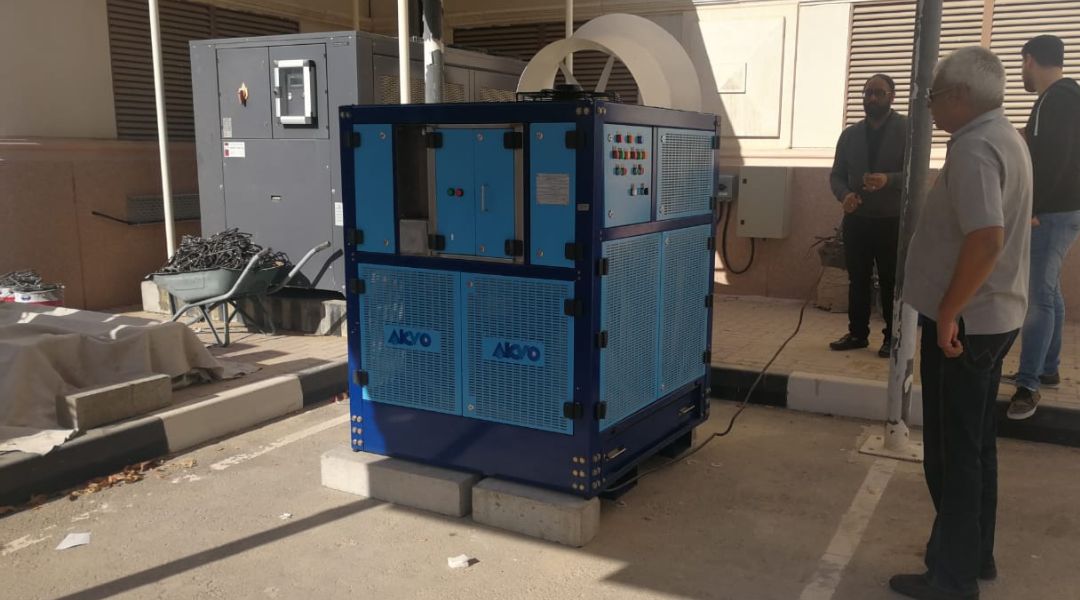
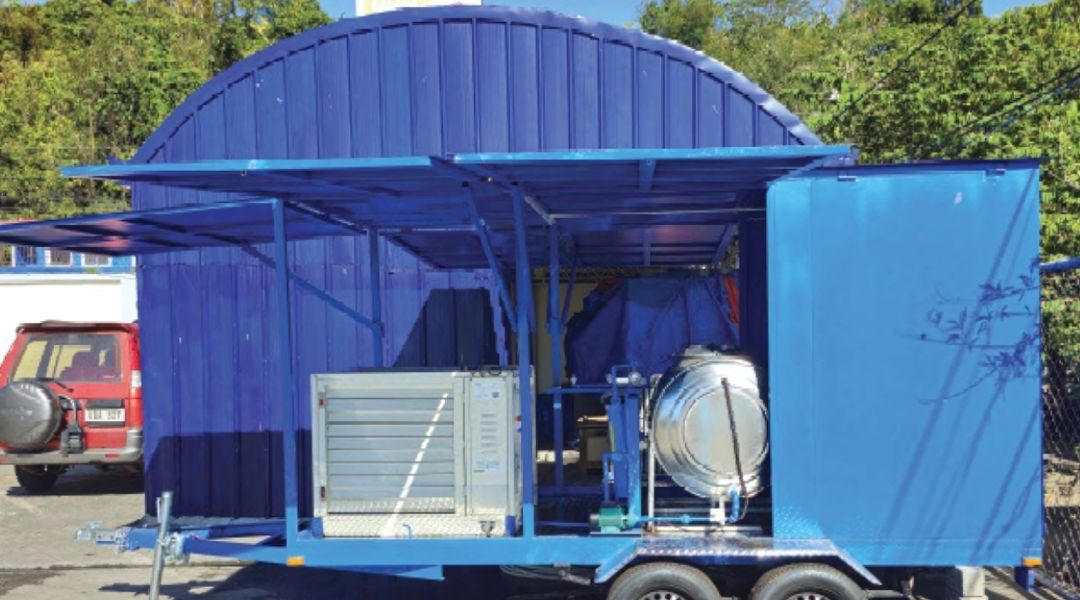
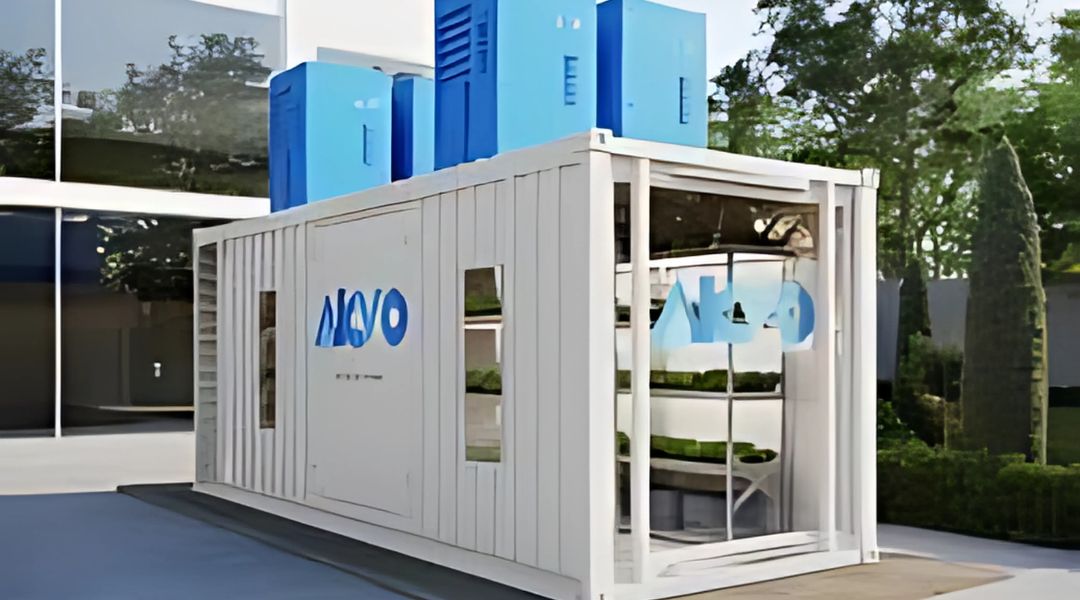
Akvo developed and deployed 25 trailerized AWG solutions, each equipped with a 300 LPD system and backup generators. These mobile units were designed for rapid deployment and could be positioned across various ports as needed. The self-contained systems ensured that clean water was available even in the most challenging conditions, with minimal setup time.

Impact

– Emergency Preparedness: The Port Authority gained the ability to respond swiftly to emergencies, providing essential water supplies during disasters.
– Operational Continuity: Ensured the availability of potable water at key strategic points, maintaining port operations and public safety during critical times.
– Versatility and Mobility: The trailerized systems could be moved to any location, offering flexibility in response to varying emergency scenarios.

Chennai – Empowering a corporate giant with on-site water generation

Location: Chennai
Usage: Drinking water supply for a large corporate headquarters
Setup Type: Distributed Water Supply with Rooftop AWGs

Background

A major corporate headquartered in Chennai, employing over 5,000 people, required a reliable, high volume water solution that could keep pace with its growing needs. The traditional reliance on municipal water supplies posed a risk of shortages and disruptions, making it imperative to find a self-sufficient alternative.

Solution

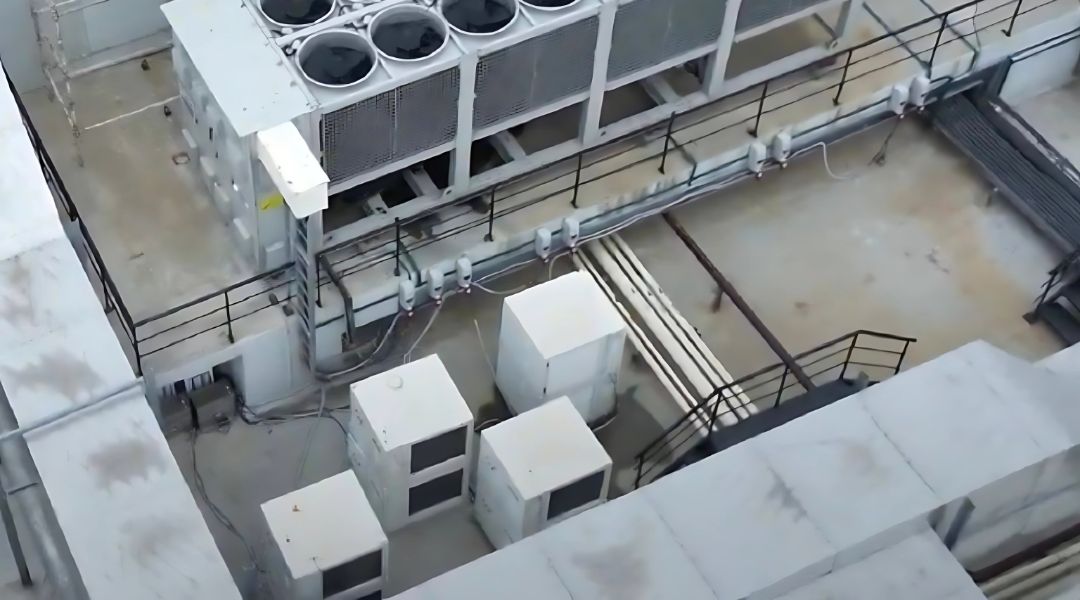
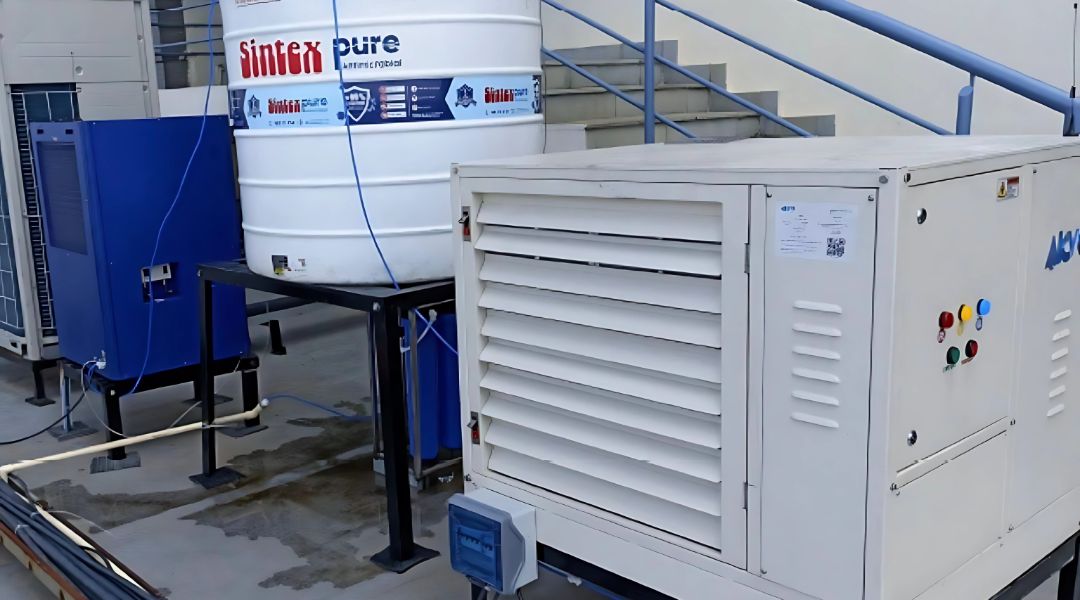
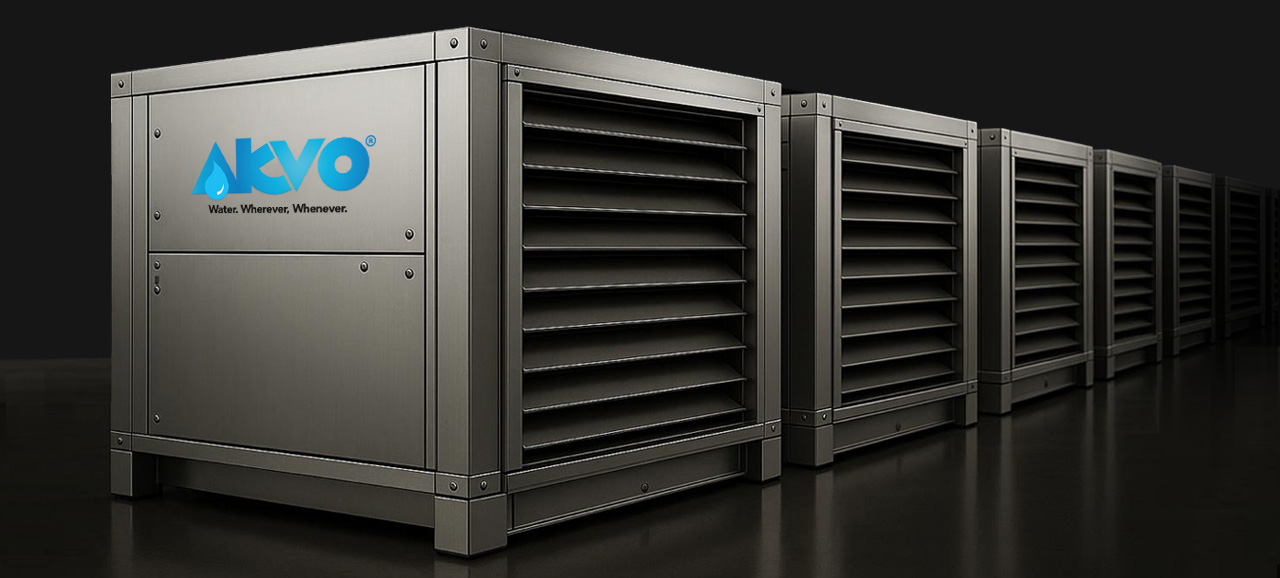
Akvo installed 60 Water Blocks on the rooftop, each generating 500 litres of water per day. This modular setup, producing a total of 30,000 litres daily, was connected to multiple distribution points across the headquarters, ensuring a steady low of fresh water for all employees, visitors, and operational needs.

Impact

– Self-Suficiency: The company gained complete control over its water supply, eliminating dependence on external sources and mitigating the risk of water scarcity.
– Enhanced Sustainability: By generating water on-site, the corporate reduced its environmental footprint, supporting its broader sustainability goals.
– Team Well-Being: A consistent supply of high-quality drinking water & enhancing workplace health.

Gujarat – Redefining industrial water solutions for employee welfare

Location: Gujarat
Usage: Drinking water for factory employees
Setup Type: Distributed Water Supply with Rooftop AWGs

Background

The largest glass bottle manufacturer in Gujarat, employing thousands, faced a persistent challenge: ensuring the availability of safe drinking water in a region where groundwater resources were both scarce and compromised. A reliable, decentralised solution was essential to safeguard employee health and productivity.

Solution

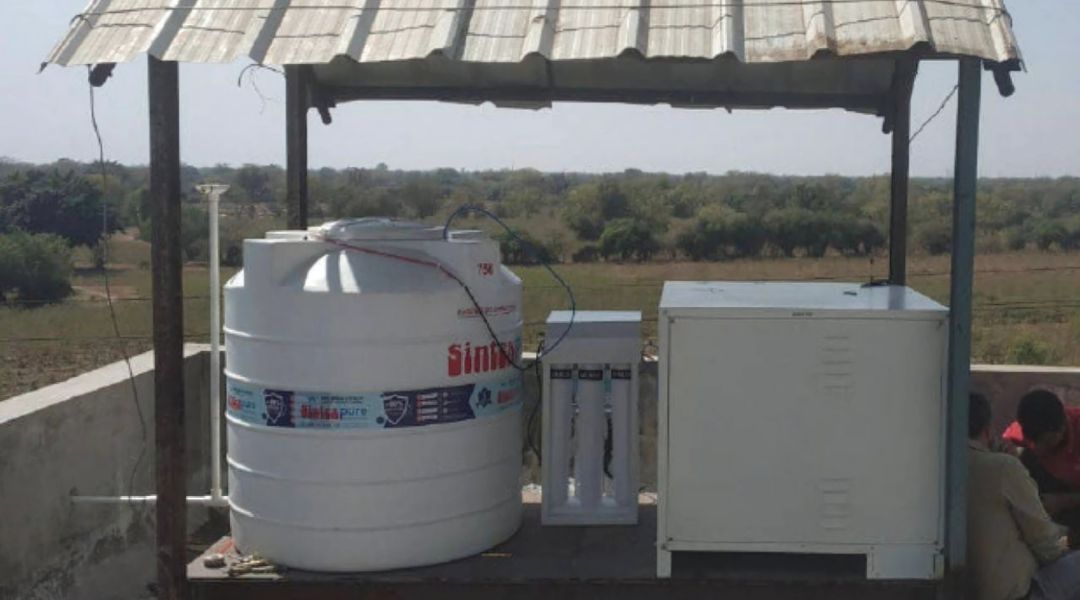
Akvo deployed multiple 500 LPD AWGs across the factory premises, strategically installing them on rooftops and connecting them to various distribution points throughout the facility. This setup ensured that every employee had easy access to fresh drinking water, regardless of their location within the factory.

Impact

– Employee Health and Safety: The provision of clean drinking water reduced health risks and absenteeism, contributing to a more productive workforce.
– Operational Eficiency: The decentralised system eliminated the logistical complexities of transporting water, ensuring consistent availability at a lower operational cost.
– Sustainability Leadership: By adopting a renewable water generation model, the company positioned itself as a leader in sustainable industrial practices.

Bengaluru – Revolutionising corporate water supply with WOW (Water on Want)

Location: Bengaluru
Usage: Corporate water supply through a pay per-litre model
Setup Type: Distributed Water Supply with Rooftop AWGs

Background

A leading corporate in Bengaluru, catering to thousands of employees, faced the dual challenge of ensuring a consistent supply of high-quality drinking water while managing costs and environmental impact. The conventional approach of procuring bottled water was not only expensive but also contributed to significant plastic waste, contradicting the company’s sustainability goals.

Solution

Akvo implemented its WoW (Water on Want) model, installing rooftop AWGs capable of producing 3000 liters per day. This innovative pay-per-litre BOOT (Build Own Operate-Transfer) setup allowed the corporate to access fresh water on demand, eliminating the need for bottled water. Multiple dispensers were strategically placed across the campus to ensure easy access for all employees.

Impact

– Sustainable Transformation: Reduced the use of single-use plastics by over 80%, aligning the company with its environmental commitments.
– Cost Efficiency: Achieved significant cost savings on water procurement and logistics, reinvesting the savings into employee welfare programs.
– Enhanced Employee Experience: Improved access to fresh, chilled water, contributing to employee satisfaction and productivity.

Silicon India

Access to clean drinking water remains a critical issue worldwide, especially for underserved communities facing the challenges of water scarcity. AKVO Atmospheric Water Systems, founded in 2017 by Navkaran Singh Bagga in Kolkata, is pioneering an innovative solution to this pressing problem by turning atmospheric moisture into clean, drinkable water.

Continue reading “Silicon India”

Harnessing the Skies for Hydration: Akvo’s Innovation Lights Up Lakshadweep

We’re thrilled to share a snapshot of change – straight from the heart of Lakshadweep!

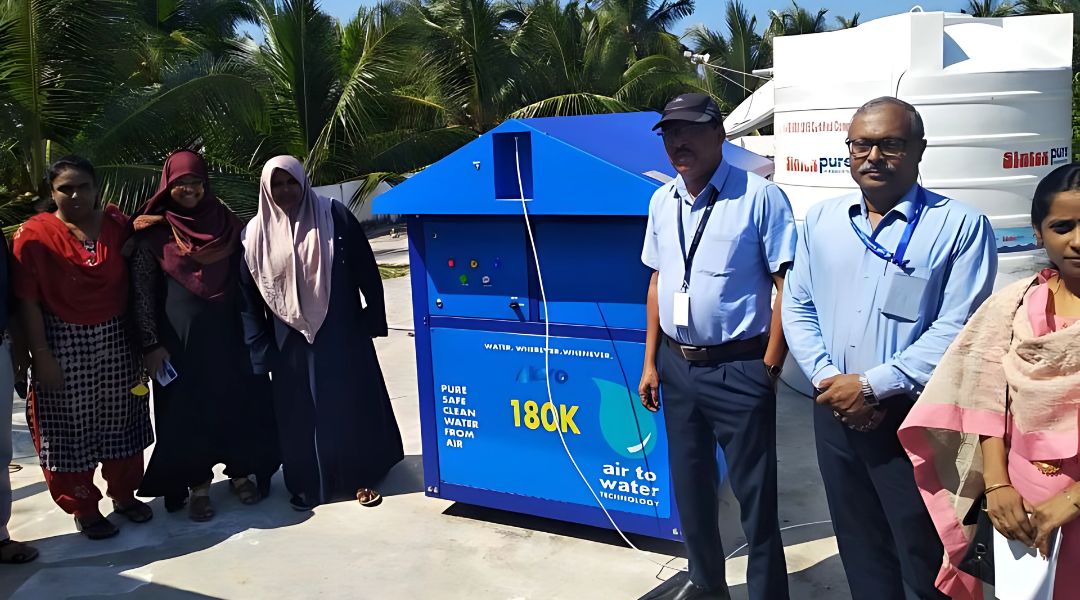
The year 2019 marked a leap forward in our journey towards water sustainability as we, Akvosphere, in collaboration with the Airport Authority of India (AAI), brought our state-of-the-art 180K machine to the sun-kissed isle of Agatti.

Educational Empowerment

Nested within the walls of a school that once felt the parched throes of scarcity, now stands a beacon of hope—our Akvo unit. With each drop of clean water it produces, it signifies a tide turning against water scarcity, delivering not just life-sustaining hydration but also seeding the clouds of knowledge about sustainable living and innovation among young minds.

Technology and Community

This picture captures the essence of collaboration, where technology meets humanity. The smiles reflect a community’s resilience and the promise of a future where clean water isn’t a luxury but a given. The Akvo 180K machine is more than an appliance; it’s a testament to human ingenuity and the spirit of CSR that aims to quench the thirst of generations.

Impacting Lives

As we look back at the deployment in Lakshadweep, we are reminded that innovation isn’t just about the machines we build; it’s about the lives we touch. The success of this project has paved the way for many more, spreading ripples of sustainability across the globe.

Join the Conversation

Let’s discuss how we can bring such transformative changes to more communities in need. Share your thoughts on how we can collectively make a difference with innovative water solutions.

Sustainability Karma

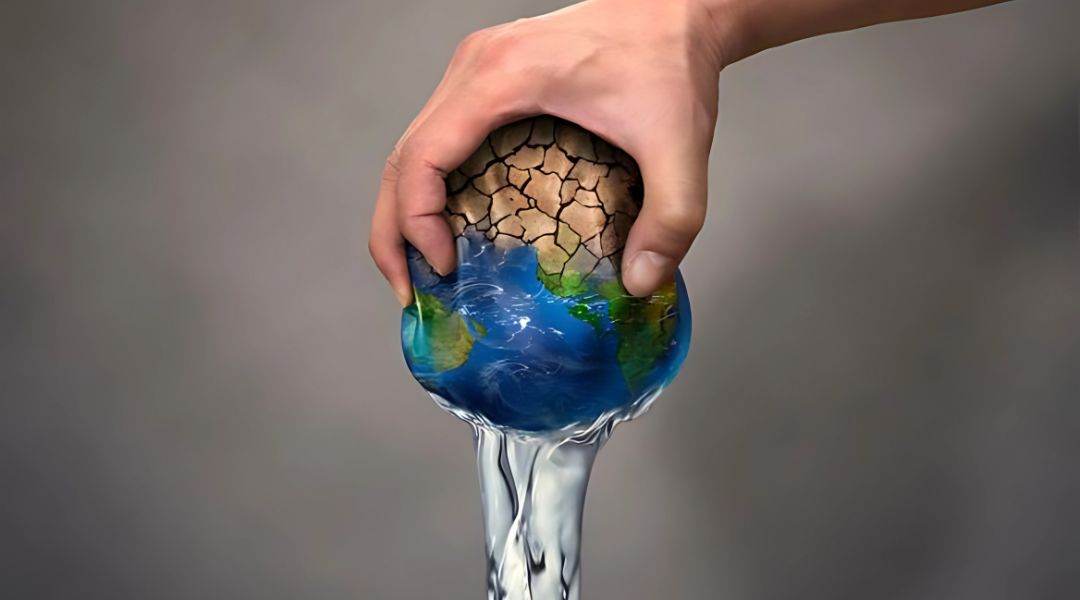
The global water crisis is the most pressing issue of our times, making its way across more than two billion people without clean and safe drinking water. Several factors cause this growing scarcity, namely: climate change, rapid urbanisation, and the depletion of freshwater resources. Because of this, the innovation of more presiding pressing water technologies has been their shift towards addressing these challenges, promoting sustainability, and helping in aspects to counteract climate change. One of the exciting innovations in water technology goes by the name of Atmospheric Water Generators or AWGs for short.

Continue reading “Sustainability Karma”

Bizz Buzz

The traditional reliance on groundwater and river systems is proving inadequate and unsustainable

Many forward-thinking corporates are early adopters of AWG technology, utilizing it to meet their sustainability goals while also curbing costs on drinking water for their workforce. This adoption underscores the practical and economic benefits of AWG 

India’s relentless quest for sustainable water resources in the face of escalating scarcity and pollution finds a promising ally in Atmospheric Water Generation (AWG). This innovative technology, which extracts potable water directly from the air, is revolutionizing how we access and ensure water sustainability. 

The need for sustainable water solutions:
With urban centres burgeoning and climatic irregularities becoming the norm, the traditional reliance on groundwater and river systems is proving inadequate and unsustainable. The pressing demand for clean water in densely populated and industrial regions is increasingly at odds with the finite and often contaminated natural water supplies. 

Science behind atmospheric water generation:
Atmospheric water generation stands out by tapping into the air’s humidity – a vast, underutilized resource. The process is elegantly simple yet profoundly impactful:

1. Air filtration: Initially, air is drawn into the AWG unit, filtering out dust, pollen, and other particles.
2. Condensation: This clean air is then cooled to its dew point, transforming water vapor into droplets.
3. Purification and mineralisation: Finally, these droplets are purified and potentially enhanced with essential minerals, ensuring that the water is both safe and nourishing.

Atmospheric water generation, the game-changer:

Sustainability and scalability: AWG can run on renewable energy, aligning with global carbon reduction goals. The scalability from personal units in homes to larger systems for industrial applications illustrates its versatility, catering to various needs without depleting natural resources. Also Read – Vembu slams ‘Liver Doc’ for calling him ‘health illiterate boomer uncle’

Uncompromised quality: The resultant water is purer than most natural sources, reducing reliance on chemical treatments and promoting health. 

Early adoption by corporates: Many forward-thinking corporates are early adopters of AWG technology, utilizing it to meet their sustainability goals while also curbing costs on drinking water for their workforce. This adoption underscores the practical and economic benefits of AWG, making it an attractive option for businesses aiming to enhance their operational sustainability. As these companies integrate AWG into their daily operations, they not only contribute to environmental conservation but also establish a blueprint for others in the corporate sector. 

Bringing AWG to life in India: In India, AWG’s potential is particularly significant. It can transform rural areas with limited infrastructure by providing reliable access to clean water, or support urban centers with supplementary supplies, ensuring resilience against shortages. Industries requiring high-quality water, like pharmaceuticals and food processing, could see substantial benefits, enhancing both their sustainability and operational reliability. 

Looking ahead: The traction AWG is gaining in urban areas signals a robust trend for the next few years, with more businesses and residential complexes likely to adopt this technology. As promising as AWG technology is, it faces hurdles like dependence on specific climatic conditions and the initial costs and energy requirements. However, ongoing advancements and increasing scale are likely to diminish these barriers, making AWG a cornerstone of India’s strategy to overcome its water challenges.

In line with the Swachh Bharat Abhiyan and other sustainability initiatives, embracing AWG could place India at the forefront of global water management innovation. 

The path forward will involve not only adopting but also adapting this technology to meet local needs and conditions, setting a precedent for others to follow in the pursuit of a sustainable future. 

Discover more about how AWG technology is revolutionizing sustainable water solutions in India by reading the full article here.

(The writer is the founder and CEO of Akvo)

Addressing a Global Challenge with Innovation!

Our world faces an urgent water crisis, affecting billions. It’s a scenario that requires immediate action, innovative thinking, and global collaboration. Inspired by the ancient concept of ‘Akrasia’ — the act of knowing what is right but not acting upon it — we are determined to bridge the gap between knowledge and action.

In this video, Navkaran Singh Bagga, CEO of Akvo Atmospheric Water Systems discusses the harsh reality of water scarcity, the universal need for sustainable solutions, and how Akvo Atmospheric Water Systems is rising to meet this challenge. The Atmospheric Water Generation Systems represents more than just technological innovation; they are a beacon of hope, turning air into life-sustaining water.

Let’s move from inaction to impact, from scarcity to abundance. Share your thoughts, your actions, and let’s spread the word.

Together, we can create a future where access to clean water is a reality for all.

https://www.youtube.com/watch?v=zMYCWhGrPn4

Water crisis hits Bangalore!

Bengaluru, the Silicon Valley of India, is currently facing one of its most challenging adversaries – the water crisis. With dwindling water resources and insufficient supply, residents are grappling with the daily struggle of securing even the most basic necessity of life – water. 

Current Scenario in Bangalore

The water crisis in Bengaluru has escalated to a critical level, with residents resorting to extreme measures to cope. The city, once known for its pleasant climate and lush greenery, is now characterized by parched landscapes and depleted water reserves. Suburban areas like Babusapalya are heavily reliant on water tankers for their daily needs, but even this vital resource has become scarce in recent months.

Residents are facing a myriad of challenges, from high tanker rates to irregular water supply. Despite government interventions like fixed rates for tankers, the problem persists due to high demand and logistical issues. The situation is dire for families, especially those with infants, who struggle to meet their basic hygiene needs. 

The water crisis has permeated every aspect of daily life in Bengaluru. From limited bathing routines to the reliance on treated water for non-drinking purposes, residents are forced to adapt their lifestyles to conserve water. Hospitals, too, are feeling the strain, with facilities like Brookfield Hospital relying on water recycling to meet their needs. Bengaluru needs 2,600-2,800 million liters of water daily and the current supply is half of what’s required. The result is a daily struggle for the city’s residents. 

Initiatives

While the government has taken steps to address the crisis, including fixing tanker rates and implementing fines for misuse of drinking water, criticism abounds regarding the efficacy of these measures. Meanwhile, long-term solutions like the Mahadayi project offer hope for alleviating the city’s water woes, but progress remains sluggish.

Amidst the chaos, voices of resilience emerge from the community. Residents recognize the need for collective action and call for sustainable solutions that extend beyond government intervention. Initiatives like water conservation efforts and online water supply platforms showcase the community’s determination to combat the crisis together.

The water crisis in Bengaluru is not merely a temporary inconvenience but a wake-up call for comprehensive action. As residents endure hardships and authorities grapple with solutions, the need for concerted efforts towards sustainable water management becomes increasingly urgent.

Simple Solution?

Akvo Atmospheric Water Generators (AWGs) have the potential to positively impact the water crisis in Bangalore in several ways:

Localized Water Production: Akvo AWGs can produce water directly from the atmosphere, providing a localized and reliable source of clean drinking water. This reduces dependency on external water sources such as rivers and groundwater, which are currently overstressed and depleting rapidly in Bangalore.

Diverse Applications: These AWGs can be deployed in various settings, including residential areas, commercial complexes, and hospitals. By providing access to clean water at the point of use, Akvo AWGs can alleviate the burden on existing water infrastructure and reduce the need for costly water transportation via tankers.

Energy Efficiency: Akvo AWGs utilize advanced technologies to extract water from the atmosphere with minimal energy consumption. Compared to traditional water purification methods, such as reverse osmosis or distillation, AWGs require lower energy inputs, making them cost-effective and environmentally sustainable in the long run.

Community Empowerment: By decentralizing water production, Akvo AWGs empower communities to take control of their water supply. This reduces reliance on centralized water distribution systems, which are often prone to inefficiencies. Communities can tailor the use of Akvo AWGs to their specific needs, ensuring equitable access to clean water for all residents.

In summary, Akvo Atmospheric Water Generators offer a promising solution to the water crisis in Bangalore by providing localized, clean water production that is resilient to climate fluctuations and energy-efficient. By integrating AWGs into existing water management strategies, Bangalore can mitigate the impacts of water scarcity and ensure a more sustainable future for its residents.

Link to article: https://www.ndtv.com/bangalore-news/bengaluru-water-crisis-bengaluru-residents-hospitals-cry-for-help-as-water-reserves-dwindle-5229006