
Turning Air Into Water — Over 100 Million Litres and Counting
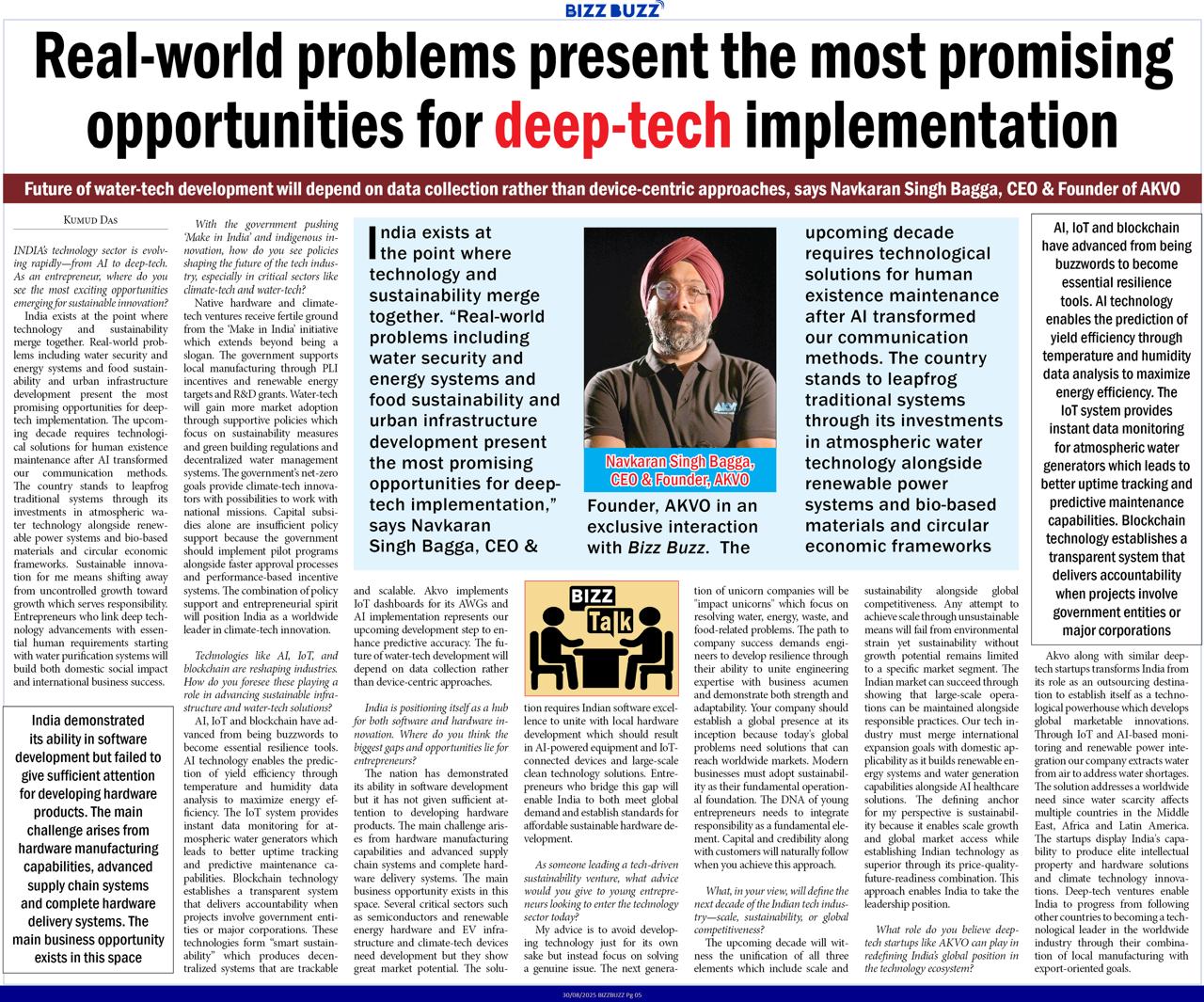
At Akvo Atmospheric Water Systems, we believe access to clean drinking water should not depend on pipelines, borewells, or plastic bottles. Founded in 2017 by Navkaran Singh Bagga, our mission is simple: turn the air around us into safe, sustainable drinking water.
From Vision to Impact
What began as an idea has today grown into a movement. With over 2,000 installations across 15 countries, Akvo has already produced more than 100 million litres of clean water—without drawing a single drop from the ground.
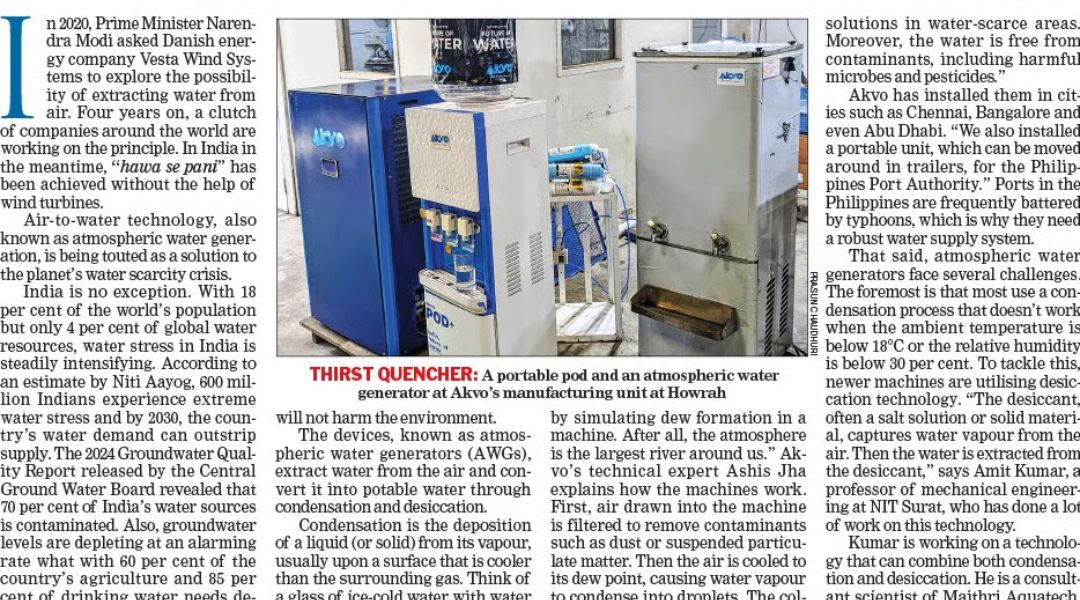
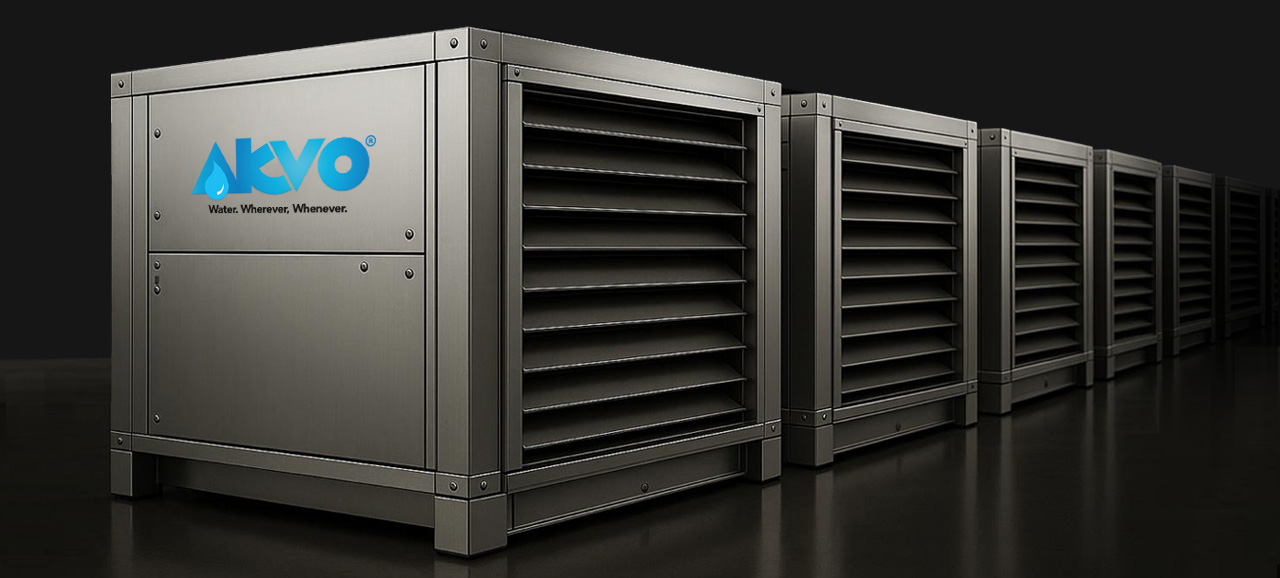
Our Atmospheric Water Generators (AWGs) extract moisture from the air, condense it, and purify it through multi-stage filtration and UV treatment, before enriching it with essential minerals. The result is fresh, mineral-balanced water—produced on-site, wherever it’s needed.
Designed for the World’s Needs
Akvo systems thrive in tropical and coastal climates such as Mumbai, Chennai, Bengaluru, and Kolkata. They are flexible to power—running on electricity, solar, or generators—making them ideal for cities, industries, hospitals, off-grid communities, and emergency zones.
Our solutions scale from 50 litres per day for small setups to 30,000 litres per day for large organisations. Clients can choose to purchase outright or opt for our BOOT (Build, Own, Operate, Transfer) model, paying only for the water consumed.
Real Change, Real Stories
Companies like PGP Glass, Corewire Surface Technology, and Acciona’s Tuppadahalli Wind Farm have replaced bottled water with Akvo systems—cutting costs, reducing plastic, and securing reliable drinking water for their teams.
Growing Without Compromise
Akvo has deliberately chosen sustainable growth over outside investment, ensuring our purpose drives our progress. With a passionate team of 38, we continue to expand in India, the Middle East, South America, and Africa.
The Road Ahead
We know no single company can solve the global water crisis. But every drop matters. By harnessing the atmosphere’s abundant humidity, Akvo is giving people and businesses control over their water, while reducing strain on vulnerable natural sources.
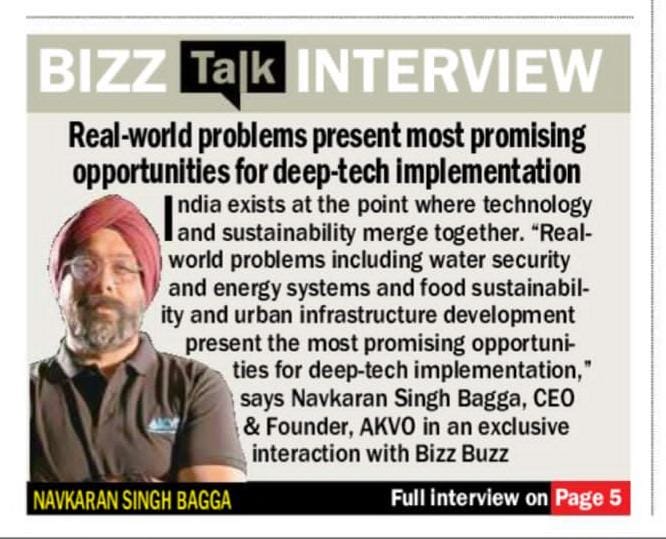
As our founder and CEO, Navkaran Singh Bagga, says:
“The atmosphere does not discriminate; it holds water for all of us. The question is—are we ready to change the way we access it?”
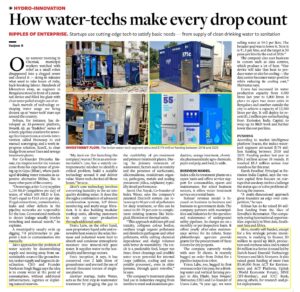
To read the full article, click here.