
India Today

Making Water from Air: From Vision to Breakthrough

A Policy Idea Backed by Science

In 2020, during a virtual interaction with Vestas, Prime Minister Narendra Modi suggested that technology could harvest moisture from the air to generate drinking water. What seemed ambitious at the time has now been reinforced by scientific advancement.

In 2026, Nobel laureate Omar Yaghi, winner of the 2025 Nobel Prize in Chemistry, unveiled an industrial-scale atmospheric water harvesting system capable of producing up to 1,000 litres of water daily — even in extremely dry regions. Through his California-based company Atoco, Yaghi has translated advanced materials science into a practical solution.

The Science: Reticular Chemistry and Molecular Sponges

At the core of this breakthrough is reticular chemistry, a field focused on designing crystalline structures known as Metal Organic Frameworks (MOFs). These highly porous materials function like molecular sponges, capturing water directly from the air through adsorption rather than energy-intensive cooling.

Unlike conventional Atmospheric Water Generators (AWGs) that rely on refrigeration to reach dew point, MOF-based systems chemically attract water molecules, allowing operation even at humidity levels as low as 10–20%. This dramatically reduces energy consumption and expands viability to desert environments.

Decentralised Water Security in Practice

Atmospheric harvesting represents a shift toward decentralised water production. A container-sized unit can generate around 1,000 litres of clean water per day and can operate using solar heat, eliminating dependence on pipelines or lMaking water from air, atmospheric water generation, Omar Yaghi Nobel Prize, reticular chemistry, metal organic frameworks MOF, PM Narendra Modi water vision, Atoco atmospheric harvesting, decentralized water solutions, water from dry air technology, climate resilient water systems, India water security, sustainable water innovationarge infrastructure.

In India, AKVO, led by Navkaran Singh Bagga, deploys condensation-based AWGs suited to the country’s diverse climates. These systems filter air, condense moisture, and purify it through multi-stage treatment, reducing reliance on groundwater, tankers, and bottled water.

A New Era of Resilience

With billions lacking access to safe drinking water and climate pressures intensifying, atmospheric water generation offers a scalable and resilient alternative. By extracting water directly from the air, communities can move toward self-sufficiency — transforming a forward-looking vision into a tangible solution.

Read the full original article here: India Today
The Better India

This Kolkata-Based Startup Is Turning Air Into Water — Over 100 Million Litres and Counting

From Curiosity to Climate Action

Founded by Navkaran Singh Bagga, Akvo Atmospheric Water Systems is redefining how India thinks about drinking water. Headquartered in Kolkata, the company has generated over 100 million litres of clean drinking water across 15 countries — without extracting a single drop from the ground.

With cities like Bengaluru and Chennai facing recurring shortages, and water stress rising in Mumbai, the urgency is clear. Bagga, who studied finance but nurtured a lifelong passion for technology, launched Akvo in 2017 to decentralise access to safe water using Atmospheric Water Generators (AWGs).

Turning Humidity into Drinking Water

Akvo’s AWGs extract moisture from ambient air, filter it, cool it to trigger condensation, and purify the collected water through multi-stage filtration and UV treatment. Essential minerals are then added to ensure the water is safe and balanced for consumption.

The systems perform especially well in humid regions and can operate on grid electricity, solar panels, or generators. Depending on climate conditions, they can produce between 2.5 to 4 litres of water per unit of electricity.

Since its first deployment in 2018, Akvo has installed more than 2,000 systems across India, the Middle East, and parts of South America.

Sustainable Solutions for Industry and Communities

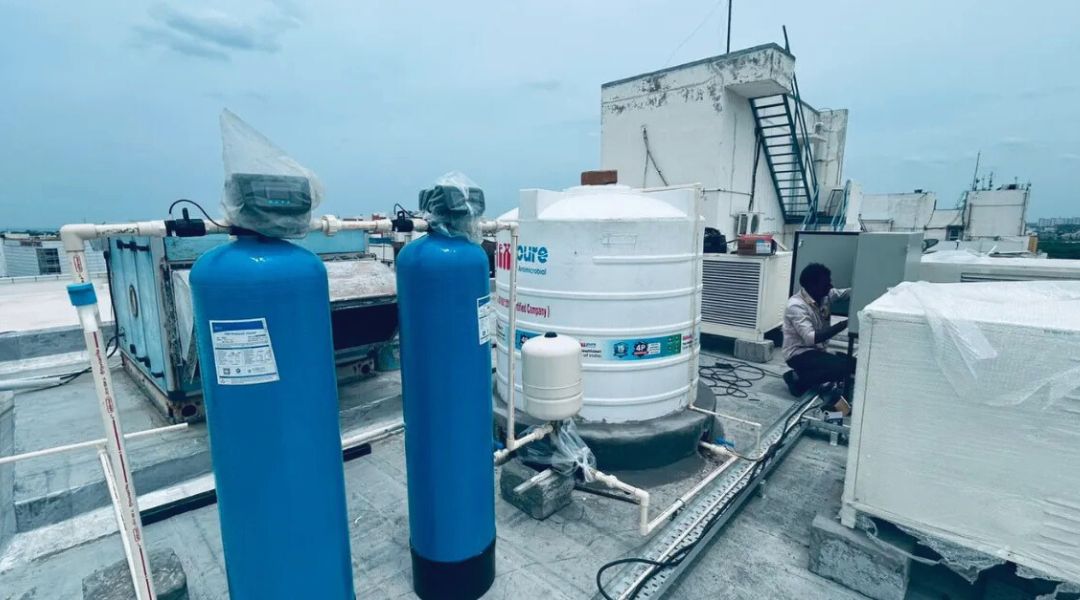
Akvo’s clients include manufacturing plants, renewable energy sites, and hospitals seeking to reduce reliance on groundwater and plastic bottles. At the Tuppadahalli Wind Farm in Karnataka, operated by Acciona, water is now generated on-site — aligning clean water production with renewable power generation.

The company also offers a flexible BOOT (Build, Own, Operate, Transfer) model, allowing businesses to adopt sustainable water systems without upfront capital investment. Clients simply pay for the water they consume.

Scaling with Purpose

Operating with a lean team and without external investors, Akvo has focused on mission-driven growth. Its systems range from 50-litre units to industrial-scale machines producing up to 30,000 litres per day.

As expansion plans target water-stressed yet humid regions in Africa and the Gulf, the vision remains clear: decentralised, climate-resilient water access that reduces dependence on pipelines, tankers, and bottled water.

Akvo’s journey is not just about technology — it is about rethinking water itself. Instead of digging deeper into the ground, the company looks upward, tapping into the vast reservoir already present in the air around us.

Read the full original article here: The Better India

Times Tech

Reimagining Water Infrastructure: How IoT Is Powering the Next Wave of Smart Utilities

From Reactive Systems to Intelligent Networks

For decades, water infrastructure has been treated as static and reactive. Pipes were laid, plants were built, and action was taken only when something failed. Leaks were discovered after losses occurred, and inefficiencies were measured in hindsight. In a world shaped by climate volatility, rapid urbanisation, and rising energy costs, this approach is no longer sustainable.

Water today must be managed as a dynamic system — and the Internet of Things (IoT) is enabling that shift.

Turning Infrastructure into “Living” Assets

Globally, utilities lose an estimated 25–40% of treated water due to leaks and operational blind spots. In decentralised environments — hotels, factories, campuses, or remote communities — visibility is often even lower.

IoT transforms installed equipment into living infrastructure. Sensors embedded in generation units, tanks, filtration systems, and distribution lines continuously monitor flow, quality, energy consumption, and uptime. Connected via cloud platforms, this data allows real-time performance tracking, remote diagnostics, and predictive maintenance.

Instead of reacting to breakdowns, operators can anticipate them — extending asset life, reducing downtime, and improving water security.

Decentralised, Yet Data-Driven

Smart utilities are not limited to large municipal networks. Modular, decentralised systems can now be centrally monitored and optimised without losing control. Underperformance is flagged automatically, and operational efficiency can be benchmarked across locations.

This digital visibility also changes the conversation around cost. With IoT-enabled systems, cost per litre, energy efficiency, and environmental performance can be measured in real time. Sustainability becomes not just an ethical choice, but an economic one.

The Shift to Water-as-a-Service

IoT is also enabling the evolution toward “Water-as-a-Service” models — where users pay for guaranteed water output, quality, and uptime rather than owning infrastructure. This aligns incentives around performance and reliability, mirroring transformations already seen in energy and telecom.

Intelligence Is the New Infrastructure

Concrete and steel will always matter. But in the next generation of utilities, intelligence is just as critical. IoT is embedding visibility, accountability, and resilience directly into water systems.

The future of water will not be managed by instinct — it will be managed by insight.

Read the full original article here: Times Tech

The Better India

Navkaran Singh Bagga: Pulling drinking water straight from the air

Navkaran Singh Bagga grew up taking apart electronics in his Kolkata home, but the water crisis pushed him towards a different kind of invention. He wondered why a country surrounded by humidity was still running out of drinking water. In 2017, he built Akvo, a system that turns air into clean, mineral-balanced water.

Since the first machine went commercial in 2018, Akvo has installed over 2,000 units across six Indian cities and 15 countries, producing more than 100 million litres without touching a drop of groundwater. From factories to schools and remote sites, the machines offer a dependable, decentralised answer to water scarcity.

Read more about our work here.

The Hans India

India’s water paradox is stark—we have abundant rivers and monsoons, yet face recurring shortages. Over 80% of our drinking water comes from underground aquifers, but relentless extraction is depleting them. Cities like Chennai, Bengaluru, and Delhi are already seeing the consequences through sinking water tables, salinity, and supply conflicts.

Traditional fixes—dams, canals, and desalination—help but come with ecological and economic trade-offs. With demand outpacing supply, it’s clear we need new approaches.

One overlooked source lies above us: the atmosphere. It holds six times more water than Earth’s rivers. With Atmospheric Water Generators (AWGs), we can harvest humidity and convert it into safe drinking water—right where it’s needed. This decentralized model cuts dependence on tankers, pipelines, and plastic bottles, while offering resilience in times of patchy rainfall or aquifer stress.

India’s humid climate makes AWGs especially viable. They can complement rainwater harvesting, recharge programs, wastewater treatment, and desalination—diversifying our water portfolio much like solar energy transformed power generation. With the right policy recognition, corporate adoption, and public mindset shift, atmospheric water can become a mainstream solution.

Water should not be a privilege but a basic right, as accessible as switching on a light. By looking up, not just down, India can move from depletion to renewal.

Read the full article here: The Hans India