World Environment Day Interview: Navkaran Singh Bagga, Founder and CEO, AKVO Atmospheric Water System
December 10, 2020
This interview is a part of the World Environment Day 2020 Interview Series. We welcome views from environmentalists, entrepreneurs, and thought leaders on present environmental challenges and request their innovative ideas to find sustainable solutions to solve them.

Name: Navkaran
Singh Bagga
Organization: AKVO
Atmospheric Water Systems Pvt Ltd.
Designation: Founder
and CEO
Navkaran Singh Bagga, Founder and CEO, AKVO Atmospheric Water Systems
ST: According to you what is
the biggest environmental threat in the world at present?
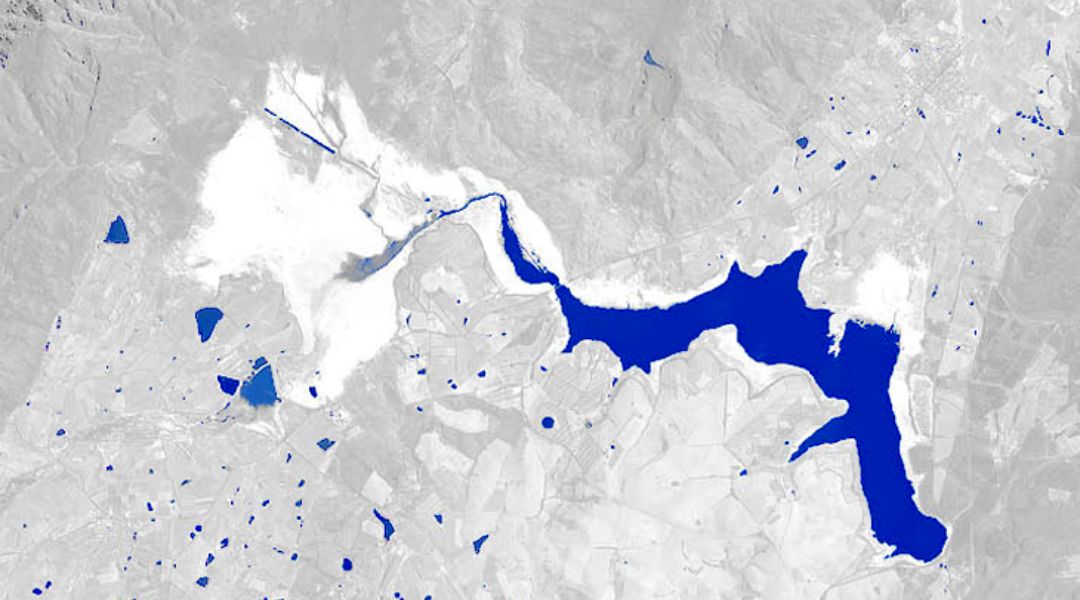
Navkaran Singh Bagga: Water scarcity reports have become the norm across the globe. Cape Town and its impending water scarcity,The Chennai Water Crisis of 2019 has established the harsh truth that we are depleting all sources of water. Water is the driving force of all life on earth. Every one out of nine people lack access to clean drinking water. 1.8 billion people in seventeen countries with India in the extremely high category of water shortage within next few years is a matter of grave concern. Thus, a
quarter of the world’s population, appear to be veering towards an un-mitigatable water crisis.
Currently India holds the undesirable title of having the highest number of rural people without access to clean water. Although being home to nearly a sixth of the world’s population, India only gets 4% of the Earth’s fresh water. Already more than half of Asia’s third-biggest economy faces high water stress. 70% of Indians have poor or no access to safe drinking water and 22% of Indians do not have water reaching their homes and walk minimum more than a kilometre to reach a proper source. With only 60% of water available for consumption by 2030 we are alarmingly marching towards a crisis that will require human intervention right away otherwise we will stare at a third world war and this time over water.
Unfortunately, it is a sad truth that as a nation we still depend heavily on groundwater availability, be it for farming, drinking, washing, construction and any other miscellaneous use. 3.8 billion people could be living under water stressed conditions by 2025.
According to the figures of the report by WaterAid, a global advocacy group on water and sanitation; India has around 63.4 million people living in rural areas without access to clean water, more than any other country. The figures are part of ‘Wild Water, State of the World’s Water 2017’, a report by WaterAid. That is more than the combined population of Punjab, Haryana and Uttarakhand. Compared globally, that is as many people as who live in Australia, Sweden, Sri Lanka and Bulgaria–combined.
12 per cent of India’s population is already living the ‘Day Zero’ scenario, thanks to excessive groundwater pumping, an inefficient and wasteful water management system running for years has rendered irreparable loss and depletion of the water reserves. According to the Composite Water Management Index (CWMI) report released by the Niti Aayog in 2018, 21 major cities (Delhi, Bengaluru, Chennai, Hyderabad and others) are racing to reach zero groundwater levels by 2020, affecting access for 100 million people. The CWMI report also states that by 2030, the country’s water demand is projected to be twice the available supply, implying severe water scarcity for hundreds of millions of people and an eventual six per cent loss in the country’s GDP.
ST: What do you think a common person can do to help the environment?
Navkaran Singh Bagga: I think it should be a basic responsibility of every individual to do their bit to help and save the environment. The year 2020 has given us a good shake up and reminded us that we are not doing enough to help Mother Nature. It is high time that we pulled up our socks and tried. It does not require a lot of financial expenses or effort and anyone can take a few measures. Reuse, Reduce and Recycle should be our mantra. We should try to use eco-friendly and biodegradable things. Every individual can take very simple steps like reducing water wastage, reducing use of paper, carpooling, switching to alternates of plastic, afforestation, using energy efficient appliances. Moreover, we should try to look for alternate sources of energy and water. Even the government should emphasize and invest more on alternative and eco-friendly sources of energy. Embracing new and alternative technology is also a step forward. Being self-sufficient and not being dependent on earth’s natural resources is the key to a better future. The education system should incorporate the issue of global climate change in a more elaborate manner to make the future generations more aware and take charge of the situation. As an individual, I have always been very conscious about the environment and have always strived to use the best environmental practices in my personal life.
ST: What message do you have for the present and future generations?
Navkaran Singh Bagga: “Climate Change is the defining issue of our time and we are at a defining moment” says the United Nations. The earth’s temperature is rising, ice caps are melting, sea levels are rising, species are getting extinct – a horrid future is staring us in the face. If we do not act right away, it might be too late. Hence, it has now become an imperative for present and future generations to save the environment if they want to stay on planet Earth. We must look for ways to reduce carbon dioxide emission and our carbon footprint. We must all work towards a sustainable future. We need more crusaders like Greta Thunberg who will make the world a better place to live in.
Try to inculcate the habit of being environmentally responsible living in your children from a very young age so that they don’t take their home for granted. Moreover, for entrepreneurs who are looking for areas to invest, I would suggest that instead of looking just for exciting business opportunities, look for problems which are worth solving. Thus, along with doing a business, you will also be helping the society and making the world a better place.
ST: What is the significance of ‘World Environment Day’ at the present time?
Navkaran Singh Bagga: The theme for World Environment Day 2020 is biodiversity, a concern that is both imperative and existential. As I mentioned earlier, 2020 has been a wakeup call for us. Recent events, from bushfires in Brazil, the United States, and Australia to locust infestations across East Africa and now in India and of course, a global pandemic prove the interdependence of humans and the network in which they exist. This World Environment Day should be a reminder that humans do not own this planet. We are mere inhabitants and we must learn to co-exist with nature else we might cease to exist. With our increasing demands, humans have pushed nature beyond its limit. It would take 1.6 Earths to meet the demands that humans make of nature each year. If we continue on this path, the biodiversity loss will have severe implications for humanity, including the collapse of food and health systems. When we destroy biodiversity, we destroy the system that supports human life. Reversing biodiversity loss is the only way to restore and sustain a healthy planet. This will only be possible when we understand and appreciate that the world we live in functions as a whole system. It is time to redefine our relationship with nature and put nature at the heart of our decision-making. It is, indeed, ‘Time for Nature’.