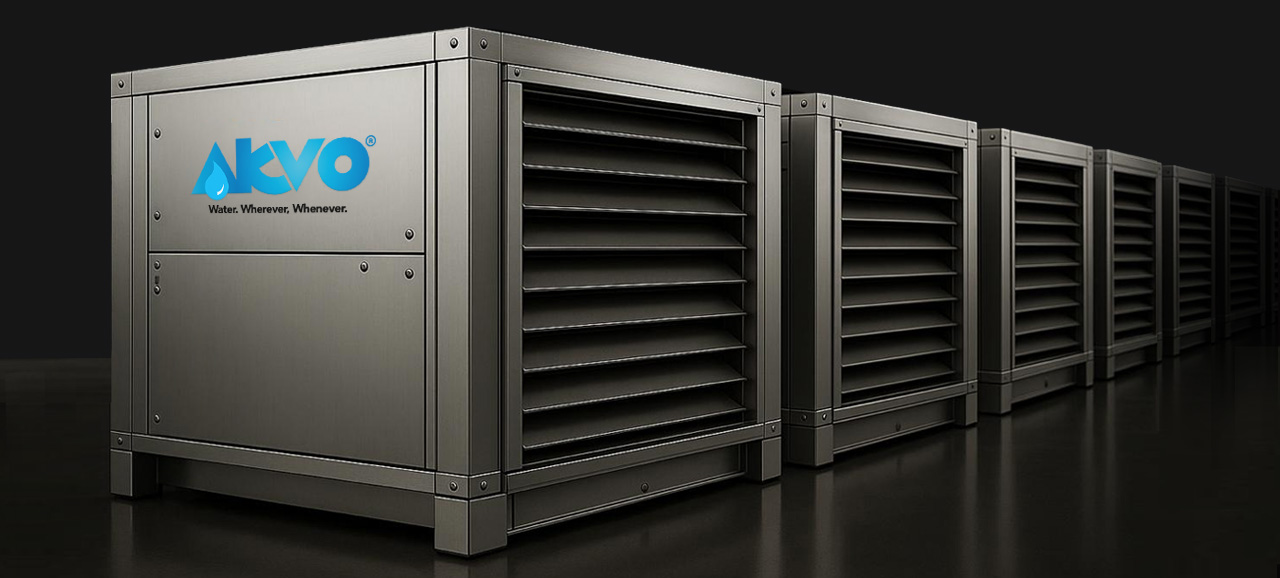
Access to safe drinking water should not depend on proximity to a pipeline or a groundwater well. Across India, millions face severe water stress where conventional infrastructure is either logistically difficult or impossible to deploy.
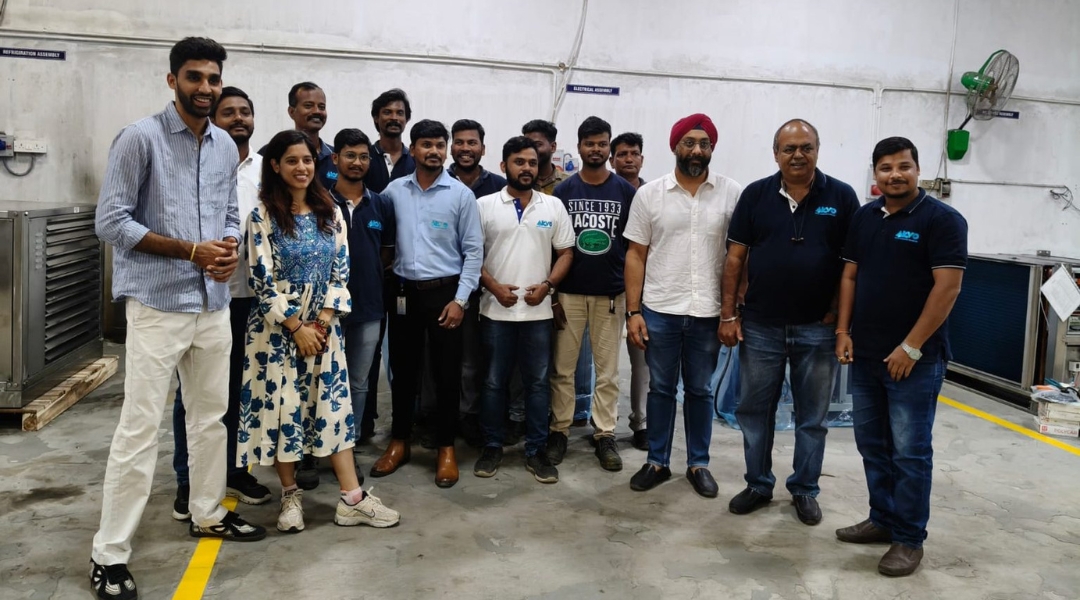
To bridge this gap, Kolkata-born entrepreneur Navkaran Singh Bagga spent the past eight years developing Atmospheric Water Generators (AWGs) at AKVO Atmospheric Water Systems—delivering decentralized drinking water directly from ambient atmospheric moisture.
The Science Behind the System
AKVO’s technology relies on a natural condensation process. Ambient air is drawn into the unit, filtered for dust and pollutants, and cooled below its dew point. As moisture condenses into water droplets, it undergoes a rigorous multi-stage purification sequence:
-
Filtration & Disinfection: Sediment filtration, carbon filtration, ultrafiltration, and UV disinfection treat the water before essential minerals are reintroduced.
-
Zero RO Waste: Because condensed atmospheric vapor contains virtually no dissolved salts, reverse osmosis (RO) is not required—eliminating the severe water wastage typical of traditional RO purification systems.
-
Quality Standard: Every unit is tested against India’s IS 10500 drinking-water standards through NABL-accredited laboratories.
Real-World Footprint & Energy Metrics
To date, AKVO has deployed over 2,000 units across 15 countries, generating more than 100 million litres of drinking water without extracting a single drop from the ground.
-
Proven Impact: Deployments range from Hardua Mangarh village in Madhya Pradesh—where an AKVO unit producing 1,000 litres daily spared residents a 4-kilometer walk for water—to Airports Authority of India facilities in Lakshadweep, Border Security Force (BSF) posts, and municipal projects in Gujarat.
-
Efficiency Focus: In warm, humid Indian conditions, AKVO units operate at an energy efficiency of approximately 0.4 kWh per litre.
-
Climate Realism: AWG output depends heavily on local conditions; at 25°C and 60% humidity, production drops to roughly 57% of a unit’s maximum rated capacity. Condensation becomes impractical below 30% relative humidity, which is why AKVO utilizes its Nimbus OS platform to monitor real-time climate data and performance.
Off-Grid Infrastructure & Future Scaling
AKVO is expanding its focus toward solar-powered, off-grid systems designed for island communities, municipal programs, and disaster relief. Recent developments include solar-powered, battery-integrated AKVO units commissioned for a remote island community in the Philippines under government evaluation.
As climate pressures and infrastructure gaps persist, AKVO continues to scale its decentralized model to bring reliable water access to places traditional pipelines cannot reach.
Original Article: Read the full story on The Logical Indian