
A city with heavy rainfall can still experience a severe water shortage. A factory with working pipes can run out of water due to upstream contamination. A hospital relying on a single water supplier remains dangerously vulnerable.
Infrastructure alone can no longer guarantee water security. For decades, water planning relied on a simple formula: find a reliable source, build supply capacity, and grow. Driven by rising climate variability, that formula is failing.
The Failure of the Single-Source Belief
Relying on a single river or aquifer treats finite resources as inexhaustible—an assumption contradicted by global data:
-
Declining River Flow: The WMO 2025 Global Water Resources report reveals that global river discharge has fallen to its lowest levels in three decades, with normal flow observed in only 34–38% of river basins.
-
Groundwater Over-Extraction: India’s Central Ground Water Board (CGWB) projects national groundwater extraction to average 247 billion cubic meters annually, rapidly depleting vital underground reserves.
True resilience requires shifting from single-source dependencies to multi-source diversification.
Diversification vs. Duplication
Diversification should not be confused with simple duplication. Having two pumps drawing from the same endangered river, or contracting two separate water truckers drawing from the same watershed, leaves you exposed to the exact same failure point.
A resilient strategy asks a fundamental question: If your primary water source fails during an outage or drought, will your backup fail alongside it?
Strategic Water Mapping & Decentralized AWG
Adopting the design principles of modern electrical grids—which route power across interconnected sources to prevent blackouts—allows water managers to build resilient, multi-tiered utility models:
-
Strategic Water-Use Mapping: Not all operations require potable purity. Matching water quality directly to its end use (e.g., using reclaimed greywater for cooling towers or landscaping) preserves high-grade drinking water for critical needs.
-
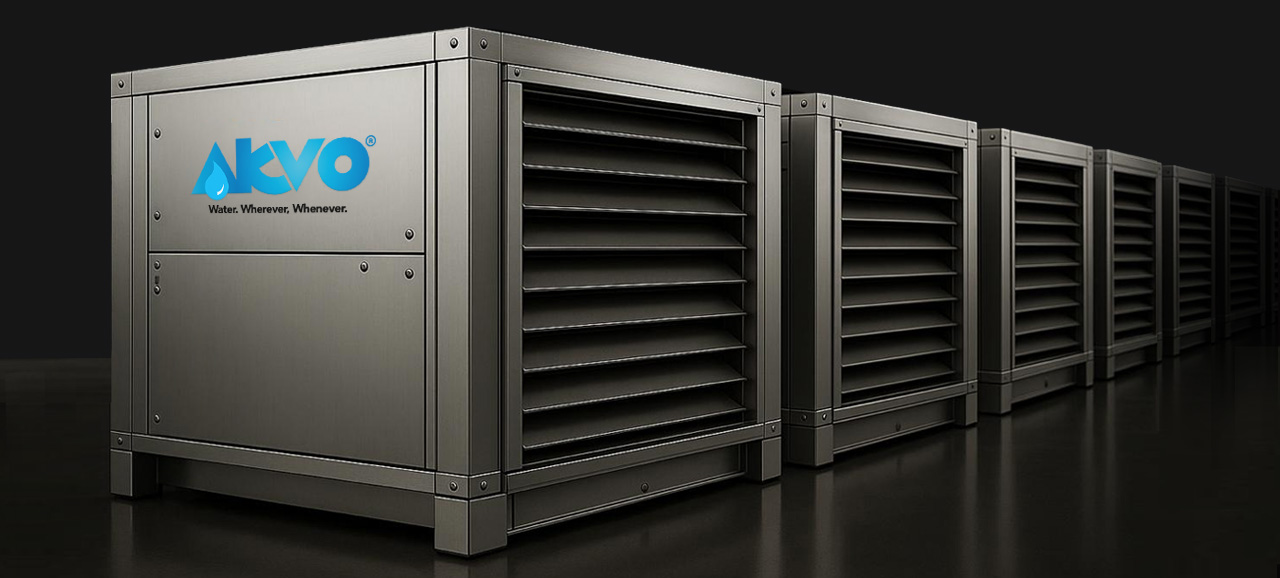
Mitigating Concentration Risk: Atmospheric Water Generation (AWG) harvests pure drinking water directly from ambient humidity. Rather than replacing regional municipal pipelines, AWG mitigates concentration risk at the point of use—giving commercial campuses, data centers, and hospitals on-site supply independence.
Measuring Exceptional-Day Performance
Digital monitoring can track well depletion, operational leaks, and system health, but only structural diversity allows a system to survive catastrophic disruptions. Modern water infrastructure must ultimately be evaluated not by how many litres it delivers on normal operational days, but by its performance during the exceptional days of crisis and supply failure.
About the Author: Navkaran Singh Bagga is the Founder & CEO of Akvo Atmospheric Water Systems Pvt. Ltd. (akvosphere.com), an Indian manufacturer of atmospheric water generators deployed across 15+ countries.
Original Article: Read the full opinion piece on TechStoriess