Rethinking water security, starting with air
You feel parched, maybe after a thorough session at the gym or simply after overworking yourself inside your centralised office space or after running a kilometre trying to make it on time for your first class.
You feel parched, maybe after a thorough session at the gym or simply after overworking yourself inside your centralised office space or after running a kilometre trying to make it on time for your first class. You reach out for a glass of water or a bottle without really putting much thought into where the water that satiates you comes from. But what if your next sip of water does not come from a reservoir, a river or a well bore, but rather from the very air that you breathe? This is not something out of the future, but a bit of everything- physics, chemistry and engineering.
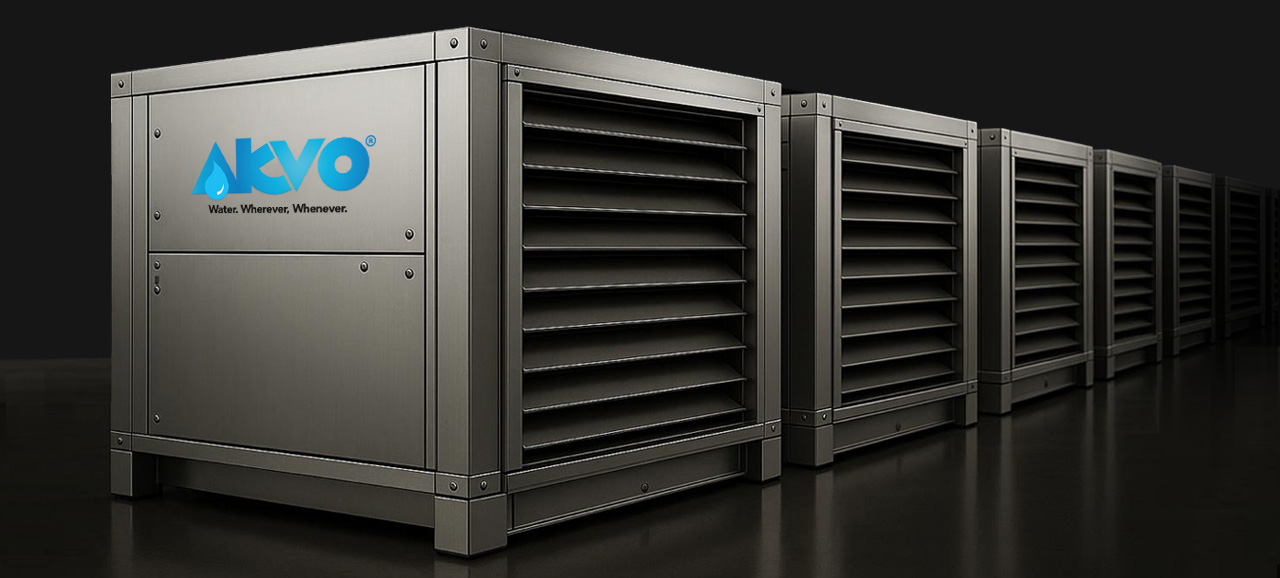
Turning to Earth’s atmosphere- the most overlooked reservoir is not something out of a fantasy but a ray of hope that while the earth battles depleting natural water sources, the sky might just become humanity’s great next aquifer. And at the heart of this lies AWG systems (Atmospheric Water Generators), which produce portable water by extracting water vapour directly from the air. Conversing with Navkaran Singh Bagga, CEO & Founder of AKVO, The Statesman gets an idea on how, even though AWG systems have gained prominence in the last few years, technology like this is at the helm of future cleantech adoption in India.
Q. What sparked the idea for air-to-water technology?
The idea was sparked by a simple but unsettling observation: while floods devastate one region, another suffers severe drought. Water exists abundantly in the atmosphere, yet we rarely view air as a viable water source. I wanted to create decentralised systems that allow communities, institutions, and businesses to generate clean drinking water on-site, reducing dependence on depleting groundwater and long supply chains.
Q. Can you explain the core physics and engineering behind Atmospheric Water Generation?
Atmospheric Water Generation works on the same principle as condensation on a cold glass. Warm air contains moisture. When air is cooled to its dew point, the water vapour condenses into liquid water. Our systems optimise airflow, temperature control, and filtration to efficiently capture, purify, and mineralise this condensed water, making it safe and potable. It is essentially controlled, engineered condensation at scale.
Q. Is this an energy-intensive process? How do you balance energy consumption versus water output?
Energy consumption depends heavily on humidity and temperature. Higher relative humidity significantly improves efficiency. We optimise compressor cycles, heat exchange, and airflow design to reduce kWh per litre under favourable conditions. The systems are IoT-enabled, allowing real-time monitoring and performance optimisation. The goal is not just producing water, but doing so with predictable, transparent energy metrics aligned with sustainability objectives.
Q. How does atmospheric water generation change the broader landscape of water sustainability?
Atmospheric water generation decentralises water production. Instead of transporting water across long distances or extracting stressed groundwater, potable water is generated at the point of consumption. This reduces plastic waste, lowers logistics emissions, and builds resilience in water-scarce regions. It transforms water from a centrally distributed commodity into a localised utility, strengthening long-term sustainability and climate adaptation strategies.
Q. Installed in diverse geographic locations, were technological adaptations required?
Yes, significantly. Installations across tropical, coastal, desert, and urban environments demand different engineering responses. We adapt airflow design, filtration systems, corrosion resistance, and control algorithms based on humidity, salinity, and dust conditions. In high-salinity coastal zones, anti-corrosion materials are critical. In arid regions, performance optimisation and hybrid integration become key. Local adaptation ensures reliability and efficiency.
Q. What are the on-ground challenges in scaling green solutions?
The biggest challenges are mindset and infrastructure alignment. Green solutions often require upfront capital and long-term thinking, while markets tend to prioritise immediate cost savings. Regulatory clarity, financing models, and awareness are still evolving. Scaling requires collaboration between policymakers, financiers, and entrepreneurs to create ecosystems where sustainable technologies are not niche alternatives, but mainstream infrastructure choices.
Q. Where does India stand in terms of sustainable water technologies?
India is at a pivotal moment. Water stress is rising, yet innovation is accelerating. Government missions around Jal Shakti and sustainability have created momentum. However, the adoption of advanced decentralised technologies is still emerging. We have strong scientific talent and entrepreneurial energy; the next step is integrating these innovations into policy frameworks and large-scale infrastructure planning.
Q. What role do startups play in driving India’s climate and sustainability goals?
Startups bring agility, experimentation, and bold problem-solving. Unlike legacy systems, startups can rapidly prototype, test, and deploy solutions that merge science with infrastructure. In the climate and water sectors, this flexibility is crucial. Startups translate research into field-ready applications and push industries to rethink conventional models. They act as catalysts, bridging laboratory science and real-world impact.