
Making Water from Air: From Vision to Breakthrough
A Policy Idea Backed by Science
In 2020, during a virtual interaction with Vestas, Prime Minister Narendra Modi suggested that technology could harvest moisture from the air to generate drinking water. What seemed ambitious at the time has now been reinforced by scientific advancement.
In 2026, Nobel laureate Omar Yaghi, winner of the 2025 Nobel Prize in Chemistry, unveiled an industrial-scale atmospheric water harvesting system capable of producing up to 1,000 litres of water daily — even in extremely dry regions. Through his California-based company Atoco, Yaghi has translated advanced materials science into a practical solution.
The Science: Reticular Chemistry and Molecular Sponges
At the core of this breakthrough is reticular chemistry, a field focused on designing crystalline structures known as Metal Organic Frameworks (MOFs). These highly porous materials function like molecular sponges, capturing water directly from the air through adsorption rather than energy-intensive cooling.
Unlike conventional Atmospheric Water Generators (AWGs) that rely on refrigeration to reach dew point, MOF-based systems chemically attract water molecules, allowing operation even at humidity levels as low as 10–20%. This dramatically reduces energy consumption and expands viability to desert environments.
Decentralised Water Security in Practice
Atmospheric harvesting represents a shift toward decentralised water production. A container-sized unit can generate around 1,000 litres of clean water per day and can operate using solar heat, eliminating dependence on pipelines or lMaking water from air, atmospheric water generation, Omar Yaghi Nobel Prize, reticular chemistry, metal organic frameworks MOF, PM Narendra Modi water vision, Atoco atmospheric harvesting, decentralized water solutions, water from dry air technology, climate resilient water systems, India water security, sustainable water innovationarge infrastructure.
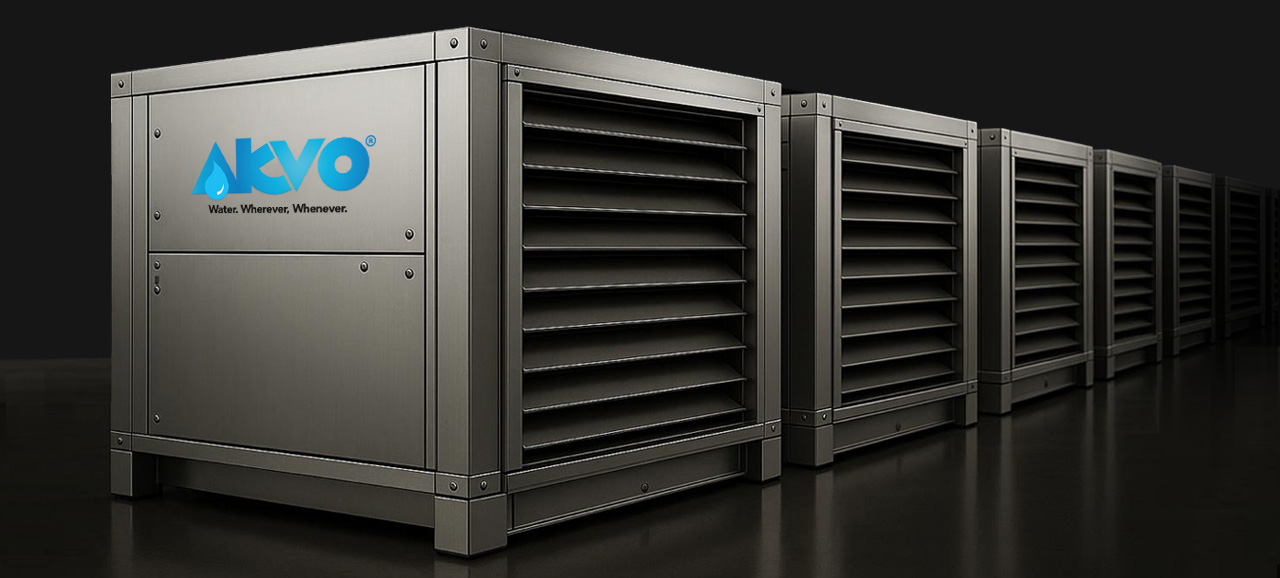
In India, AKVO, led by Navkaran Singh Bagga, deploys condensation-based AWGs suited to the country’s diverse climates. These systems filter air, condense moisture, and purify it through multi-stage treatment, reducing reliance on groundwater, tankers, and bottled water.
A New Era of Resilience
With billions lacking access to safe drinking water and climate pressures intensifying, atmospheric water generation offers a scalable and resilient alternative. By extracting water directly from the air, communities can move toward self-sufficiency — transforming a forward-looking vision into a tangible solution.
Read the full original article here: India Today